

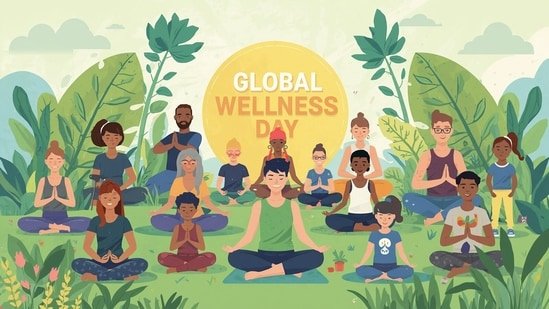
As conversations around mental health continue to grow post-pandemic, Global Wellness Day 2026 offers an opportunity to reflect on how people’s relationship with emotional well-being has changed in recent years. According to wellness expert Gunjan Adhya, founder of Tulla Journey, the COVID-19 pandemic played a major role in bringing mental health into the mainstream.
Speaking with Hindustan Times ahead of Global Wellness Day, Gunji Adhya shared why younger generations are paying more attention to mental wellness and how simple tools like journaling can help people reconnect with themselves.
How did the pandemic change people’s approach to mental health?
Before the pandemic, mental health was often treated as a private issue. People were comfortable discussing physical health problems but found it difficult to talk about emotional struggles. The pandemic changed that.
It forced many people to confront stress, anxiety, loneliness and uncertainty. As a result, mental wellness became a more open and accepted topic. Today, more people understand that emotional fitness is just as important as physical fitness.
Which age groups are engaging the most with mental wellness?
Most of the people attending wellness workshops and seeking support are in their 20s and 30s. Younger adults are much more willing to explore therapy, self-development and emotional healing.
People above 45 often find it harder because they grew up in environments where emotions were rarely discussed. Many were taught to suppress their feelings for the sake of family responsibilities or social expectations.
Why do you think Gen Z is so interested in mental wellness?
Gen Z is asking a different question. Instead of focusing only on success, they are also asking, “Am I living well?” They understand that happiness is not something that comes after achieving a goal. It is something that needs attention every day.
Many young people are willing to change jobs, set boundaries and prioritise their well-being if they feel their mental health is being affected.
Is awareness enough when it comes to mental health?
Awareness is a great first step, but it doesn’t always lead to action. Many young people know the language of mental health because of social media, but they don’t always have practical tools to manage their emotions.
That is where journaling, affirmations, and guided self-reflection can help. These practices create space for people to understand what they are feeling and why.
What role does authenticity play in emotional well-being?
Authenticity is at the heart of mental wellness. You have to be honest with yourself about your needs, your relationships and your feelings.
When people stop pretending and start listening to themselves, they make choices that are more aligned with who they really are. That creates greater peace and emotional balance.
AI is overcoming wellness prompts. Then how are physical wellness tools still relevant now?
Technology can provide information, but emotional connection often comes from experience. Physical tools such as affirmation cards or guided journals encourage people to slow down and reflect.
There is something powerful about holding a card in your hands, choosing a prompt and spending time with your thoughts. These moments help people connect with themselves more deeply.
Your journaling book was launched during the pandemic. What inspired you to create it?
During the pandemic, I was working with clients remotely and realized that many people needed support managing anxiety and stress on their own. The journaling book was created as a prompt-led self-help tool that could help people build self-awareness and discover their inner strength. It was designed to act as a guide toward authenticity rather than a traditional self-help book.
What kind of feedback have you received from users of your wellness tools?
Most of the feedback has been positive. However, some people find certain prompts intimidating because they require confronting deep fears or uncomfortable parts of their subconscious. To benefit from these practices, honesty with oneself is very important.
Do you see any gaps in the way Gen Z approaches mental wellness today?
Gen Z is very aware of mental health and has access to a lot of wellness information through social media. However, many young people still lack the proper tools to manage emotional challenges effectively. There is often a gap between knowing about wellness and consistently practicing it.
Despite this awareness, what challenges do younger generations continue to face?
Many young people understand their emotional burdens but still hesitate to express them fully, especially with their parents. Freedom and space for emotional processing have become important priorities, but emotional communication barriers continue to exist.
Conclusion
As the world marks Global Wellness Day 2026, Gunjan Adhya believes the growing openness around mental health is a positive shift. While awareness has increased significantly since the pandemic, she stresses that true well-being comes from consistent self-reflection, emotional honesty and using tools that help people better understand themselves. Global Wellness Day serves as a reminder that wellness is not limited to physical health but also encompasses emotional and mental well-being.
