

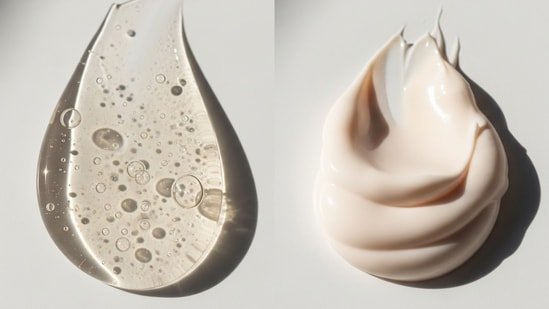
Sunscreens are inevitable all year round, and come what may, you shouldn’t miss them. However, summer and humid days make it more crucial. While all sunscreens serve the same primary purpose, their formulation can vary significantly. Two of the most common types are gel sunscreen and cream sunscreen. Understanding their features and benefits can help you choose the right one for your skin type and lifestyle.

Dermatologist Dr Vidushi Jain of Dermalinks tells HT Shop Now, “Picking a gel or cream sunscreen mostly depends on your skin type and the kind of environment you will be exposed to.”
“Gel sunscreens are an excellent choice for individuals with oily or acne-prone skin as these products are extremely lightweight and almost invisible, and less likely to cause pores to be clogged, especially in hot and humid climate conditions. On the other hand, cream-based sunscreens are perfect for dry or highly sensitive skin types as they mainly help skin stay hydrated and act as a more protective and calming skin barrier”.
Besides, she emphasises picking a sunscreen which you enjoy wearing on your skin to increase the chances of regular application. However, she clarifies that regardless of the texture, it should be a broad-spectrum one and not lower than SPF 30 to ensure a good level of protection.
Let us understand more about both types of sunscreen.
What is Gel Sunscreen?
Gel sunscreen is a lightweight, water- or alcohol-based formulation designed to absorb quickly into the skin. It typically has a transparent or slightly translucent appearance and leaves little to no residue after application.
Key features of gel sunscreen
- Lightweight, non-sticky texture
- Fast absorption into the skin
- Usually oil-free and water-based
- Leaves a matte or semi-matte finish
- Often non-comedogenic (doesn’t clog pores)
Benefits of gel sunscreen
Lightweight, non-greasy finish: Gel sunscreens feel very light on the skin, absorb quickly and don’t leave an oily layer. They are best for humid weather.
Prevents clogged pores and breakouts: Gel sunscreens prevents clogged pores and breakouts, making them the best choice for oily and acne-prone skin.
No white cast: Gel sunscreens usually blend invisibly, without leaving a white cast on your skin.
Matte or semi-matte look: Since the texture is gel, it helps control shine throughout the day, giving your face a matte look.
Works well under makeup: Gel sunscreen can be used as your makeup base or primer as well.
Hydrating (but not heavy): As gel sunscreens are water-based, they often hydrate, without feeling heavy on the skin.
5 gel sunscreens
What is Cream Sunscreen?
Cream sunscreen is a thicker, richer formulation that combines sun protection with moisturising properties. It typically contains oils and emollients that nourish and hydrate the skin.
Key features of cream sunscreen
- Thick, creamy consistency
- Slower absorption compared to gels
- Provides a dewy or slightly shiny finish
- Contains moisturising ingredients
- Forms a protective barrier on the skin
Benefits of cream sunscreen
Deep moisturisation: Cream sunscreens are usually richer and more hydrating, making them ideal for dry or normal skin.
Better coverage: Their thicker consistency helps ensure even application, reducing the chances of missed spots.
Stronger protection: Many cream sunscreens offer high SPF and broad-spectrum protection against both UVA and UVB rays (linked to Skin Cancer and premature ageing).
Longer-lasting on skin: They tend to stay on the skin longer compared to gels or sprays, especially in non-sweaty conditions.
Suitable for dry and sensitive skin: Cream-based formulas often include soothing ingredients and are less likely to irritate, helping prevent issues like Sunburn.
Key differences between gel and cream sunscreens
Which one should you choose?
Choosing between gel and cream sunscreen depends largely on your skin type and environment. If you have oily or acne-prone skin or live in a humid climate, a gel sunscreen is likely the better option. On the other hand, if your skin is dry, sensitive, or exposed to cold weather, a cream sunscreen will provide the hydration and protection you need.
Ultimately, both types are equally effective in protecting against UV rays when used correctly. The best sunscreen is the one you feel comfortable wearing daily, ensuring consistent protection for your skin.
Similar articles for you:
Hoodies, sneakers, and a moisturiser: Abhishek Sharma breaks down his style playbook
Sophie Choudry thinks that a nighttime skincare routine is very important, never misses her lip balm
Liquid vs powder blush: Which to pick according to your skin type?
Disclaimer: At Hindustan Times, we help you stay up-to-date with the latest trends and products. Hindustan Times has an affiliate partnership, so we may get a part of the revenue when you make a purchase. We shall not be liable for any claim under applicable laws, including but not limited to the Consumer Protection Act, 2019, with respect to the products. The products listed in this article are in no particular order of priority.
