


Love is patient, love is kind. Love will also make you lose your mind. Because no fairy tale or rom-com ever tells you what happily ever after is actually like. We’ve celebrated meet-cutes, falling in love, love triangles and star-crossed lovers. But the day-in-day-out of a relationship, as the dishes pile up in the sink? Not so much.
Until now.
Turns out, short-form video is a great showcase for the long-form adventure of couplehood. Tolstoy was right: Happy couples are really all alike. They can’t decide what to eat tonight, put off chores, forget to buy milk, but remember each other’s transgressions in ultra-HD detail, and yell “What?” to each other from different rooms until one of them dies.
Filming domesticity is harder than it looks. It calls for recognising what’s worth celebrating, worth sharing, worth calling out, and what’s worth keeping private. Take a look.
In this together
We’ve seen happily ever after played out before. Kim Casali’s Love Is… cartoons (Love Is… someone to be goofy with; Love Is… planning holidays together) appeared in newspapers well into this century. Sarah Andersen’s illustrations and Catana Comics had the internet in a cutesy chokehold all through the 2010s. Kavya and Dhruv from Netflix’s Little Things have set new live-in love goals.
But on Reels, new stories are playing out. Both spouses work – so the old tropes about Her spending His money are no longer funny. Most households are nuclear, with just one child or a pet – no opportunity to bash the in-laws. Interfaith, inter-racial couples are seeing the funny side of the culture clash. The jokes are about forgetting passports, sneakily finishing the last cookie, figuring out how the air-fryer works, evading the chores and other signs of adulting together.
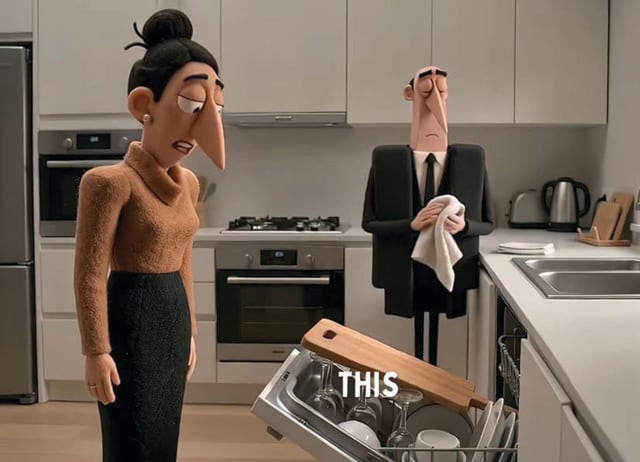
The couple du jour: Paul and Jane from the AI-generated micro-drama @LowBattteryPeople. They’ve sighed through everything, from digital detoxes, being hangry, meme overloads and waltzing in the kitchen, via 15-second clips. Episode 36 has them both in bed, ready to sleep. “You snore,” Paul says. “No, I don’t,” says Jane. “I recorded it,” he says. “Delete it!” she objects. “I can’t. I play it when you travel. It helps me sleep.” The bit is titled Weird Things Men Do When They Are In Love. It has 384K Likes on Insta.
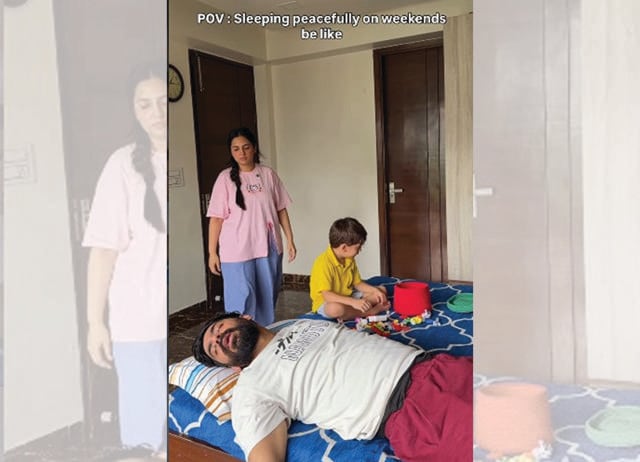
Kriti Vij has been posting videos featuring herself and her husband Viren Barman on @ItsKiViTime since 2022. “We started putting out things that were happening with us in real life,” says Vij. Soon, friends, family and followers began to chip in with suggestions for new videos. They’ve done skits in which he shaves off his beard because she “doesn’t like prickly kisses”. One video is from the POV of the phone charger that will inevitably get left behind as they check out of their hotel room. It’s filled with comments from couples who swear that this is exactly their story too.
Balance of payments
Psychologist Richa Saini, who runs the online platform Wellness With Richa, says content about “shared routines, everyday disagreements, and small acts of care resonate because viewers have often lived versions of them”. Audiences feel less alone in their own relationship challenges. Short-form video formats activate that “so us” sense of recognition especially quickly.
Gorang Grover and Meru Panwar Grover have been married for five years and chronicle everyday life as @Gorang_Grover and @Meru.PanwarGrover. Life is “naturally full of chaos, emotion and funny moments,” says Grover. “Instead of seeing it as a problem, we see it as content. The only secret is being a good observer, because in a joint family, every day feels like a reality show.”

He recalls filming one Reel built around a familiar household joke: The husband who spent so much time in the washroom that, by the time he emerged, his wife had aged, their son had grown up, and was about to get married. “It was such a simple idea, but millions of people related to it,” he says. “It taught me that there’s no such thing as an ordinary moment. The smallest, everyday situations connect the most because they’re real.”
The genre is crowded, admits Ninad Nashikkar, the Bengaluru-based creator behind Low Batttery People. “A lot of relationship content starts to blur together because everyone is drawing from the same family dynamics.” The challenge, he says, is not in identifying a telling moment, but turning it into art. Nashikkar’s hack is to avoid using “the obvious take, the moment that feels easy or immediately shareable, because chances are, if it came to us quickly, it’s already been done elsewhere.” In one recent episode, Paul asks Jane if she still gets excited when he comes home. Instead of the expected reassurance, Jane says she gets worried when he doesn’t. That flip — the less predictable version of love over the obvious one — is why the show shines.

Spreading the love
Grover, a banker, doesn’t believe a relationship ever runs out of stories. “One day, you’re learning how to handle each other’s anger. Another day, you’re learning when to give each other space. The next, you’re simply enjoying the little moments together.” It means he and his wife don’t chase new ideas, they look closer at how their life unfolds. “But behind every 30-second reel are two to three hours of planning, shooting, editing, and sometimes sleepless nights. The toughest part is convincing my parents and grandparents to be part of the skits.”
The other tough part: To not make love seem cringey or preachy. Vij and Barman do it by including the disagreements alongside lighter moments. In one Reel, instead of blaming each other for leaving a towel around or not switching off the water heater, they try asking each other politely — only for the same disagreement to surface anyway. With Nashikkar, the goal is to make Paul and Jane’s conversations not sound too polished. “It should feel like something you might have actually overheard, rather than something written for effect.”
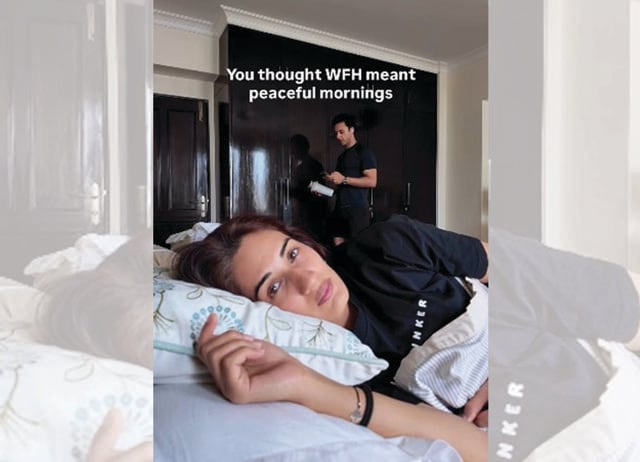
Couplehood content is so popular worldwide that more than a few creators have faked the love. Singaporeans Darshen K and Dr Samuel Choudhury went viral last year for filming videos showcasing the Type A vs Type B dynamic – one spouse does all the travel planning, the other just shows up. In March, they not only revealed that they had parted ways, but hinted that they weren’t even a couple, after all.
There’s a limit to how much you can connect to a skit, even one about everyday love, Saini says. “Every relationship has two stories: The one you live and the one you post.” All content is ultimately shaped for entertainment. And no matter how real the videos aim to be, sometimes, things get too real for Insta. Vij and Barman learnt this the hard way when Barman was confined to bed after a serious back injury in December 2025. It brought their content production to a halt for five weeks. “Real life happens, and there’s no way around that,” he says. So now, instead of creating content week by week, they bank videos for a contingency. Love Is… after all, knowing what to prioritise on a rainy day.
From HT Brunch, August 29, 2026
Follow us on www.instagram.com/htbrunch
