

In an era where ‘sugar-free’ labels dominate grocery aisles, dietitian Shweta J Panchal is pulling back the curtain on what we use to sweeten our food. In an Instagram post shared on April 24, Shweta ranked popular sweeteners on a scale of 1 to 10, offering a breakdown based on glycemic impact, nutritional value, and clinical experience. Also read | AIIMS-trained gastroenterologist highlights the risk of using artificial sweeteners, shares what to use instead
Her message was clear: marketing often masks the physiological reality of these ingredients. “We live in a world where sugar is the villain, artificial sweeteners are the hero, and nobody is telling you the full truth about either,” Shweta wrote in her caption.
The rankings
Shweta’s ratings focused on how these substances affect the body, particularly for those managing blood sugar. Here is how the most common sweeteners stacked up:
⦿ Monk fruit 8 to 9 /10. This is Shweta’s top recommendation, especially for diabetics looking to avoid insulin spikes.
⦿ Dates: 7 to 8 /10: Highly recommended by her due to fibre content and a favourable glycemic index.
⦿ Honey 7 /10: Shweta praises it for antimicrobial properties and gut health benefits.
⦿ Jaggery 5 /10: According to her, this is a slightly better mineral content than white sugar, but still processed by the body as sugar.
⦿ Stevia 5 /10: A middle-of-the-road plant-based option.
⦿ White sugar 3 /10: The primary issue is the high quantity consumed in modern diets, per Shweta.
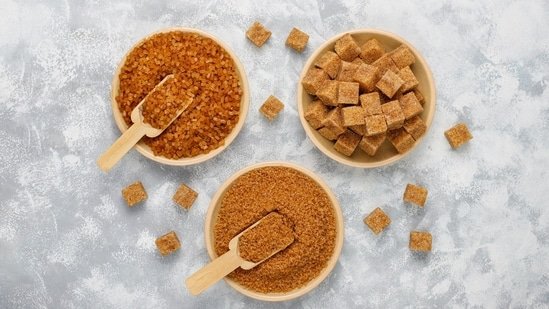
⦿ Brown sugar 3 /10: She describes it as ‘the same as sugar’ despite the healthier image.
⦿ Coconut sugar 3 /10: Shweta dismisses it as a marketing ‘health halo’, says it functions like standard sugar.
⦿ Artificial sweeteners: The lowest possible grade; Shweta advises avoiding these entirely.
Debunking the ‘healthier’ sugars
One of the most significant takeaways from Shweta’s analysis is the debunking of ‘natural’ alternatives like brown sugar and coconut sugar. While these are often marketed as premium health products, she gave them the same low score as white table sugar (3/10), noting that the body reacts to them in nearly identical ways.
Even jaggery, a staple in many traditional diets, only received a 5/10. While Shweta acknowledged its mineral content, she warned that ‘ultimately, it’s still sugar’. She saved her harshest criticism for artificial sweeteners (such as aspartame or sucralose), which she ranked as a ‘minus’. This rating directly challenges the ‘sugar-free’ industry, which relies on these chemicals to mimic sweetness without calories.
Conversely, Shweta urged those with diabetes or insulin resistance to pivot toward monk fruit. With a score of 8 to 9/10, it emerged as her gold standard for satisfying a sweet tooth without the metabolic cost. Shweta urged people to audit their pantries and look closely at the ingredients hiding in ‘sugar-free’ biscuits and snacks.
“The sweetener you think is healthy might be doing more harm than the one you’ve been avoiding,” Shweta warned. She advised people to save her guide for their next grocery run to ensure they are choosing sweeteners that provide actual nutritional value — like dates and honey — rather than just empty or chemical sweetness.
Note to readers: This report is based on user-generated content from social media. HT.com has not independently verified the claims and does not endorse them.
This article is for informational purposes only and not a substitute for professional medical advice.
