

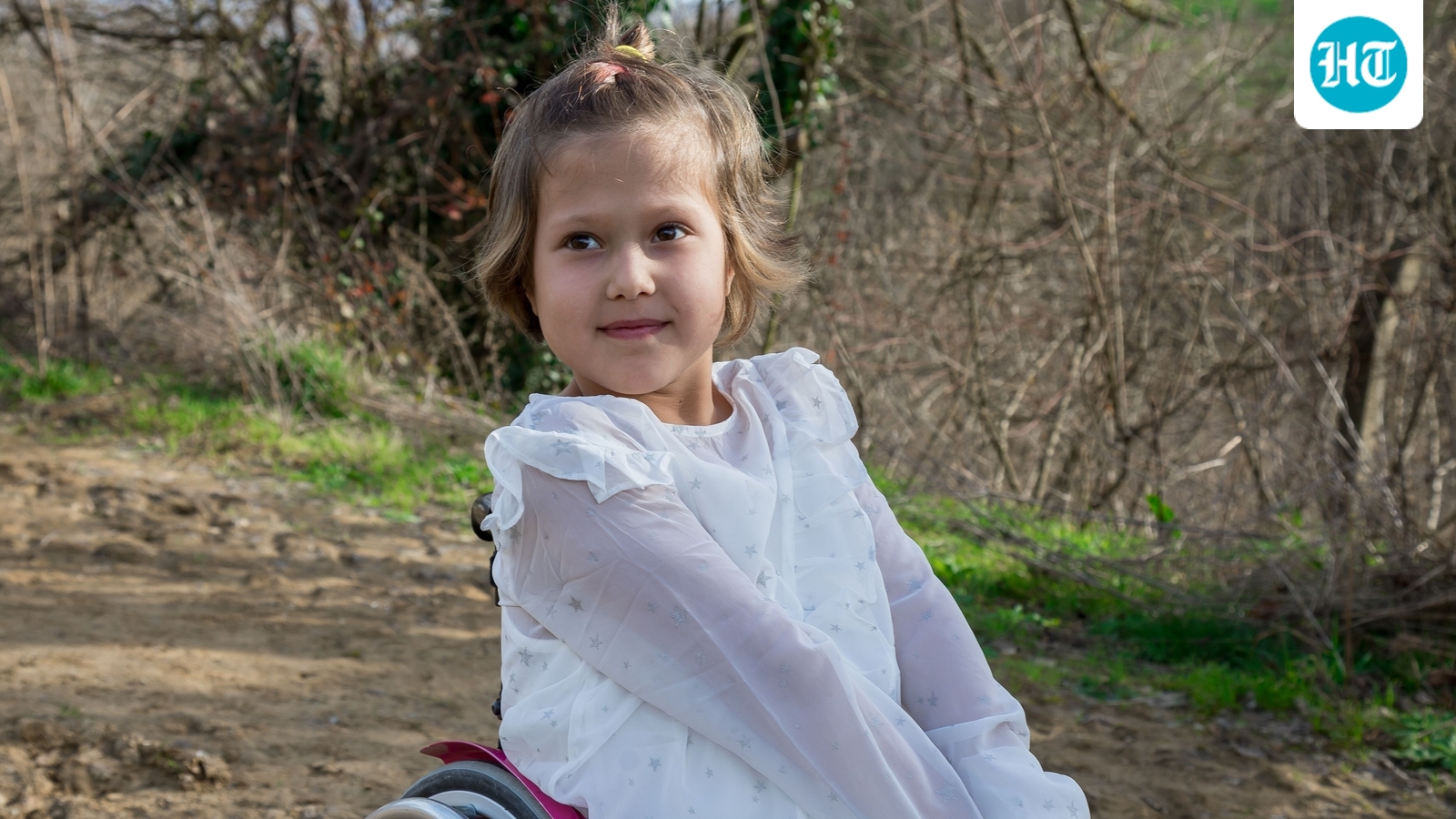
Cerebral palsy is one of the most common physical disability of childhood. It results from injury to, or abnormal development of, the developing brain before, during or shortly after birth, paediatrician Dr Suresh Shah shared with HT Lifestyle.
“The brain injury itself does not get worse over time, but what we do in the first two years of life makes an enormous difference,” he stated. “A baby’s brain is at its most adaptable in this window, so therapy started early can shape how a child moves, eats, speaks and learns for the rest of their life.”
Unfortunately, in India, many children are still diagnosed at two or three years of age, after the most valuable window has passed. Dr Shah went on to share the early signs that parents should look out for, for timely diagnosis and treatment.
What are the early signs of cerebral palsy?
The paediatrician divided the signs of cerebral palsy into the age groups in which they appear. They are presented as follows.
1. First six months
“In the first six months, parents should notice if the baby’s head flops backwards when they are lifted from lying down, if the body feels unusually stiff or unusually floppy, or if the baby arches the back and neck strongly when held,” stated Dr Shah.
Another warning sign is legs that stiffen and cross like scissors when the baby is picked up. “Persistent difficulty with sucking, swallowing or feeding, and hands that stay tightly fisted beyond three to four months, should also be discussed with a paediatrician,” he noted.
2. Between six and 10 months
In the age between six and ten months, Dr Shah suggests watching out if the baby is not rolling over, cannot bring both hands together, or reaches with one hand while the other stays fisted or unused.
“A clear hand preference before one year of age is not a sign of a ‘left-handed’ or ‘smart’ child. Babies should use both hands equally at this stage, and favouring one side can point to weakness on the other,” he noted.
3. Above 10 months
In the words of the paediatrician, “After ten months, parents should note a lopsided crawl that drags one side, scooting on the bottom or hopping on the knees instead of crawling, not sitting independently by nine months, or not standing with support by twelve months. A child who walks only on the toes or is not walking by eighteen months also needs evaluation.”
Who needs special attention?
Elders often say that every child grows at their own pace. While that is true in the case of small variations, Dr Shah noted that consistent delays, stiffness or one-sided movement requires medical evaluation.
“Some babies are at higher risk and should be monitored closely even if they appear well at discharge,” noted the paediatrician. They include:
babies born prematurely or with low birth weight, babies who needed NICU care, ventilation or resuscitation at birth, those who had seizures, severe jaundice or brain infections as newborns, twins and triplets, and babies whose mothers had infections during pregnancy.
“For such babies, NICU follow-up visits are not optional. They are where we catch the earliest signs,” noted Dr Shah. He further added that high-risk babies can often be identified as early as three to six months. That means therapy can begin while the brain is still rapidly developing.
“Not every case can be prevented, but good antenatal care, timely management of high-risk pregnancies, delivery in facilities equipped for newborn resuscitation, prompt treatment of newborn jaundice and infections, and completing rubella vaccination before pregnancy all help reduce the risk,” noted Dr Shah.
Note to readers: This article is for informational purposes only and not a substitute for professional medical advice. Always seek the advice of your doctor with any questions about a medical condition.
Dr Suresh Shah, MD, DNB, is the founder and lead paediatrician at Sparsh Children’s Hospital. He has special expertise in neonatology, NICU care, assisted ventilation, pediatric emergencies, and childhood asthma, including a dedicated Asthma OPD.
