

World Breastfeeding Week 2026: Breastfeeding is the best feed for a growing infant. It is full of all the nutrients that an infant requires to grow adequately. Breastfeeding should be started immediately after birth, preferably within the 1st half hour of life, and should be exclusively continued till 6 months; thereafter, it should be continued along with complementary feeds till 2 years and beyond.

Common reasons for breastmilk expression
- Breastmilk pumping is a very important tool for modern-day mothers. It helps confer the baby with the benefits of breastfeeding (nutritional and immunological) while continuing to meet the present-day challenges and realities of work. Many working mothers resume their jobs within a few months of birth.
- Pumping allows them to maintain an adequate milk supply. They can express milk at work and store it, which can be fed to the baby in their absence. In the modern world, there is also a concept of shared parenting, where both partners share equal responsibilities for the babies. The father can pitch in and feed the baby with the mother’s expressed milk.
- In contrast, the mother can have some independence for rest, errands, and sometimes social events. With the advancement in neonatology, extreme preterm babies can survive with specialised care in NICUs. These babies stay in NICUs for months and are unable to feed directly as their sucking and swallowing reflexes are not developed.
- These babies are fed mother’s expressed milk through a stomach tube. To maintain an adequate supply for these vulnerable babies, mothers express milk so it can be given to their growing preterm babies. In case of excess supply of breastmilk, it can be donated to human breastmilk banks, which can use it for other vulnerable babies in need.
Expression and storage
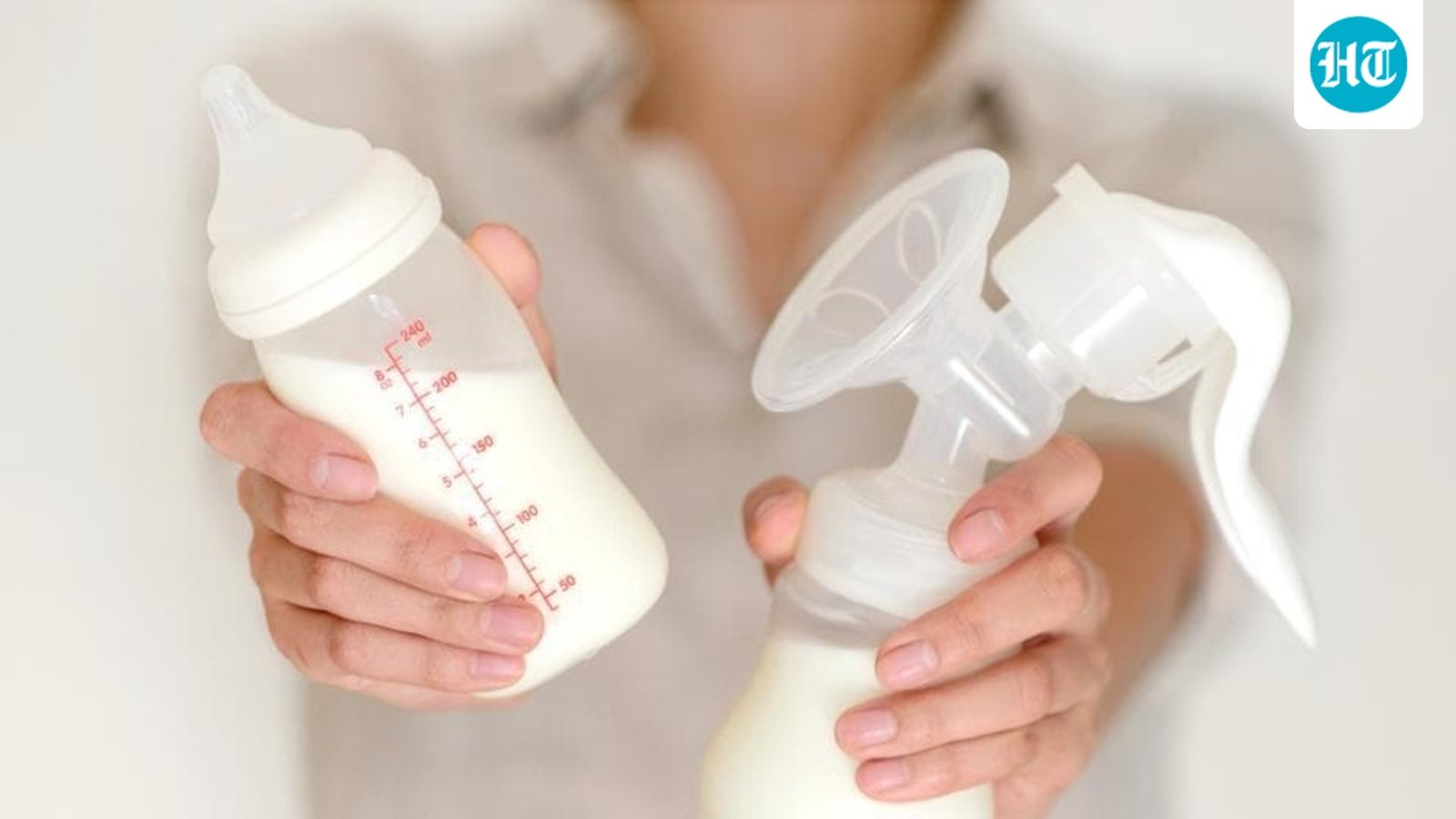
Milk can be expressed manually by pressing the areola and collected in sterile containers. Alternatively, breastmilk pumps are also available in the market to help mothers express milk. There are manual pumps, which are usually hand-operated, portable, and relatively cheaper. Electric pumps are more efficient and faster than manual pumps but are more expensive. This expressed milk can be easily stored at room temperature for up to 6 hours.
It can also be stored in the chiller compartment of the refrigerator for use in the next 24 hours. “Although breastmilk can be frozen for use up to 6 months, it would require a separate freezer used exclusively for storing breastmilk so that it does not get contaminated”, Neonatologist Dr Avadhesh Ahuja, Fortis La Femme GK, tells Health Shots. Expressed milk can be offered to the baby using a katori-spoon, through paladai feeding, or through a nifty cup.
Challenges
Besides the benefits that expressed breastmilk provides, it must be noted that expression requires equipment like a breast pump or satori, spoon, paladai, etc., which can be a source of infection to the newborn baby. Special care has to be maintained regarding hygiene and sterilisation of the equipment.
The process of expression and feeding is more time-consuming and sometimes physically tiring compared to direct breastfeeding. Another big challenge is that once a mother starts expressing milk, she can quantify it, and it may create guilt or pressure if she is not able to pump enough. This can cause a further reduction in breast milk supply.
Support for pumping mothers
The feeding mothers have to be supported in different ways, right from giving them constant psychological support during lactation by their husbands and their families. While the working mother is out at work, the family should step in and feed the baby with expressed milk. Work areas and offices should have separate lactation rooms and refrigerators to keep the stored milk.
Lactation consultants should help with the correct techniques for expressing and storing breast milk. Hence, pumping breastmilk empowers modern-day mothers with choice and control, letting them provide their baby with optimal nutrition without compromising other aspects of their modern life. Breastmilk expression, in a way, is a blend of tradition (providing breastmilk nutrition) and modernity (tools to support diverse lifestyles).
(Disclaimer: This article is for informational purposes only and is not a substitute for professional medical advice. Always seek the advice of your doctor with any questions about a medical condition.)
