

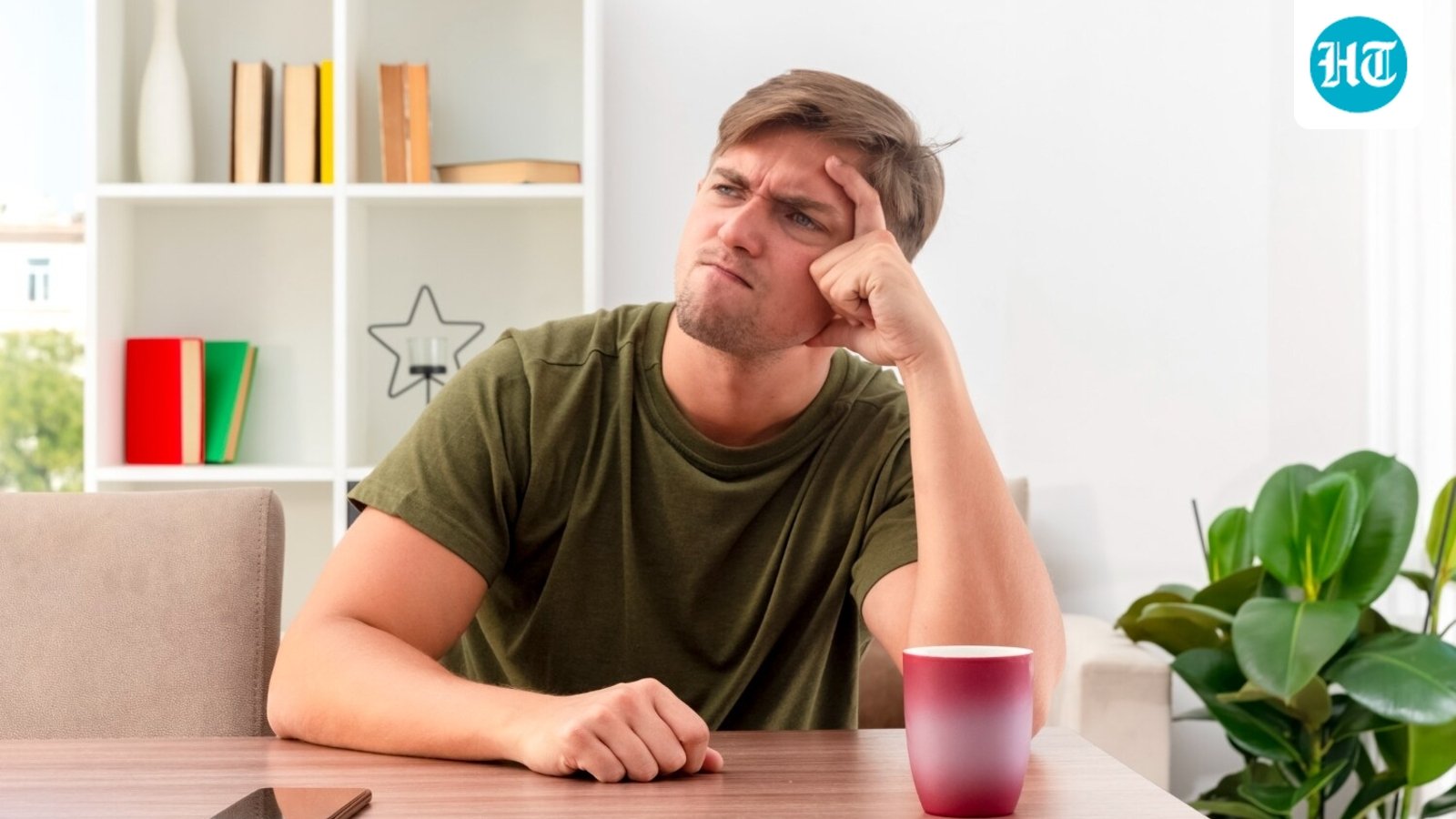
In today’s episode of Everyday Explained, we’re looking at one of those strangely familiar moments: walking into a room and suddenly forgetting why you went there. You may head to the kitchen to get something, reach the doorway and then stop to think, “Why am I here?” A few seconds later, the thought may return, sometimes only after you walk back to where you came from. But why does this happen? Is the doorway actually responsible, or is something else happening in the brain? Let’s find out. (Also read: Everyday explained: Why do some songs get stuck in your head? Know the surprising science behind it )
What is the ‘doorway effect’?
Researchers have studied this phenomenon under the name doorway effect, also known as the location updating effect. The idea is that moving from one location to another can sometimes make recently held information harder to retrieve.
A 2014 study published in Memory explored this phenomenon further by asking participants to mentally imagine walking through familiar environments. Researchers found that when the imagined walk involved passing through a doorway, participants experienced more forgetting than when the mental walk did not involve crossing a doorway.
The finding was important because participants did not actually have to walk through a doorway for the effect to occur. Simply imagining the transition was enough in the experiments.
Why entering a new room affects memory
One explanation is that the brain organises our experiences into separate events or contexts. Moving from one room to another can act as an event boundary, a point where one situation ends and another begins.
Think of your day as a series of mental chapters. You may be sitting in the living room thinking about getting your charger. You stand up, walk towards another room and enter a completely different environment.
As the context changes, the brain updates the information that is currently relevant. That shift can sometimes make the intention you were holding moments earlier harder to retrieve.
So the thought has not necessarily been erased. It may simply become temporarily less accessible.
It’s not just about the doorway
The science is more nuanced than the idea that walking through a door automatically makes you forget something.
A later 2021 study published in BMC Psychology tested the doorway effect across four experiments involving virtual reality, video and real-life movement. Researchers did not find a significant doorway-related forgetting effect across the experiments overall. However, when participants were also dealing with a working-memory load, passing through doorways made memory more susceptible to interference.
This suggests that context changes and mental load may matter more than the physical doorway itself.
For example, imagine walking to the kitchen while simultaneously thinking about an email you need to send, a conversation you just had and your plans for later. By the time you reach the kitchen, your original intention may have to compete with several other thoughts.
Why do we suddenly remember after going back?
There is a reason retracing your steps can sometimes help.
Returning to the previous room or situation may recreate some of the environmental cues associated with the original thought. Those cues can make it easier to retrieve what you had intended to do.
In other words, the memory may not have disappeared. The context that helped you access it may have changed.
So, is your memory failing?
Not necessarily. Forgetting why you entered a room from time to time is better understood as an example of how memory, attention and context interact.
The research behind the doorway effect suggests that crossing a boundary can influence memory retrieval, but later work shows that the effect is not universal and may become more noticeable when your working memory is already occupied.
So the next time you walk into a room and suddenly wonder, “Why did I come here?”, you may not have a bad memory. Your brain may simply be updating its context, while your original thought gets temporarily pushed out of focus.
