

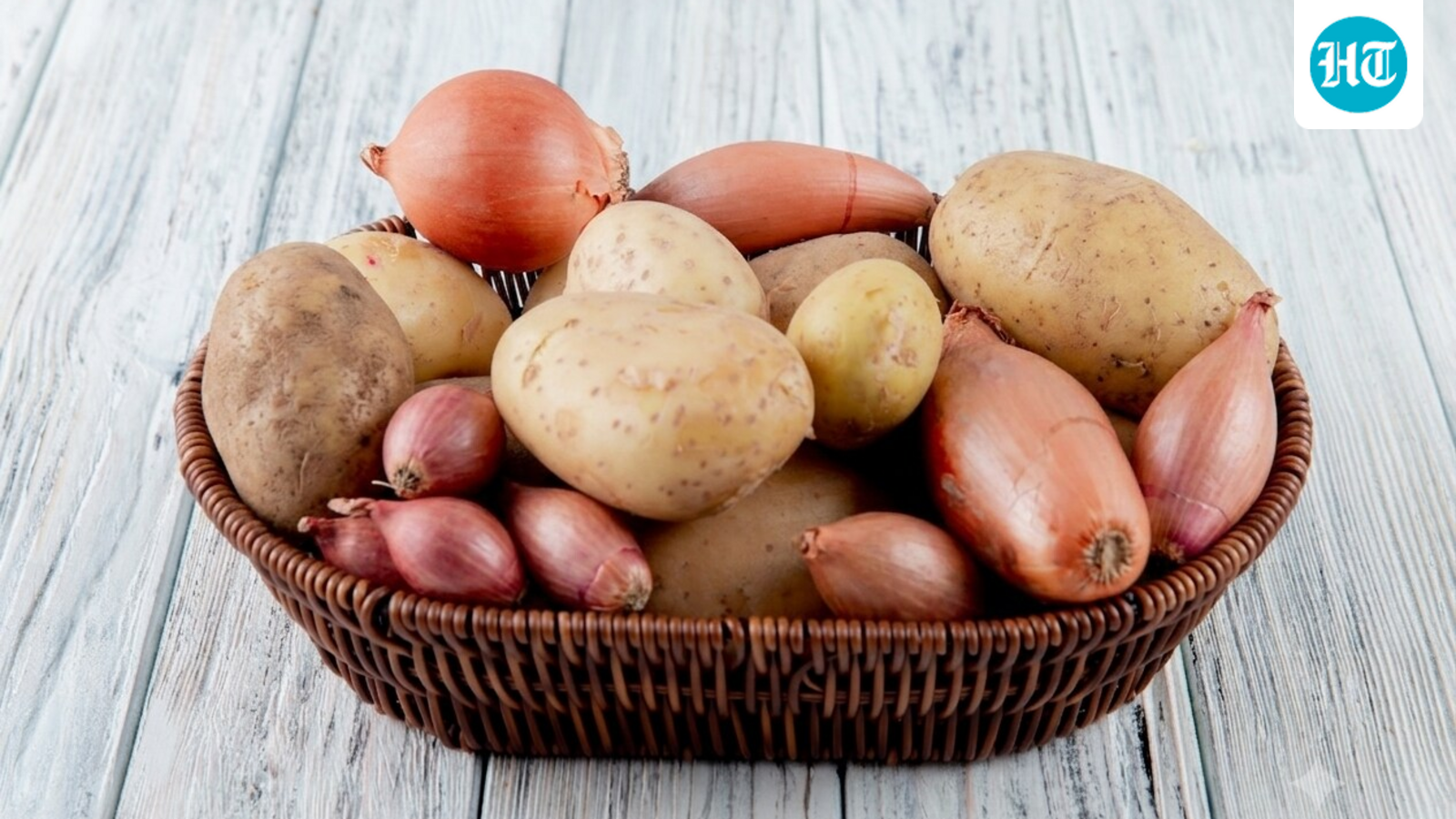
It’s a standard move in kitchens across the world: dumping onions and potatoes into the same basket. They are, after all, everyday staples that sometimes end up in the same dish. However, according to a clinical nutritionist with 25 years of experience, this casual storage habit is actually a recipe for premature spoilage, food waste, and potential health risks. Also read | Everyday explained: Why garbage bags have that thin white string
In an interview with HT Lifestyle, Nidhi Sahai, assistant general manager and head of dietary services, dietetics and nutrition, Medanta Noida, explained why keeping onions and potatoes side by side is a mistake.
“Most of us store onions and potatoes together in the same basket or cabinet without giving it much thought. After all, they’re kitchen staples that are used almost every day,” she said, adding, “However, this common storage habit can actually make both vegetables spoil faster, leading to food waste and, in some cases, increasing the risk of consuming spoiled produce.”
The science of the clash
The root of the issue lies in vastly different environmental needs and natural chemical reactions. Onions release invisible ethylene gas, which causes potatoes to age and spoil prematurely, Nidhi said. Additionally, onions hold a high water content — moisture that transfers to neighbouring potatoes, encouraging mould growth, she added. Potatoes, meanwhile, easily soak up smells, altering their flavor profile when kept in close proximity to onions, Nidhi shared.
She noted, “The main reason is that onions and potatoes have different storage needs. Onions are highly sensitive to moisture. When stored next to potatoes, the extra humidity can cause onions to become soft, mouldy, or start sprouting sooner than expected.”
The reaction goes both ways. “Onions also release gases that can encourage potatoes to sprout more quickly,” Nidhi explained. “Sprouted potatoes not only lose their texture and taste but may also develop green patches,” she added.
Beyond spoilage: knowing the health risks
While the combination doesn’t create toxins instantly, it significantly accelerates decay, increasing the odds of consuming compromised produce. Those green patches on overexposed potatoes pose genuine health risks. “These green areas contain higher levels of compounds called glycoalkaloids, including solanine, which can be harmful if consumed in large amounts,” Nidhi warned.
“Eating potatoes with significant green patches or excessive sprouting may cause nausea, vomiting, stomach pain, or diarrhoea. While peeling away small green spots is usually enough, potatoes that are heavily green or extensively sprouted should be discarded,” she explained.
Spoiled onions carry their own health concerns. Nidhi shared: “If an onion develops mold, becomes slimy, or has a foul smell, it should not be eaten. Mould may produce substances that can cause digestive discomfort, especially in children, older adults, pregnant women, or people with weakened immune systems.”
“The issue is not that storing onions and potatoes together creates harmful chemicals or makes healthy vegetables toxic overnight,” she clarified, adding, “Instead, it speeds up spoilage, increasing the chances that you may unknowingly use vegetables that are no longer fresh.” Also read | Everyday explained: Why do elevators almost always have mirrors? Know the real reason
The broader economic impact
On a macro level, improper storage fuels staggering post-harvest losses. “India is the second-largest producer of both onions and potatoes, but post-harvest losses remain substantial due to unsuitable storage practices,” Nidhi shared.
She added, “According to ICAR (Indian Council of Agricultural Research), onion storage losses can reach 30–40 per cent under conventional storage conditions. Scientific storage with proper ventilation and controlled humidity greatly reduces these losses. Similarly, ICAR’s potato research highlights that improper storage causes sprouting, rotting, moisture loss, and quality deterioration, emphasising the need for appropriate temperature, humidity, and ventilation.”
How to store them correctly
To maximise shelf life and avoid household waste, Nidhi outlined clear rules for keeping both staples fresh:
⦿ Potatoes: keep them in a cool, dark, well-ventilated place away from direct sunlight. “A dry home like a paper bag does well with potatoes,” she advised. Crucially, keep them out of the fridge, she said: “Avoid storing them in the refrigerator, as very cold temperatures can change their starch into sugar, affecting both taste and cooking quality.”
⦿ Onions: place them in a cool, dry, and airy spot strictly away from potatoes. “Mesh bags, open baskets, or wire racks are ideal because they allow air to circulate and prevent moisture from building up,” Nidhi explained, adding, “Once an onion has been cut, it should be stored in a sealed container in the refrigerator and used within a few days.”
Fixing the problem doesn’t require high-tech gear — just a bit of physical separation. “A simple way to remember this is: if one basket holds potatoes, the other should hold onions,” Nidhi said.
She concluded, “Taking a few extra seconds to store these everyday vegetables separately can help them stay fresh for longer, reduce unnecessary food waste, and lower the chances of accidentally consuming spoiled produce. It’s a small change in your kitchen routine that can make a noticeable difference in both food quality and household savings.”
Note to readers: This article is for informational purposes only and not a substitute for professional medical advice. Always seek the advice of your doctor with any questions about a medical condition.
