

“Do you remember that story Dadu used to tell,” can be a heart-breaking question when the grandfather in question is no longer around to answer it. In this way, we quietly lose family lore, treasured memories, and all the details we didn’t listen to hard enough.
Most are tales no one else now knows: About the uncles who got lost in a forest while on holiday, and claim to have come face to face with an elephant. The power outage that led to a valiantly fought game of antakshari. The parents who watched their daughter take her first steps in their under-construction house, the smell of concrete and paint still hanging in the air.
In another era, when time seemed more abundant, one anecdote sparked another, aided by cups of tea; and the stories lived on. Today, we try to hold on, but distractions abound. And suddenly it’s: I can’t remember that story Dadu used to tell.
Last year, copywriter-turned-filmmaker Robbie KCee decided to launch a service that could help. Famdocs makes documentaries about regular families.
Clients pick their subjects and choose an ideal runtime. He then turns up to document their day, capture unscripted moments, and conduct days-long interviews in which they may unpack heirlooms, pore over photo albums, sing or play a musical instrument, as their mood dictates.
He then edits the footage, adds music, and hands over a 30- to 40-minute film. (Prices start at ₹5 lakh for a documentary and ₹1.5 lakh for a Famvoice video featuring just one person.)
“We’re all connected constantly, but not really,” says KCee, 42. “We’ve stopped really talking and listening to each other.”
It was regret about this that led to the idea for Famdocs.
In 2022, after a slipped disc left him temporarily bedbound, he began to spend concentrated hours with his daughter Hosanna, then 10, and found that she was full of questions about his mother, who had died a decade earlier.
“Hosanna keeps losing things like her pencil box,” he says, smiling. “While my wife gets annoyed, I’m amused because I was the same at her age. When I told her this, she asked: Then what would Dadi do? Did she scold you?”
Of course she did. But she wasn’t around to go into it with her granddaughter.
“As I told Hosanna stories of my mother, I found myself really wishing I had recorded the things she used to say,” KCee says. “So this is a chance to record a loved one: quirks, laughter, sketchy memories and all.”
It helps, he adds, to have an outsider do it. “We don’t come with any family baggage. We don’t have our own perspective on those stories. The result is a video that aims to capture the essence of who this person is, and perhaps even who they are when you’re not around.”
KCee, aided by cinematographer Kartik Thapliyal and producer Sujitha Menon, have so far shot four documentaries and about a dozen Famvoice videos. Many were commissioned for occasions such as a birthday, wedding or anniversary.
While the single-subject Famvoice is shot over one day, the full-length film takes considerably longer. The crew typically spends a few hours talking to each subject, mapping their lives, hobbies, habits and quirks, and chatting with them in their natural setting to ease them into the idea of being followed by a camera.
“On this first day, we might capture them going about their day, accompany them to the bazaar or for a drive around their town. Then, once they’re comfortable, each subject sits down for a one-on-one chat,” KCee says.
It generally takes about four days to get all the footage they need. Slowly but invariably, moments of laughter, anecdotes of hardship and tales of little joys and sorrows spill out.
THAT’S A WRAP
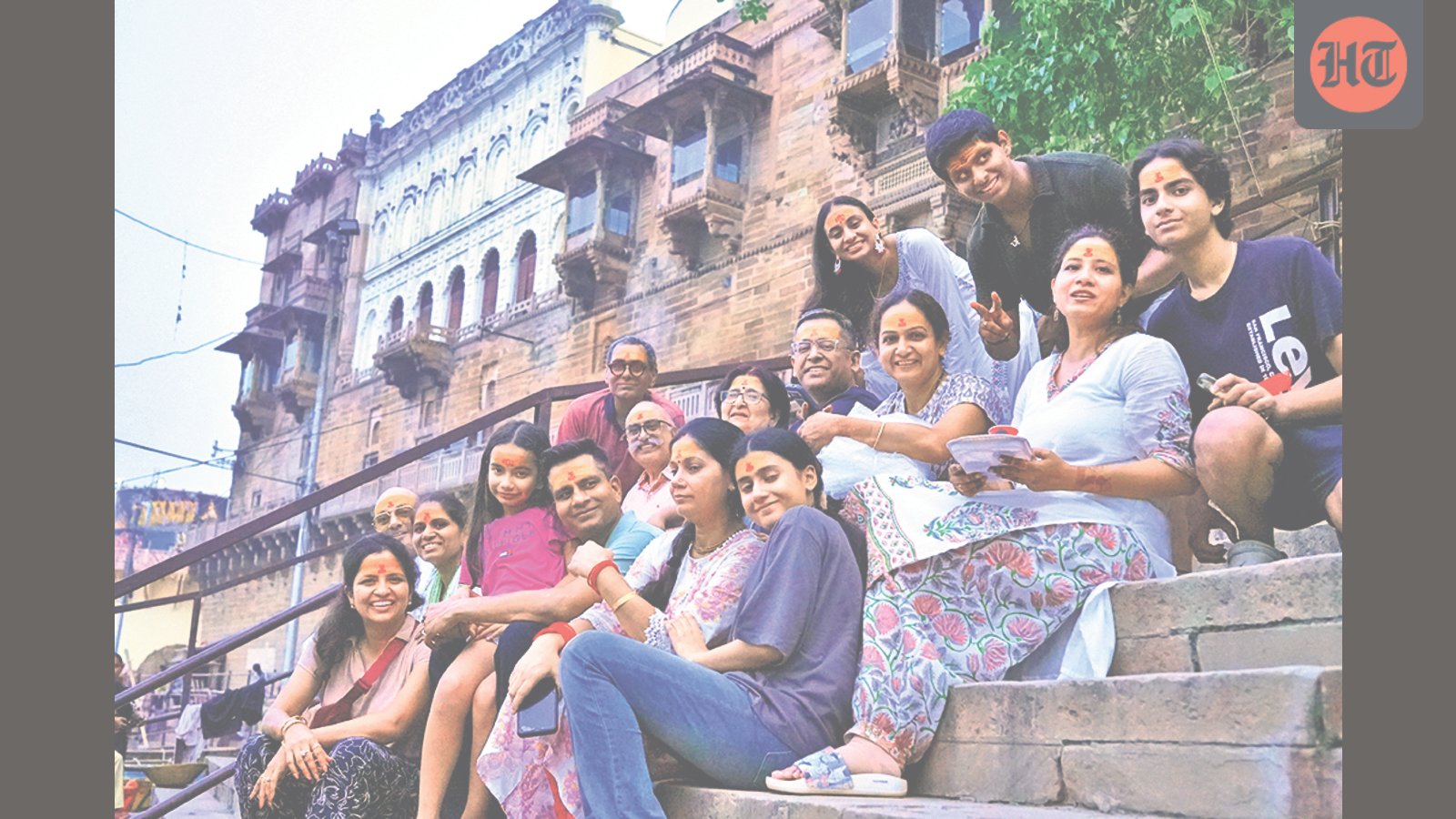
In one documentary, shot during a 50th-wedding-anniversary family trip to Varanasi, Shiv Shankar Sharma and his wife Manju Sharma, their children and grandchildren take turns recounting another trip, when a horde of adults and children crammed into Shiv Shankar’s boxy red van.
Everyone remembers the day they packed 14 people into the vehicle. As his daughter Kamna Sharma, now 38 and a marketing executive, chuckles at the memories, he starts to talk about how he still misses that van. “It was stolen years ago. I never would have sold it,” he says. “We now drive around in a BMW and a Fortuner. I don’t really enjoy these cars as much.”
In another documentary, the Mehras from Gurugram, a couple in their 60s, are at what they call their weekly kar-o-bar meet, driving to late-night food stalls with friends and eating either in their car or at a local dive. Their children, settled abroad, decided to document their daily lives as a gift they could all share in.
“One of the sweetest requests we’ve had came from a woman in Lucknow who was the third child in her family. Her parents didn’t have the means to raise her, so she was adopted by her maternal grandparents. She called asking if we could film them, as a tribute,” KCee says.
The fourth commission came from a group of four siblings looking to make memories in real time. Based across Delhi, Mumbai and the US, they asked Famdocs to capture them with their cousins and relatives, talking about their late parents.
Clips from some of these films serve as samples on the Famdocs Instagram page. But most of KCee’s samples feature stories told by willing friends. Marketing executive Himanshu Gaur, 47, tells an endearing one about his “zen mother”, now-retired schoolteacher Rajul Gaur.
Maggi’s instant noodles had just entered the market in the 1980s, he recalls. Once he had tasted them, he decided this was all he would ever eat. Instead of losing her cool or cracking the metaphorical whip, his mother simply said “Okay”, and Gaur ate the noodles for two days straight. “By the end of that second day, when she handed me Maggi again, I was so done,” he says, laughing. “I wanted rajma-chawal again!”
The pragmatic Indian parent hasn’t changed, KCee adds, laughing.
Many are horrified when they hear how much a child is paying in order to have a stranger record them as they tell the “same old stories”. “They truly don’t understand it. Sometimes the kids try to explain by saying it’s like a pre-wedding shoot. That doesn’t always help,” he says. “They’re still aghast: A pre-wedding shoot for your grandparents?!”
