

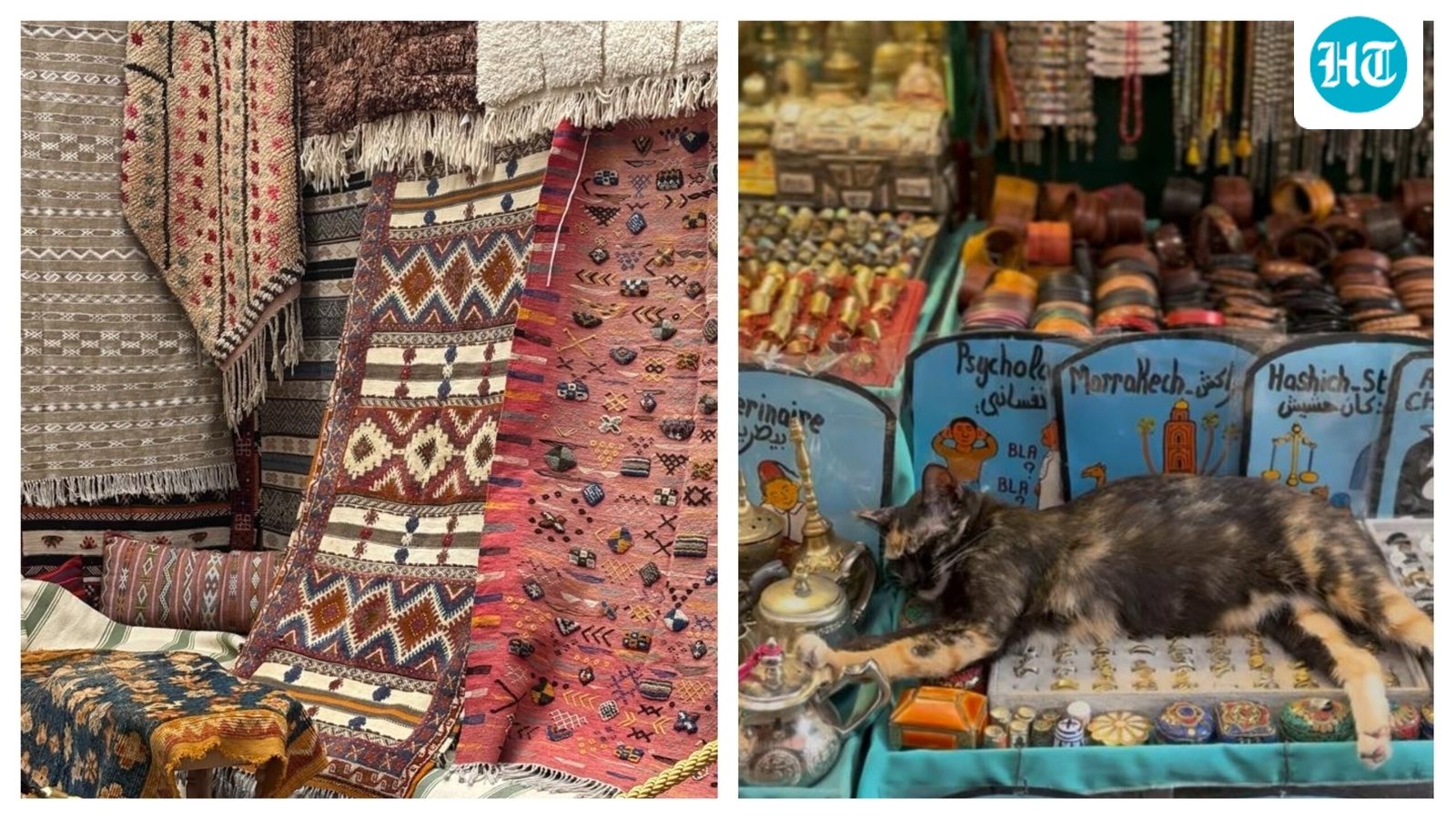
The weakening rupee means Indians have to spend more than ever while shopping abroad. Destinations like the US, Europe, Singapore, Japan, the UAE and Saudi Arabia are packed with luxury brands, but what if you’re travelling on a modest budget and still want to return home with meaningful souvenirs?
Last month, I spent 10 days travelling across Morocco, hopping from one fascinating city to another. From Casablanca and Fes to Chefchaouen, Ouarzazate and Marrakech, every stop offered breathtaking architecture, incredible food and bustling souks filled with handmade treasures. By the end of the trip, I had filled an entire suitcase with purchases that now sit proudly in my home.
Also read: Planning a babymoon in Abu Dhabi? Here’s when to visit and what all to do
Here are the things I think are absolutely worth buying in Morocco.
Rugs
Moroccan rugs are among the country’s most iconic crafts. Traditionally handwoven by Berber tribes in the Atlas Mountains, they are made from soft wool and feature striking geometric patterns, earthy colours and symbols inspired by everyday life. Styles such as Beni Ourain, Azilal and Boucherouite are now sought after around the world for their craftsmanship and timeless appeal.
I bought my first rug on the banks of the Todra River. The shopkeeper, like many others during my trip, welcomed me with enthusiastic chants of “Shah Rukh Khan” the moment he realised I was Indian. The rug itself was impossible to resist—a vibrant tufted piece in yellow, red, black and white. Its compact size meant it wouldn’t eat into my luggage allowance or my budget.
I hadn’t planned on buying another, but during an evening stroll through Ouarzazate I came across a second one that was equally beautiful. Both measured roughly 4×2 feet and cost 500 Moroccan Dirhams (approximately ₹5,000) each.
Back home, they now hang above my dining table as colourful tapestries, instantly becoming conversation starters.
Leather goods
No shopping trip to Morocco is complete without leather goods, especially if you’re visiting Fes.
One of Morocco’s oldest cities, Fes is renowned for its centuries-old leather craftsmanship. The famous Chouara Tannery still processes hides using traditional methods before skilled artisans transform them into bags, slippers, belts, jackets and wallets. Each piece reflects generations of craftsmanship and is prized for its durability and authenticity.
I picked up two leather bags from the Fes souk. The smaller one cost just 100 Moroccan Dirhams (around ₹1,000), while the larger one was 120 Moroccan Dirhams (around ₹1,200).
Whether you’re after a sleek crossbody bag, a roomy tote or a handcrafted wallet, the variety is impressive. They also make excellent gifts without burning a hole in your pocket.
Crockery
Moroccan ceramics are just as irresistible. Known for their vibrant colours and intricate hand-painted designs, they are crafted from locally sourced clay and decorated using techniques passed down through generations. Cities such as Fes and Marrakech are particularly famous for their pottery, featuring geometric, floral and Moorish motifs.
I came home with a pair of handleless coffee mugs from Marrakech for 150 Moroccan Dirhams, something I had been searching for for quite some time. In Casablanca, I found a beautiful dessert plate for 190 Moroccan Dirhams, while a stop at a fossil workshop in Erfoud led me to a pair of marble salt and pepper containers for 180 Moroccan Dirhams.
The ceramics are practical enough for everyday use but beautiful enough to double as décor.
What else should you buy?
Beyond rugs, leather goods and crockery, Morocco is a treasure trove of artisanal products. Argan oil, natural beauty products, handcrafted wooden items, brass lanterns, woven baskets, Berber jewellery and colourful textiles are all worth browsing. Even if you don’t plan on buying much, wandering through the souks is an experience in itself.
What I brought back from Morocco will always remind me of the trip, but what I remember even more fondly are the people. Shopkeepers were warm, curious and eager to strike up conversations. Almost every interaction involved someone asking about Shah Rukh Khan, singing a Hindi song or telling me how much they loved India.
One final tip: bargaining is practically a sport in Morocco. Don’t hesitate to negotiate politely—you’ll almost always walk away with a better price, and it’s all part of the experience.
The author was hosted for a 10-day stay in Morocco by Morocco Tourism.
