

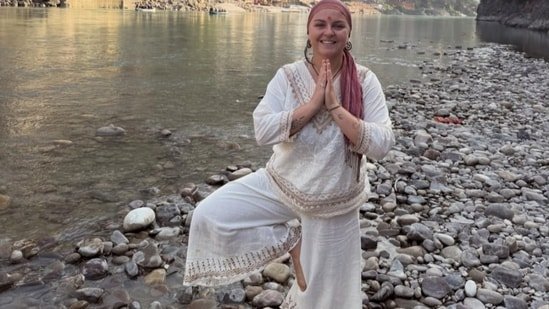
After travelling across India, Irish travel vlogger Ellen McLoughlin shared a list of cultural experiences and everyday observations that left a lasting impression on her. In an Instagram post, she reflected on everything from temple rituals and sacred cows to India’s diverse cultures, chai stalls and flexible road rules, offering a glimpse into what surprised her the most. (Also read: New Zealand travel vlogger shares his ‘brutally honest’ ranking of north India; names this city the most underrated )
India’s temples, sacred cows and spiritual traditions
One of the first things that fascinated Ellen was the devotion she witnessed in Hindu temples. She wrote, “The God is treated like a royal guest and is ceremonially woken and put to sleep on a schedule. The temple will close during the day, or curtains will close for feeding, so the deity can take a rest.”
She also noted, “People offer food for the God to be blessed and then returned to the people as they believe it transforms ordinary food into something sacred.”
Ellen admitted she was amazed by the sight of cows freely roaming Indian streets. “Cows are revered, especially females, because they symbolise life-giving abundance, milk, dung for fertiliser, calves and powered agriculture,” she wrote.
She explained that laws in many Indian states restrict or ban cow slaughter, adding that locals often feed them. What surprised her most was seeing cows in traffic. “It was wild to me… You could see families of cows chilling or sleeping in the middle of a highway. Trucks, lorries and cars happily drive around them. They seem to cause little chaos and people are used to them walking in the middle of roads.”
‘What is a baba’
The travel creator also explained the concept of a baba, something she found unique to India. “A ‘baba’ is usually a holy man, spiritual teacher or someone who gives up typical worldly life, such as wealth, status, family, sex or career, to pursue a religious or spiritual path full time.”
She added, “In return, society supports them with food or donations as they are seen to be pursuing spiritual truth on behalf of everyone else. Some are genuine ascetics living in poverty, while others may perform holiness as a survival strategy.”
Among all her experiences, India’s spiritual culture left one of the strongest impressions. “Blown away and truly inspired by the daily devotion of the people with their faith,” she wrote.
She continued, “Hundreds of rituals along Ma Ganga, daily fire pujas and temple visits. Many homes have temples and there are so many festivals where most people won’t work. I loved that even young people were so devoted because it’s made fun, dancing and singing in temples. Wholesome, beautiful energy.”
From honking and chai to diverse cultures
Ellen confessed that India’s constant honking initially felt overwhelming but quickly realised it served a different purpose. “Everyone honks the horn as communication, to let the person know they are overtaking. This is NOT out of anger or frustration, it is for safety and actually works very well. I definitely feel safer on the crazy roads using this tool.”
She also observed, “The rules of the road are more flexible than strict. I was on the highway and there was a huge bus driving down the wrong side of the road… people are chill about it, they just move around each other with ease.”
Ellen also couldn’t get over India’s love for tea. “Chai wallahs are all over, roadsides, train stations… no matter how high you climb in the mountains, you’ll be able to buy a chai and a snack. This was so funny to me.” She added that some tiny roadside stalls even stay open 24 hours so people can enjoy chai whenever they want.
The Irish traveller was struck by India’s incredible diversity. “You could go 30 km down the road and the language would be different. Food, clothes, traditions, it all varies, and this is beautiful. Most Indians speak four or five languages. It is incredible to witness them interchange language so easily.”
India challenged her perceptions about religion, wealth and lifestyle
Ellen admitted she expected to see Hinduism, Buddhism and Islam, but was surprised by the size of Christian communities, especially in South India. “I did not expect so many Christians, especially in South India. Culturally, Indians seem to be much more loud and proud Christians than in Ireland, with singing, dancing, processions and large feast day celebrations.”
She also encouraged people not to make assumptions about wealth in India. “Of course, there is extreme poverty in India. However, don’t assume people have little money just because they live in India. India is an extremely wealthy place, and I realised a lot of people do very well for themselves.”
Another observation was India’s connection to yoga and traditional healing. “A lot of Indians grew up deeply connected to yoga, not just the physical postures westerners associate with it, but also to themselves, plants and what we would call the original medicines.”
Ending on a light-hearted note, Ellen joked about punctuality. “‘Indian time’ really does exist. People are culturally much more laid back when it comes to time. NOTHING EVER HAPPENS ON TIME… EVER. For any Type A people… be warned!”
Note to readers: This article is for informational purposes only. This report is based on user-generated content from social media. HT.com has not independently verified the claims and does not endorse them.
