

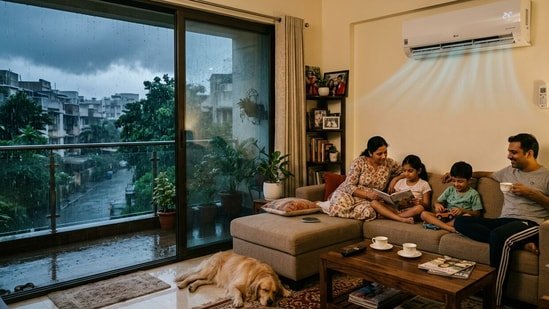
Monsoon has arrived in India. While rains have always been romanticised, they come with their own share of problems, especially if you have to commute to your work every day amid waterlogged roads. But if you stay at home and use an air conditioner (AC) for a long time, you should be aware that the habit comes with its own set of health problems.
Dr Murtaza S Bagwala, head of emergency medical services at Saifee Hospital in Mumbai, in an interview with HT Lifestyle, listed the most common health problems linked to prolonged AC use during the rainy season.
According to him, during the monsoon, AC provides comfort by reducing humidity and improving indoor air quality. However, using them for an extended period without proper maintenance or sensibly can lead to several health issues.
What are the most common health problems linked to prolonged AC use during the monsoon?
Dr Murtaza listed the common problems associated with an air conditioner during the monsoon:
Air conditioners can make the air very cold and dry, which can irritate your nose and throat and increase your risk of viral infections. If the air conditioner filters are not clean, they can spread dust, mould spores, and bacteria, worsening your symptoms when using the air conditioner.
Dirty air conditioner filters can trap allergens like dust mites, pollen, and mould, then spread them throughout the air, causing sneezing, nasal congestion, itchy eyes, and coughing, especially in people with allergies to air conditioners.
- Asthma and COPD flare-ups
Air conditioners can make the air very cold, which can trigger wheezing, breathlessness, and coughing in people with asthma or chronic pulmonary disease.
Being in an air-conditioned room for a long time can dry out the air, leading to dry eyes, irritated skin, and cracked lips.
Cold air can irritate your nose and make it congested. If the air conditioner is not working well, it can make the air damp and full of mould, which can lead to sinus symptoms.
- Muscle and joint stiffness
Sitting in a cold room with air conditioners for a long time can make your muscles and joints stiff, especially if you have arthritis or other muscle problems from prolonged use.
If the room is poorly ventilated, you can get headaches and feel tired after sitting in an air-conditioned room for a long time.
How to use your air conditioner safely without hurting your health?
According to Dr Murtaza, to stay healthy while using an air conditioner and save energy, keep the temperature between 24°C and 26°C for comfort. Meanwhile, Dr Mahavir Modi, chest physician at Ruby Hall Clinic, Pune, cautions that using AC the wrong way can make us feel uncomfortable and unhealthy.
He explains, “One mistake people make is setting the temperature too low. A comfortable temperature of around 24 to 26°C is usually good. It helps prevent temperature changes that can give you headaches, throat pain or breathing problems, especially for kids, older people and those with breathing issues.”
It’s also important to maintain the air conditioner itself. Dr Mahavir stresses that dirty filters can collect dust, mould, and allergens, which then spread inside and can make allergies, asthma, or sinus problems worse. He suggests cleaning the filters often and servicing the unit as recommended to keep the air inside healthy.
He also cautioned against not ventilating the room, and said, “People often spend a lot of time in air-conditioned rooms with little fresh air, when they can open the windows for a time to let in some fresh air and improve air circulation.”
Drinking water is also a simple yet often-forgotten habit. Being in air-conditioned spaces for a time can make your skin, eyes, and nose feel dry, Dr Mahavir highlighted.
Note to readers: This article is for informational purposes only and not a substitute for professional medical advice. Always seek the advice of your doctor with any questions about a medical condition.
Dr Murtaza S Bagwala is the head of emergency medical services at Saifee Hospital in Mumbai. He has completed the MRCEM in Emergency Medicine with the Royal College of Emergency Medicine.
Dr Mahavir Modi is a chest physician at Ruby Hall Clinic in Pune. He has studied interventional pulmonology at the University of Ancona in Italy.
