

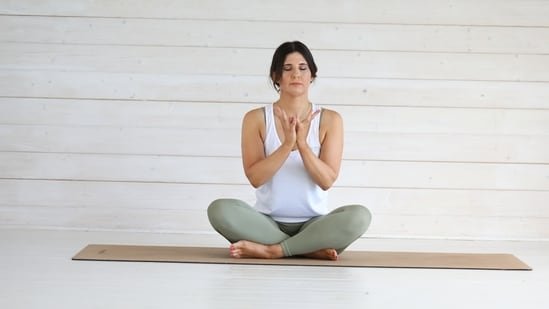
Stress and anxiety have grown more frequent due to the complexity of our modern problems and the numerous dynamic elements at work in our daily lives. In many cases, they are a primary cause of illness.
Practising yoga for a few minutes each day may help calm the mind. Yoga influences both the body and the nervous system. Studies have found that regular practice may lower perceived stress, improve sleep quality and promote emotional regulation.
Experts say slow, restorative postures with steady breathing activate the body’s relaxation response and reduce physical tension. Gentle poses that encourage relaxation are particularly helpful for beginners and those looking to unwind after a busy day.
10 yoga poses that may help calm the mind
1. Easy Pose (Sukhasana)
A simple cross-legged seat supports meditation and breathing exercises. It is often used to begin or end a yoga session and can be done for about 5 minutes.
The Sukhasana provides many health advantages for the whole body, such as strengthening the back and core, stretching the knees and ankles, and improving mental peace. This position is ideal for pranayama and seated meditation.
2. Child’s Pose (Balasana)
This resting posture stretches the back and hips and can help release neck and shoulder tension. The Balasana is also known to calm the nervous system when done for 1-3 minutes.
Folding the body within itself initiates a cooling, calming, and grounding action, according to Banyan Botanicals. This can help you start practicing pratyahara, or the retreat of the senses, and bring your energy inward.
3. Cat-Cow Pose (Marjaryasana-Bitilasana)
This gentle spinal movement coordinates breath with motion.
The back muscles are relaxed by the movement of your spine when you inhale and face up with an arched back. As you round your back, exhale, and face down, your breathing stabilizes.
The Cat position (Marjaryasana), which leads to the Cow stance (Bitilasana), can be performed 10–20 times a day to foster mindful awareness and relieve stiffness.
4. Downward Dog Pose (Adho Mukha Svanasana)
Adho Mukha Svanasana is an asana in reverse yoga as a form of physical activity in yoga. It is frequently used as a part of a fluid series of poses, particularly the Surya Namaskar, the Sun’s Salute.
The exercise aids in releasing stress and awakening your legs. The calves and hamstrings benefit from the deep stretch when done for 30-60 seconds.
5. Low Lunge Pose (Anjaneyasana)
The Anjaneyasana stance requires you to concentrate on your breath, alignment, and body sensations, just like the majority of yoga poses.
To do this pose, one knee should be on the ground, the other foot should be front, and the arms should be up.
The parasympathetic nervous system, which is the rest-and-digest mode that helps lower stress and anxiety, is triggered by this thoughtful attention, which also automatically silences the mind’s chatter if done for 30-60 seconds on each side.
Read more: Yoga expert shares relaxing 10-minute bedtime yoga routine for better sleep and stress relief
6. Warrior II (Virabhadrasana II)
Virabhadrasana II, also known as Warrior II, is a powerful, expansive standing posture that increases attention, stability, and endurance.
As you look over your front fingertips, the arms and hips open to Warrior II. The asana helps develop focus as it improves drishti, or the steady gaze, as you exhale and inhale 3-5 slow breaths.
7. Tree Pose (Vrksasana)
Many of us experience weakness and instability in our bodies and minds as a result of stress and anxiety.
Just like a tree, Vrksasana helps you find your firm center, reestablish a connection to your roots, and develop a sense of strength and power.
This may all be accomplished through standing balancing poses with your right foot either on the calf or upper thigh of your left leg, and drawing the hands together in front of your heart in prayer position.
8. Wide-legged forward fold (Prasarita Padottanasana)
Wide-Legged Forward Fold, also known as Prasarita Padottanasana, is a grounding standing pose that calms the nervous system and extends the entire back.
This posture provides release in the hamstrings, back, and neck by spreading the legs wide and extending the spine forward and downward if done for 3-5 minutes.
9. Butterfly pose (Baddha konasana)
This sitting forward fold is an essential position for developing patience and surrender.
You sit tall on your mat with your feet together and let your knees drop toward the mat. When done for 3-5 minutes, it gradually encourages the release of deeply held tension in the groin and adductor muscles.
10. Corpse Pose (Savasana)
It seems obvious that this would be included on the list of important postures for calming the mind and nervous system.
Savasana’s benefits include disengaging the sympathetic nervous system, lowering blood pressure, relaxing stress and tension in the muscles of the entire body, and assisting the mind in being calm.
Disclaimer: Yoga may support relaxation and overall well-being, but it is not a substitute for medical treatment or professional mental health care.
