

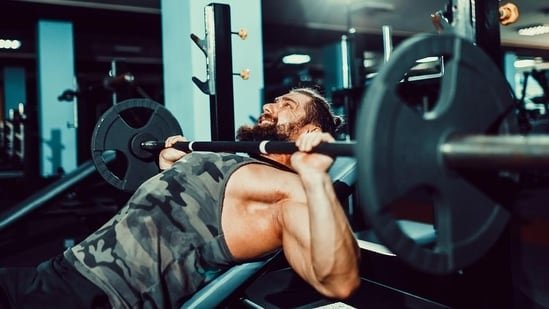
Strength training helps build muscle, but its benefits go beyond just looking strong at the gym. After you hit the age of 30, weightlifting becomes more important because the body starts to lose muscle and bone density. These changes can impact strength, movement, metabolism, and long-term health.

“An important but often-ignored health issue in India is muscle loss after age 30 and its effects on overall health. Losing muscle can lower metabolism, strength, and mobility over time. One effective way to help people fight these changes as they age is to use orthopaedic devices,” Orthopaedic surgeon Dr Manan Vora tells Health Shots.
At what age does a person start losing muscle mass?
Sarcopenia is a serious health issue in India that many people ignore is the gradual loss of muscle mass that usually starts after age 30. This loss affects our strength and our ability to move. It also slows down our metabolism. “Muscles play an important role in regulating glucose levels in the body. When muscle mass decreases, the body struggles to control glucose effectively. This metabolic slowdown can lead to weight gain and other health problems over time,” says Dr Vora.
“Doctors often tell you to eat well and sleep well, but they usually don’t mention this. After age 30, your body starts to lose muscle without you noticing. This loss is called sarcopenia, and it’s a big health issue in India that many people overlook. Losing muscle also slows down your metabolism. So, even if you eat the same amount of food, your body starts to store it differently, and you may gain weight without realising it comes from muscle loss,” the surgeon explains.
Why is bone density important as you age?
As we age, it is important to monitor bone density and muscle loss. Over time, our bones can gradually lose strength and become more fragile, often without obvious signs. Many people don’t realise they are developing osteoporosis until they suffer a fracture from a minor injury or fall, which shows that their bones have already weakened significantly.
“As you get older, your bones become thinner and more fragile. Osteoporosis doesn’t give you warning signs. It can suddenly cause a fracture from a fall that shouldn’t have been serious,” the surgeon explains.
Does weightlifting prevent bone loss?
The best way to prevent muscle and bone loss is through strength training, especially heavy lifting. However, just lifting weights isn’t enough. “To be effective, the weights must truly challenge your muscles. This helps your body adapt, build strength, and keep muscle mass and bone density over time,” says Dr Vora.
“The best thing you can do to combat these issues is to lift heavy weights. Strength training is crucial for your health, not just for looking good. It helps protect your metabolism, bones, and overall long-term health. I want to be clear: if the weight you are lifting isn’t challenging you, it won’t help you. Your body only gets stronger when you face new challenges,” emphasises the doctor.
The importance of starting strength training, which can be helpful at any age or fitness level. “If you are new to exercise or coming back after a break, regular strength training can help you build muscle”, says Dr Vora. This can maintain your mobility, support your bone health, and keep your body functioning well as you age.
“Start strength training at any age and any fitness level. The important thing is to start (under supervision for safety). Strength training helps your body work well when you are 50, 60, 70, and older,” says the doctor.
(Disclaimer: At Hindustan Times, we help you stay up-to-date with the latest trends and products. Hindustan Times has an affiliate partnership, so we may get a part of the revenue when you make a purchase. We shall not be liable for any claim under applicable laws, including, but not limited to, the Consumer Protection Act, 2019, arising from the products. The products listed in this article are in no particular order of priority, and the brands have not been directly suggested by the expert mentioned.
This article is for informational purposes only and is not a substitute for professional medical advice. Always seek the advice of your doctor with any questions about a medical condition.)
