

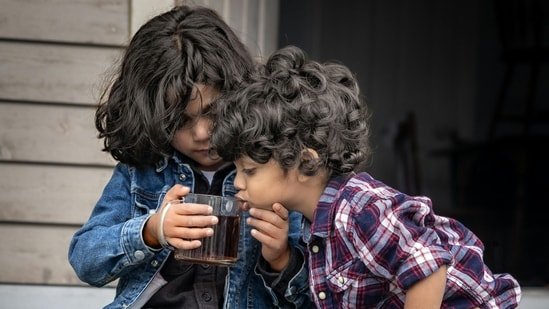
People often wonder why siblings growing up in the same household often associate with their childhoods in different ways. In 2025, Dr Gabor Maté, a Canadian physician, author and addiction expert, shared his views on the subject while appearing on The Mel Robbins Podcast.
Also Read | Therapist explains how this overlooked childhood experience can affect your relationships for years
In a clip from the episode that was shared by @melrobbins on Instagram on August 13, 2025, Dr Maté is seen explaining that even though siblings may grow up in the same household, they do not experience the same home during their childhood.
In his words, “No siblings grow up in the same house. No siblings have the same parents. No siblings have the same family. No siblings have the same childhood.” The reasons he gave for the three statements are as follows.
1. Order of birth
The order in which the children are born greatly shapes their experiences of their childhood, as the approach of the parents to their first kid is bound to be different from the way they approach their second.
In Dr Maté’s words, “Number one, there’s the birth order. Parents don’t relate to the first child the way they relate to the second child. Then there are gender differences. I’m not talking about whether the parents love the kids or not. I’m talking about what actually happens. The child doesn’t experience the parents’ love; the child experiences the way the parent shows up.”
2. Different circumstances
The second factor that makes the childhood of siblings different is changes in the family’s situation, be it economic or otherwise.
“Number two, the parents’ relationship might be in a different phase with one child than another. Then the parents might be in a different economic situation. The parents’ lives might be different,” shared Dr Maté.
He also shared that each child evokes a different response from the parents, which is often influenced by these other factors. It might not be because the parents love one child more than the other, but simply because they were inclined to respond to them differently.
3. Different temperaments of children
The third significant factor, according to Dr Maté, is the different temperament of the children themselves. As he explained, “Children are born with different temperaments, which (means) they experience the world differently. So even if I could be the same parent to all my kids, which I couldn’t be, they still have three different parents because they would experience me differently.”
Ultimately, as the caption to the Instagram post stated, “It’s not about who is loved more. It’s about how that love is expressed — and how each child experiences it.”
Note to readers: This article is for informational purposes only. This report is based on user-generated content from social media. HT.com has not independently verified the claims and does not endorse them.
