

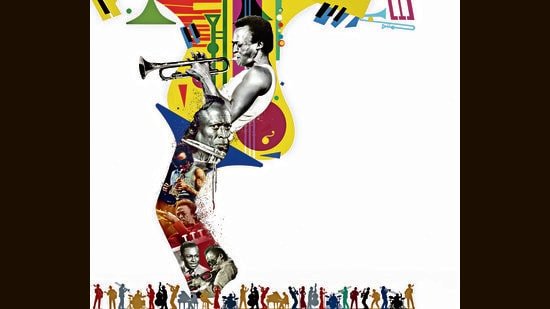
It was sometime in the late 1970s, on a woozy summer afternoon in a city I no longer live in, that a much older friend — someone I admired and looked up to — put a record on that stopped me where I sat.
The room was warm, the light was thick, and the music that came through the speakers had a quality I had no vocabulary for: orchestral but intimate, melancholy but never sentimental, dense with texture and yet utterly spacious. The trumpet (and I understood even at age 17 that it was a trumpet) sounded less like a brass instrument and more like a human voice at the very edge of speech, pressing against some inexpressible barrier, reaching for something just beyond language.
The album was Porgy and Bess (1959). The trumpeter was Miles Davis.
I was discovering an artist who had already been reshaping music for three decades. Miles was still alive as the needle touched the groove that afternoon, but he was in the midst of one of his deliberate silences. This retreat from public life would last nearly six years, from 1975 to early 1981.
Even in absentia, he sounded like the future.
I would soon learn more about the album: how Davis and the brilliant arranger Gil Evans reimagined George Gershwin’s folk opera about a crippled beggar and his doomed love, transforming it into something brooding, modal and quietly devastating. The familiar Summertime, with its arching melodies, was made entirely strange.
It remains, to my ears, perhaps the finest of the three great Davis-Evans collaborations (the other two being Miles Ahead from 1957, and Sketches of Spain from 1960). It was also the record that, for me, opened the door to one of the 20th century’s most extraordinary musical minds.
THE QUESTION OF LASTING
Miles Davis was born on May 26, 1926, in Alton, Illinois.
A centenary year is a good time to ask the serious questions. Not just to celebrate (though celebration is warranted), but to seek the answers that serious music demands: Will this last? Will Miles Davis be listened to in another 100 years, the way we listen to Beethoven or read Shakespeare, as a primary, inexhaustible cultural resource?
Or will he, however beloved, be a period figure, his sound the artefact of a particular American moment that future ears can admire but no longer feel?
My instinct, sitting with these questions, is that he will last. I’m happy to make my arguments for why.
THE MAN WHO REFUSED TO BE ONE THING
What kept Miles from being simply a great musician was his refusal to be just one thing.
The Picasso of Jazz is the shorthand for what he was, and it is apt. He reshaped the form not once but, depending on how you make the count, five or six times.
He left home to study at Juilliard and arrived in New York in 1944, dropping out soon after to study bebop at its fountainhead, Harlem, learning the language from Dizzy Gillespie and Charlie Parker.
By the late 1940s, uninterested in fire-breathing virtuosity and lacking Dizzy’s stratospheric range, he was already pivoting. The 1949-50 Birth of the Cool sessions — a nonet of exceptional artists playing chamber-jazz arrangements — introduced a restraint and refinement that would define a whole subgenre. Davis was 23.
Then came what many consider the most important jazz album ever recorded. Kind of Blue (1959) didn’t merely expand jazz but changed its grammar. Moving from “vertical” improvisation, in which players navigated dense, rapidly changing chords, to a “modal” approach — playing over a single scale for extended periods — Miles created space, emotion and a new kind of conversational possibility between musicians.
Pianist Chick Corea said it “practically created a new language of music”. It remains the best-selling jazz record of all time, and the roster of artists it influenced crosses every genre boundary: the Allman Brothers listened obsessively to it in the ’60s; the horn lines of James Brown’s Cold Sweat (1967) borrowed directly from its opening track, So What; Pink Floyd’s Richard Wright said it shaped the atmosphere of Dark Side of the Moon (1973). Over half a century later, Kendrick Lamar’s To Pimp a Butterfly (2015) brought jazz musicians raised on Kind of Blue into the modern hip-hop mainstream.
Meanwhile, by the time of Dark Side of the Moon, Davis had already blown up his own creation twice more. With the two Great Quintets — the first featuring the volcanic young John Coltrane (1955-59) and the second the thrilling telepathy of Wayne Shorter, Herbie Hancock, Ron Carter and the incendiary drummer Tony Williams (1964-68) — he was developing what musicians called “time, no changes”: improvisation liberated from fixed harmonic structures, governed entirely by instinct, attentiveness and trust.
Herbie Hancock, in a now-famous account, describes playing what he was certain was the wrong chord during a 1964 concert in Stuttgart. Davis, rather than flinching, simply played a line that made the chord sound inevitable. There are no mistakes, was the lesson. Only opportunities.
Then came the electric storm: Bitches Brew, in 1970. Plugging in, with a Fender Rhodes replacing the acoustic piano, electric bass replacing the upright, and with studio editing techniques borrowed from rock, Davis invented jazz fusion and effectively wrote the template for an entire strand of progressive music.
Then, in the maligned and underrated 1980s, he leaned into synthesisers, drum machines and hip-hop. His final studio album, Doo-Bop, released posthumously in 1992, found him collaborating with hip-hop producer Easy Mo Bee, layering his muted trumpet over street-level breakbeats. He died in 1991, from pneumonia and a stroke. Aged 65.
He was moving to the end.
RECORDS TO RETURN TO
I find myself going back, over and over, to A Tribute to Jack Johnson (1971), a ferocious, extended meditation on the life of the great Black boxer whose swagger and style Davis openly identified with, dressing sharp and driving fast cars in conscious imitation. It strikes me as more viscerally thrilling than even Bitches Brew.
Walking through Helsinki, where I live, in all four seasons, savouring the changing light, I turn to Jack Johnson’s relentless, churning rhythm and feel the city transform around me.
Sorcerer (1967), often overlooked, is the second quintet at its most cerebral and collaborative, Davis letting Hancock and Shorter lead compositionally while the band plays with an almost telepathic intensity.
On the Corner (1972), scorned on release and now rightly acknowledged as visionary, is funk, Indian percussion and experimental studio editing decades ahead of its time. Miles Ahead (1957), on which Davis plays flugelhorn exclusively over a 19-piece orchestra in that first great collaboration with Gil Evans, is a masterwork of what was called Third Stream music — jazz and classical in genuine, unstrained dialogue.
Each of these sounds like a different artist. That is the point.
THE DARKER LEDGER
Davis was not a comfortable man to celebrate, and honesty requires that we sit squarely with that discomfort. He battled prejudice all his life, refusing to play segregated shows, beaten and arrested by the police outside a venue where his name was on the marquee. The injustice as naked as it was routine. He battled brutal physical decline in his final years, playing through considerable pain with a burning curiosity that never dimmed. He was buried with a black trumpet.
But there is a darker accounting too, one that his admirers sometimes prefer to footnote: he was, by most accounts, a cruel and controlling partner in his personal relationships, prone to violence against the women in his life. He was a neglectful father, and an abusive husband.
Genius does not compensate for moral failure. The ledger has to hold both, without one cancelling out the other.
WHAT THE MUSIC ARGUES
What I keep returning to is something that exceeds biography.
Jazz musician Terence Blanchard, hearing Miles Davis for the first time at 15, said he understood immediately that jazz should never stand still; it should always be growing. Brandon Woody, the young American trumpeter, captures something even more profound: “The intensity is not in the volume. It’s in the intention.”
That intention is what will last.
Shakespeare endures because he wrote about the universal and eternal in human experience: ambition, love, betrayal, guilt, regret. Bach endures because his structures feel like discoveries rather than inventions — laws of nature expressed in sound.
The question for Davis is whether his sound operates at that level of necessity and, hence, longevity.
I believe it does, in a way that is all its own.
His enduring gift is not simply a canon, but a method, a philosophy, a way of being in music and, by extension, in life. Rarely the most technically dazzling player in the room, he was the most inventive and intentional. He heard what each artist could become and drew it out through pressure, through space, and through what he deliberately left unsaid.
“I have to change,” he once said. “It’s like a curse.” That restlessness and refusal to settle, the conviction that comfort was a form of artistic death, is a permanent statement about what art should demand of itself.
All this time later, Davis sounds contemporary not because the music is timeless in some vague, undefinable sense, but because the questions it asks remain unanswered: How much can a single melody sustain? What lives in the silence between notes? How does a group of fallible individuals make something together that none of them could make alone?
Those questions will outlast all of us. So will the legend of the man who asked them.
.
THE MILES PLAYLIST: 10 TRACKS THAT TELL THE STORY
By Sanjoy Narayan
(Click here to listen as you read)
* Four (1954)
An early statement of intent, recorded with a quartet featuring Horace Silver, Percy Heath, and Art Blakey, this track established the tempo, swagger and 32-bar structural confidence that would define Davis’s voice for years to come. Jazz saxophonist Sonny Rollins called it one of the compositions that “set the pace for jazz to come”.
* Summertime (1959; from Porgy and Bess)
Gil Evans’s orchestration wraps around Davis’s muted flugelhorn like fog around a lamp, and George Gershwin’s most familiar melody is made brooding, strange and entirely new. Many consider this the finest jazz interpretation of the song ever recorded, and it remains the record that introduced countless listeners to the world of Miles Davis.
* So What (1959; from Kind of Blue)
The opening bass figure, then the horns answering, then Davis entering with that unrushed, spacious phrase — few moments in recorded music are more instantly recognisable. Built on just two modal scales, it dismantled the harmonic complexity of bebop and replaced it with something more open, more emotional, and ultimately more influential.
* All Blues (1959; from Kind of Blue)
Often overshadowed by So What, All Blues represents the modal approach at its most lyrical and blues-soaked, Davis playing with a warm directness that cuts straight through. It is the track that reminds you, amid all the intellectual structure, that this music was always also about feeling.
* Nefertiti (1968; from Nefertiti)
This is a Wayne Shorter composition, but Davis and the Second Great Quintet make it entirely their own, the melody repeated over and over while Tony Williams’s drums move restlessly beneath it, creating an almost hypnotic tension. It is the sound of a band so locked in, they seem to communicate in a private language.
* Sivad (1971; from Live-Evil)
Davis on a wah-wah pedal, sounding uncannily like a guitar. Jazz trumpeter Yazz Ahmed has noted that the rhythmic phrasing of the opening line is “reminiscent of early hip-hop, a few years before hip-hop was even in popular consciousness”. This is a radical, disorienting overture that announces the electric era with full conviction.
* Right Off (1971; from A Tribute to Jack Johnson)
Twenty-six minutes of controlled ferocity. John McLaughlin’s guitar locked into a groove that doesn’t release, Davis riding over it with a freedom and aggression that feels genuinely dangerous. This is the record that sounds best walking around a city in all weathers; the one that makes the architecture move.
* On the Corner (1972; from On the Corner)
Dismissed on release, now recognised as prophetic, the rhythm is everything here, layers of percussion and electric texture prefiguring drum ’n’ bass by two decades. Davis recorded it to reach a younger Black audience listening to Sly Stone and James Brown. The music sounds like it knows exactly where it’s going, even if the critics of the time did not.
* Time After Time (1985; from You’re Under Arrest)
Here, Davis plays Cyndi Lauper, and makes it sound like the most natural thing in the world. His muted trumpet strips the pop song down to pure melody and longing, demonstrating that his genius was never about genre but about finding the emotional core of any track, and speaking directly to it.
* Blow (1992; from Doo-Bop)
His last recorded work, released after his death, finds Davis’s trumpet floating over hip-hop breakbeats produced by Easy Mo Bee. This is not a nostalgic farewell but a genuine forward reach into music he saw as the next conversation worth having. That he was still curious, still racing forward, to the very end, is perhaps the most Miles Davis thing of all.
