

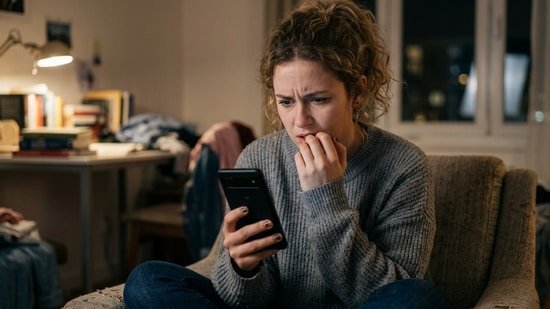
Are you back from a romantic date, whether it is an artsy museum date, a cosy candlelight dinner or a fun cafe hopping? You send a text saying you had a good time but now their ‘last seen’ has you in a chokehold. Or not solely for a new connection, unexpected ghosting is common in later stage of talking stage or situationships. You keep checking it again and again, biting your nails, double-checking with friends, while the knot in your stomach intensifies and your heart leaps every time there is a ping, only for it to turn out to be a food delivery app notification.
Sad, but almost everyone has been there, in some capacity or the other. But this innocuous habit of checking someone’s last seen, whether it is a date or anyone else even, can actually impact your wellbeing.
Let’s understand what exactly goes on in your mind when you feel compelled to check your phone for hours on end. For this, we asked Noya Giri, clinical psychologist at Maarga Mindcare, Gurugram, to break down the repercussions.
She believed such habits are common among people who seek a lot of reassurance, validation and emotional comfort externally, relying on others for their sense of self. In such cases, self-worth begins to depends on how someone else responds, rather than how one feels about oneself.
This quickly escalates into overthinking. A delayed response draws thoughts like, ‘Why are they not responding?’, ‘Are they ignoring?,’ Did I say something wrong?’ or even ‘Am I the problem?’
What happens when you continue checking last seen?
What is the emotional toll of this vicious ‘last seen’ cycle? It can almost feel like a purgatory? You know the habit is hurting you, you know you should stop, but you still find yourself going back to check again.
The psychologist expressed concern that this behaviour can trap a person in a cycle of anxiety. “Emotionally, this pattern wears a person’s security and sense of self over time. Which in return impacts their sleep, concentration, mood, their confidence and overall peace of mind,” she said.
One of the biggest hits is sleep, and we all know that sleep acts as the foundation of good health. So, if you frequently find yourself in a relationship where communication is in inconsistent, leaving you grasping at ‘last seen’ for answers and losing sleep over it, it may be time to put yourself first and re-evaluate whether this connection is truly worth keeping.
To put things into perspective, poor sleep can single-handedly throw the body’s equilibrium off balance. For short term side effects, next day, poor sleep makes you tired, groggy next morning with poor focus. Add to this irritability, headache, food cravings and low motivation. All that worth it for a dating app connection who says ‘hi’ after 12 hours. Definitely not a great emotional investment where health is at stake.
Long time side effects include the risk of chronic ailments such as cardiovascular issues, obesity, and diabetes. A study published in eBioMedicine, part of The Lancet Discovery Science, on September 30, 2025, identified poor sleep as one of the reasons for premature brain ageing. Sleep disturbances set the path for neurogenerative diseases like dementia in future because of accelerated ageing.
What should you focus on?
There’s a silver lining, as the psychologist urged people to look at the positive side: late replies may not always mean rejection, disinterest or lack of care. The other person may simply be busy, tired, stressed, distracted or taking time for themselves. But when someone is anxious emotionally, the mind tends to leap to the worst-case scenario before they learn the truth.
What should a healthy connection be then? Noya answered, “Healthy connections should be based on trust, patience, communication, and emotional balance, and not on monitoring. It is vital to think about whether you check something because you truly miss that person or do it in order to relieve some of your tension.”
Note to readers: This article is for informational purposes only and not a substitute for professional medical advice. Always seek the advice of your doctor with any questions about a medical condition.
