

Medical emergencies can happen suddenly, leaving people people with little to no time to prepare. A situation can unfold within seconds and may rapidly escalate if immediate action is not taken. In such moments, people begin panic and unsure about what to do. This is why awareness and basic first-response knowledge are extremely important as the right section taken in the first few minutes can potentially save a life. The emergencies can vary in severity, whether someone collapsing, struggling to breath, bleeding heavy or showing signs of a stroke or heart attack. You never know when a medical emergency may strike, so it is always better to be prepared.
For better clarity on what the first response should be during a medical emergency, Dr Ankit Desai, leading paediatric anaesthetist and founder-director of Children’s Anaesthesia Services shared with us on what the immediate steps should be during medical situations.
The doctor described how medical emergencies may trigger panic and confusion, unsure about the right steps. For this, one needs to first stay calm and approach the situation with clarity.
Dr Desai said, “The first five minutes of a medical emergency are not just about the medical expertise but about clarity, action and prioritization. Panic is quite natural, but preparation and awareness help in transforming panic into purposeful response.”
When you understand how to respond in advance, you act more calmly and may possibly save a life before professional help even arrive.
Here’s his detailed guide covering 10 immediate steps on what the first response during a medical emergency should be:
1. Pause, observe, and ensure safety
- The first move is mostly to rush in, but the very first step should always be to assess the environment.
- One should check for immediate dangers like fire, electrical hazards, traffic or chemical exposure. Helping someone while putting yourself at risk can worsen the situation.
- Once the area is safe, quickly observe the state of the person: Are they conscious? Are they breathing normally? Is there visible bleeding or injury?
- This quick assessment is useful in determining the severity and the next steps.
2. Call for emergency help immediately
- After the occurrence of a medical emergency, call the local emergency number without any delay.
- In India, dial 112 for general emergencies or 108 for ambulance services in many states.
- When speaking to emergency responders, clearly mentioning the location, describing what happened, explaining the person’s condition, whether he is unconscious, not breathing, bleeding, etc and following instructions carefully can be quite useful.
- If others are present, divide the responsibilities like ask someone specific to call emergency services rather than assuming it’s been done.
3. Check responsiveness and breathing
- Approach the person and then gently tap their shoulder and ask, ‘Are you okay?’ if there is no response, then check for breathing.
- Check for the chest movement, airflow from the nose or mouth and any unusual breathing pattern (gasping or very shallow).
- If the person is unresponsive and not breathing normally, this is a life-threatening emergency requiring immediate CPR.
4. Begin basic life support (if needed)
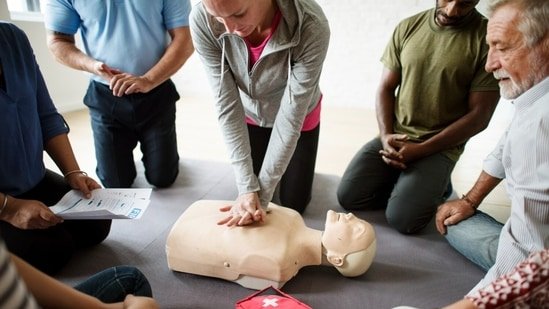
- Begin the cardiopulmonary resuscitation (CPR) if the person is not breathing or has no pulse immediately.
- Place your hands in the middle of the chest, push hard and fast about 100-120 compressions per minute and allow full chest recoil after each compression. T
- hen continue until help reaches or the person regains consciousness. If you are trained and an Automated External Defibrillator (AED) is available, use it as soon as possible.
- Even if you are not trained, chest compressions alone can help in increasing the survival chances in cases of cardiac arrest.
5. Control severe bleeding
- Uncontrolled bleeding is likely to become fatal within a few minutes. When one sees heavy bleeding, apply firm, direct pressure while using a clean cloth or bandage.
- Do not remove the cloth if it gets soaked, and add more layers on top. If possible, elevate the injured area above heart level and maintain the pressure until medical help arrives.
- Tourniquets should only be used in extreme cases when bleeding cannot be controlled otherwise.
6. Help someone who is choking
If the person cannot speak, cough, or breathe:
- Perform abdominal thrusts (Heimlich maneuver) if trained.
- For infants, use back blows and chest thrusts.
- Continue until the object is expelled or the person becomes unconscious.
- If they become unconscious, begin CPR immediately.
7. Position the person safely
If the person is unconscious but breathing:
- Place them in the recovery position (on their side.)
- Keep the airway open.
- Monitor breathing continuously.
- This prevents choking and keeps the airway clear until help arrives.
8. Stay calm and reassuring
- Talk calmly to the person if they are conscious.
- Providing simple reassurance like ‘Help is coming’ can reduce panic and stabilise their condition.
- Avoid unnecessary movement of the person unless there is immediate danger ,such as fire or traffic.
9. Gather information for responders
- While waiting, collect useful information regarding the medical history, allergies, medications and what happened before the emergency.
- This helps to significantly help medical professionals once they arrive.
10. Don’t stop until help arrives
- Several emergencies require continuous attention.
- Be it CPR, pressure on a wound or keeping a check on breathing, then do not stop unless the person recovers or professionals take over.
Note to readers: This article is for informational purposes only and not a substitute for professional medical advice. Always seek the advice of your doctor with any questions about a medical condition.
