

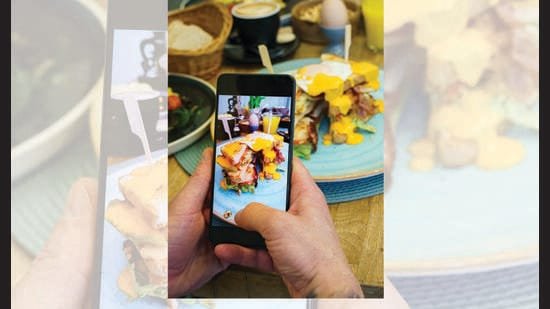
How we used to laugh! Two decades ago, if you went to a fancy restaurant anywhere in the West, you would see neatly dressed Japanese guests with expensive cameras. Each time a course was served, they would position their cameras and take pictures of what they were eating.
Are they here to eat? I would wonder. Or do they think this is a photo shoot? The chefs at these restaurants would ask the same questions and chuckle. How bizarre was this behaviour!
It wasn’t until I got to the Far East (chiefly Korea and Japan) that I realised that this was a normal practice. Diners liked to keep a record of everything they ate.
In those days, there was no foodie Instagram, so I never discovered what happened to the photos. Did they post them on Facebook? Perhaps on Twitter, which in those days was a largely troll-free, cheerful sort of place. But we still laughed at the earnest Japanese and their cameras.

Now, of course, we realise that the Japanese were ahead of their time. Though the iPhone was launched in 2007, it took a few more years for smartphones to gain popularity. (Samsung launched its first smartphone in 2009.) Instagram came along in 2010 as a photo-sharing site and took some more years to take off and become a place for foodies.
It was all very different two decades ago compared to today, where everyone has a high-quality camera in their phones, and most foodies have their own Instagram accounts. And if you go to a fancy restaurant now, nearly every table will have guests taking pictures of their food.
There are many ways in which this has changed the food space. For a start, all of us are more food-conscious now. Chefs themselves pay far more attention to how their plates look because in an Instagram-obsessed world, appearance often counts for more than flavour.
And Instagram has changed many of the old rules. Restaurant discovery has become more and more dependent on Instagram; that’s where people first learn about restaurants. You don’t need to advertise your restaurant any longer.
More importantly, it has created a new profession: Influencing. There have been food bloggers for decades, but,to write a restaurant blog that anyone will read, you need a modicum of food knowledge and an ability to write.

But with Instagram, the picture is the point; the words are incidental. And virtually anyone with a smartphone can take a picture of his or her plate and post it on Instagram. There are no conditions of entry and no qualifications are required.
So bloggers are passé. The world is now full of influencers whose job is to post pictures of food and draw attention to restaurants. You can, in theory, make money by posting videos of food on TikTok or YouTube. But in reality, it is much easier to take money from restaurants for posting about them. Even when influencers don’t take cash, they get to go on trips and eat free meals. It’s not always an easy way of making a living; you don’t really make much money from social media unless you have tens of thousands of followers. But you get to have lots of food and fun for free. And even if it is a sideline to a primary profession that pays better, at least you get courted by many of the country’s best chefs and you always feel important.
The combination of smartphone and Instagram has revolutionised restaurant marketing. Anybody who opens a restaurant needs to hire a social media agency. The agency will have influencers on its rolls and will take money from the restaurant to invite influencers who will post about the restaurant. Sometimes the agency will share the money it makes with the influencers. And the rates will be determined by each influencer’s follower-tally. More followers mean more money. Or at the very least more invitations. This in turn feeds another new industry; the buying of fake followers to boost your numbers.
Old fogeys will huff and puff angrily about how influencers are ignorant people who happen to own cameraphones. But it works for restaurants, because they get to control what the influencer posts: Write a caption that is anything less than fulsome in its praise and the social media agencies will drop you from their rolls.

And I am not convinced by the ethical arguments against influencers. Yes, they may take money for posts. But in a media environment where even the largest newspapers will take money for writing about a restaurant, why judge influencers? Surely it’s better that individuals get to keep the money rather than large media companies? (I am sure the Editor would want me to point out that Brunch does not sell editorial space. Every establishment mentioned here made it to these pages on merit. But Brunch may be an exception to a growing trend.)
There is one other key change caused by the influencer culture. Most awards and ratings that depend on voting (say, The World’s 50 Best Restaurants list) include a fair number of influencers as voters. So, if an influencer gets to be a voter, then he or she is treated as a celebrity by restaurants who want to get on the list, and is invited by establishments all over the world. So, if restaurant PRs know who the voters are, then they can game the system by cultivating the right influencers. (How do you know if an influencer is a voter? Simple. They tell you.)
As a consequence, most chefs now welcome the cameras they once laughed at. They need the influencers to win their awards.

But it could be that the trend is changing. Gaggan Anand, whose Bangkok restaurant has been number one on many of these lists innumerable times, has now banned guests from taking any pictures when service is on. So, no more pictures of the delicate Yoghurt Explosion and no more pictures of tongues lapping at plates for Gaggan’s famous Lick It Up.
But does that mean that he will get fewer influencers? Fewer instagram mentions? Almost certainly.
Does it mean less business? No. The Gaggan restaurant may be the hardest reservation in Asia, so he doesn’t really care. Does it mean fewer votes for awards and for places on best restaurant lists? Probably.
Will it set off a trend? I am not sure. The world has always been divided between chefs who cultivate influencers and care about places on lists, and those who prefer to be judged by anonymous critics and inspectors (such as Michelin).
But I have heard more and more great chefs complaining about cameraphones, influencer culture and the gaming of the system for places on lists.
So, maybe Gaggan is on to something!
From HT Brunch, May 09, 2026
Follow us on www.instagram.com/htbrunch
