

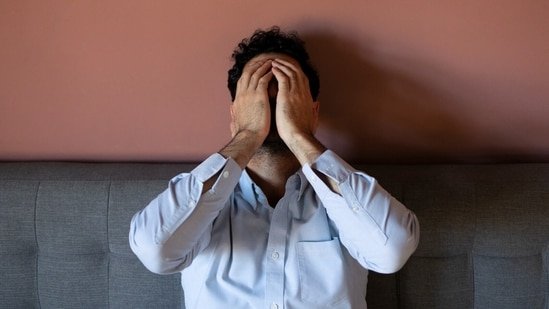
For those who have never experienced a panic attack, the symptoms can seem inexplicable. But for Dr Brian Hoeflinger, a US-based neurosurgeon with 26 years of experience, the experience is as visceral as sliding toward the edge of a cliff. In a detailed explanation shared on Instagram on March 30, Dr Hoeflinger broke down the physiological and psychological ‘impending doom’ that defines a panic attack, drawing from both his medical expertise and a 20-year personal battle with the condition. Also read | Here’s what to do when you are having an anxiety attack
What is a panic attack?
As per Cleveland Clinic, a panic attack causes sudden, temporary feelings of fear and strong physical reactions in response to ordinary, nonthreatening situations. When you’re having a panic attack, you may sweat a lot, have difficulty breathing and feel like your heart’s racing.
Panic attacks usually last 5 to 20 minutes, but some people have reported attacks lasting up to an hour, Cleveland Clinic shared. It may feel like you’re having a heart attack. If you are unsure whether it is a panic attack or a heart attack, it is always safer to be evaluated by a doctor to rule out underlying physical conditions.
‘The fear is uncontrollable’
To illustrate the sheer intensity of panic attacks, Dr Hoeflinger asked people to imagine a hike that goes horribly wrong. He said in the video he posted, “Imagine that you’re hiking… onto a smooth granite plateau 3,000 feet above the valley below… as you’re taking it all in, suddenly you feel your feet slip on the wet stone, and you start to slide downward.”
He described the rapid escalation of the body’s survival systems in vivid detail: “Your heart starts racing immediately, your body tenses and you’re trembling, and you start to hyperventilate… the situation is out of control as you slide faster and closer towards that ledge.”
The crux of the experience, he shared was the total loss of agency. “You feel the impending doom of yourself falling off the cliff… and there’s no way to stop it,” Dr Hoeflinger explained, adding, “The fear is uncontrollable, and you are now in full-blown panic because you think that you’re going to die at any second.“
Fear without a target
The medical anomaly of a panic attack isn’t the physical reaction itself — which is a standard ‘fight or flight’ response — but rather the context in which it occurs. Dr Hoeflinger challenged people to take that exact ‘sliding off a cliff’ sensation and transplant it into a mundane setting.
He said, “Take that same reaction and put yourself in a much safer environment like a classroom, a restaurant, at a friend’s party, a pet store, an aeroplane, a cruise ship, or even in your own bedroom at home. That is exactly what a panic attack feels like.” Dr Hoeflinger defined the condition as a ‘sudden episode of uncontrollable fear and impending doom, with no real imminent threat or danger’.
A personal battle
While his neurosurgical background provided the clinical context, Dr Hoeflinger’s most striking admission was his own history with the disorder. Explaining why this wasn’t just a lecture, but a testament to survival, he said, “It’s one of the most absolute worst feelings to ever experience in your life, and I know because I had uncontrollable panic attacks for nearly 20 years.“
By bridging the gap between a life-threatening mountain fall and a quiet afternoon at home, Dr Hoeflinger highlighted the most isolating aspect of the condition: the internal conviction of mortality. “You literally feel like you are going to die if you don’t get out of that situation,” he concluded.
For the millions who suffer from anxiety disorders, the doctor’s message served as a powerful validation: the fear may be ‘false’ in its origin, but the physical experience is as real as a 3,000-foot drop.
Panic attack management
According to guidelines from the Mayo Clinic and supporting insights from health organisations like the WHO and Cleveland Clinic, managing a panic attack involves a combination of immediate grounding techniques and long-term lifestyle adjustments.
The core goal is to signal to your nervous system that you are safe, even when your body feels like it is ‘falling off a cliff’. When a panic attack strikes, the Mayo Clinic suggests shifting your focus from your internal sensations to your external environment. Click here to know more.
Note to readers: This report is based on user-generated content from social media. HT.com has not independently verified the claims and does not endorse them.
This article is for informational purposes only and not a substitute for professional medical advice.
