

It was one of those wonderfully wet Finnish summer days — unexpected, slightly comic, and, in hindsight, perfect.
I was on the Kuopio leg of a bike-and-train trip through the country, negotiating a queue for paistetut muikut, the addictive crispy-fried whitefish that Kuopio does better than anywhere else on earth, when something stopped me mid-reach. Music. Specifically, a groove so fat, so irresistibly New Orleans in character, that for a disorienting moment I wondered if I’d been teleported from the shores of Lake Kallavesi to a sticky, beer-soaked night at Tipitina’s.
A quartet had quietly materialised on a festival stage — drums, bass, guitar, keyboards — and were playing like they’d been raised in the French Quarter. They were The Cuacuas from the nearby village of Kinahmi, devotees of The Meters and Booker T. In Finland. In the rain. On the shores of a Nordic lake.
That evening crystallised something I’ve been thinking about for years: the Nordic countries have built one of the richest blues scenes anywhere outside the US. It doesn’t get talked about nearly enough. Let’s do our bit to fix that.
The story, like most good stories, involves war, rebellion, and rock-and-roll. After World War 2, American records — jazz first, then blues — began to wash up in Scandinavia. In a region eager to mark distance from Occupation and the recent past, this music represented freedom and rawness. Then came the British. When Nordic musicians in the early 1960s heard The Rolling Stones and The Animals cover Muddy Waters and Howlin’ Wolf, something clicked.
This was deeper than cultural transmission. Musicians across the region describe encountering the blues and feeling the sound matched something already within them — a quality sometimes called the Nordic Tone: a strain of melancholy and longing, of sadness held alongside joy, that runs through folk traditions from Finnish runo songs to Norwegian Hardanger fiddle music.
The blues didn’t arrive as something alien. It arrived as something curiously familiar.
Finland’s scene is dominated by one towering figure. Erja Lyytinen, 49, born in Kuopio (yes, the very city of the rain-soaked festival), is the real deal. The first woman to study electric guitar as a major at Helsinki’s Sibelius Academy, she earned the title Queen of the Slide Guitar through ferocious talent and relentless touring. She has played with Carlos Santana, toured with Robert Plant, and won Best Guitarist at the European Blues Awards. Her 2014 Elmore James tribute, The Sky is Crying, remains a masterclass; her 2025 album, Smell the Roses, strips it back to raw guitar power.
Before Lyytinen, there was Pepe Ahlqvist, now 69, the godfather of Finnish blues, with 6,000-plus performances across five decades.
Norway’s scene is anchored by Knut Reiersrud, a guitarist who incorporates Norwegian folk traditions, African music and American blues into a sound entirely his own; a man who has shared the stage with Buddy Guy, Otis Rush and Stevie Ray Vaughan.
Sweden’s great lost figure is Sven Zetterberg (1952-2016), arguably the finest soul-blues musician Scandinavia ever produced. His 2001 album, Let Me Get Over It, is required listening.
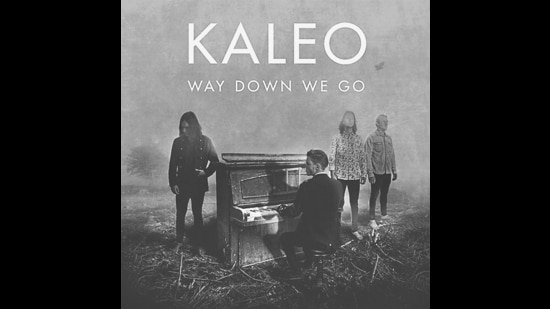
Then there’s Iceland’s Kaleo: four childhood friends from a town of 9,000 near Reykjavík, who bonded over American music from the 1950s, ’60s, and ’70s, recorded an album in Nashville, and went double-platinum in the US. The song Way Down We Go from that album, A/B (2016), hit #1 on the Billboard Alternative chart. Lead singer JJ Julius Son, 35, says Kaleo is “just a blues band at the end”. He’s right, and it’s magnificent.
The Nordic blues tradition runs too deep and wide for any single piece to do it full justice. But a few more names deserve to be in the room. Sweden’s Rolf Wikstrom, 76, is called the uncrowned king of Swedish blues for his gritty guitar work and willingness to sing in the local language. Denmark’s Peter Thorup (1948-2007), the first Danish blues musician you genuinely couldn’t place as Nordic, co-founded bands with British legend Alexis Korner and spent years bringing the blues traditions of two continents together.
Norway gave us Vidar Busk, 55, who went to the US at 15 to play alongside American bluesmen; and the ferociously intense Bjorn Berge, 57, whose 12-string acoustic slide work is in a category of its own. Finland’s Dave Lindholm, 73, has quietly woven blues into his singer-songwriter craft for decades, while Sweden’s Louise Hoffsten, 60, brought the genre’s emotional core to audiences who might never have found it otherwise. The bench, in other words, is very long.
It would be easy, and incorrect, to call Nordic blues imitation.
These musicians are in genuine conversation with a tradition, adding their voices, creating something that could only have come from where they are. A few qualities stand out. Technical excellence is one: many Nordic blues musicians come through formal conservatory training, and bring a classical musician’s precision to the music’s emotional vocabulary. The results can be jaw-dropping.
Nordic blues is also genuinely dark, and not performatively so. In a region where the sun doesn’t rise for months, and where isolation is a lived reality rather than poetic metaphor, the themes of loss and longing are not exotic imports. They are simply true.
Nordic blues musicians are not purists. They cross-pollinate freely, blending this sound with folk, jazz, progressive rock, even the atmospheric density of northern landscapes. Reiersrud plays the oud. Lyytinen weaves in violin textures. Kaleo shoot videos at Icelandic volcanoes.
Back on the shores of Lake Kallavesi, The Cuacuas played on. The rain had eased. My fish, with a twist of lemon and creamy mashed potatoes, was excellent. Erja Lyytinen took the stage later that evening and the crowd of Finns — not, it must be said, demonstrative by nature — responded with something close to reverence.
This music doesn’t need the Mississippi. It just needs people willing to feel it. In Finland, Norway, Sweden, Denmark and Iceland, there are plenty of those.
(To reach out, email sanjoy.narayan@gmail.com. The views expressed are personal)
