

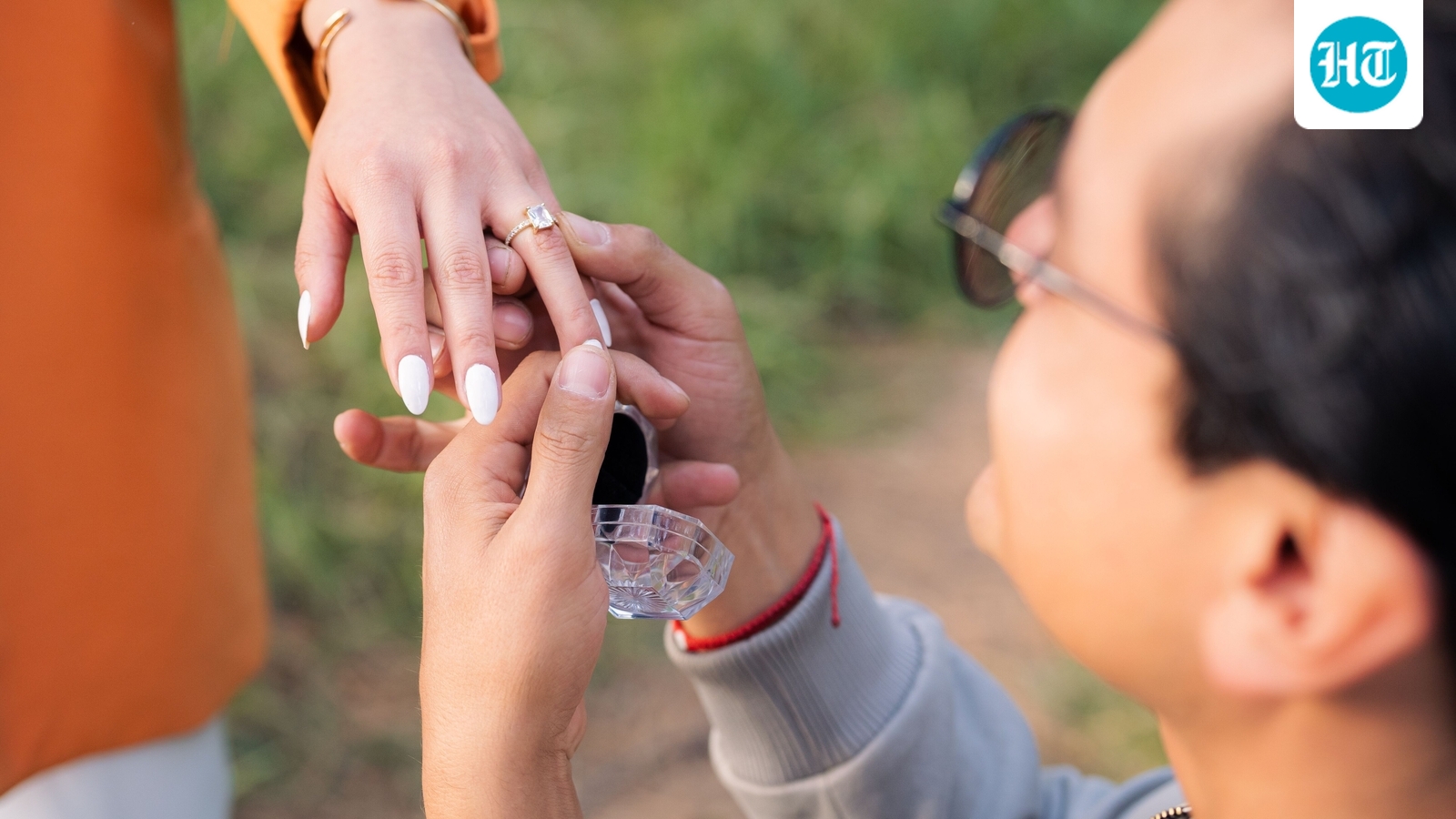
The fourth finger from the thumb, or the finger that is right next to the pinky, is widely known as the ring finger. Depending on the culture, it may vary from left to right hand, but the custom of wearing an engagement or wedding ring on that particular finger has been so commonplace that it has been named after it. Today’s ‘Everyday Explained’ explores why that is.
Also Read | Everyday Explained: Why your eyes twitch randomly throughout the day
How the ring finger came to be
In Western societies, the custom of wearing an engagement ring on the fourth finger of the left hand originated from the Roman belief that the finger contained a distinct vein, called vena amoris, that went directly to the heart.
As Vogue reported, scientists at the time had yet to discover that all veins ultimately led to the heart, which made this particular connection seem very meaningful. References to the vena amoris, or the heart finger, have been found in texts across centuries.
For instance, in his An Abridgement of Christian Doctrine published in 1648, Henry Turberville wrote, “That is called the heart finger, and hath (they say) a veine in it which reacheth to the heart, so to signifie the hearty, and constant love which ought to be betwixt man and wife.”
In 1917, George Frederick Kunz shared in his book Rings for the Finger, “The custom of placing the betrothal or wedding ring upon the fourth finger seems undoubtedly to owe its origin to the fancy that a special nerve, or vein, ran directly from this finger to the heart.”
Also Read | Everyday explained: Why new shoes cause painful blisters even when they fit you perfectly
Why the practice stood the test of time
A likely reason for brides to wear the engagement ring on the fourth finger from the thumb over the ages is that it is a practical choice. It is the weakest finger on the hand and, as a result, is most likely to have the least amount of movement.
This makes it a safe spot for the expensive ring, as the chance of damage is reduced. Wearing the ring on the left hand adds to this, as it is the non-dominant hand for most people. However, some cultures also wear the ring on the right hand, as they consider it more auspicious.
