

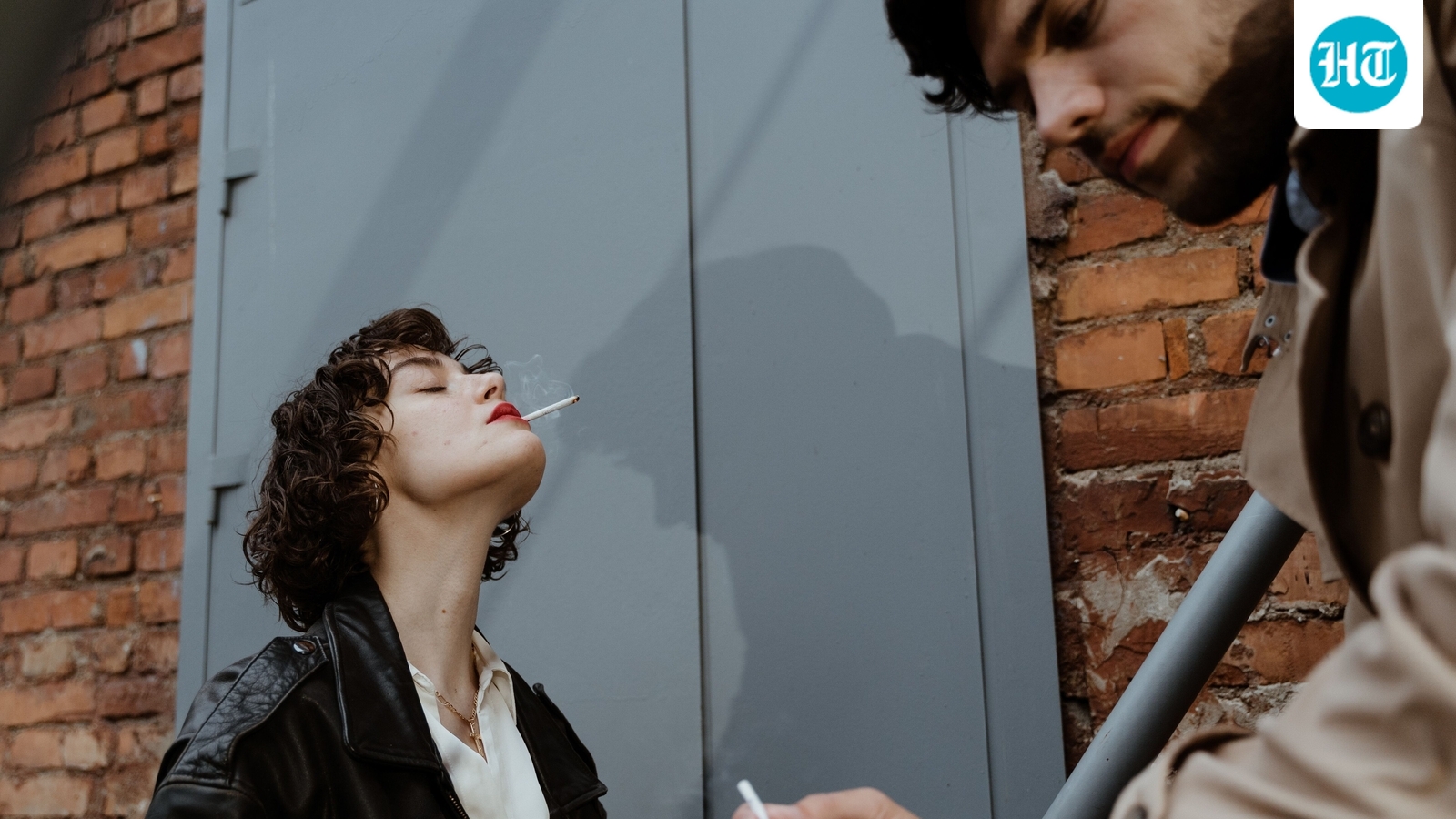
You may not smoke. You may even avoid smoking areas at restaurants and airports, insist that nobody smokes inside your home. But what happens when the person sitting next to you lights a cigarette? That familiar smell drifting across a balcony, into a car, through a window or across a tea stall is not ‘just smoke’. You are breathing in second-hand smoke – a mixture of smoke from the burning cigarette, the smoke exhaled by the smoker.
In an interview with HT Lifestyle, Dr Ashwin Rajbhoj, cancer physician, MOC, Cancer Care, Pune, and Dr Sewanti Limaye, director of medical and precision oncology, Sir HN Reliance Foundation Hospital, shared how second-hand smoking can impact your lungs.
Also read | Is it ever too late to quit smoking? Surgeon reveals what former smokers should know
How can second-hand smoking impact your lungs?
“People often underestimate second-hand smoke because they are not the ones holding the cigarette. But the lungs and blood vessels do not distinguish between a smoker’s cigarette and smoke forced into the air around them,” said Dr Rajbhoj.
He highlighted that cigarette smoke contains more than 7,000 chemicals, including dozens known to cause cancer. For non-smokers, repeated exposure has been linked with lung cancer, heart disease and stroke. Even short-term exposure can affect blood vessels and trigger inflammatory and respiratory changes.
According to Dr Limaye, second-hand smoke is much more dangerous than the stench. Second-hand smoke contains thousands of chemicals, some of which are carcinogenic agents, and there is no safe level of exposure to second-hand smoke. Exposure to such an environment increases the likelihood of developing lung cancer and cardiovascular and respiratory disorders.
Can your neighbour’s cigarette harm you?
“Yes- particularly when exposure is frequent or prolonged,” said Dr Rajbhog. The practical answer is not to panic over every whiff of smoke, but to reduce exposure wherever possible. Keep homes and cars completely smoke-free, move away from active smoking, and avoid assuming that an open window or designated smoking corner makes exposure harmless. Because when someone else lights a cigarette, you should not have to light one too to pay the health price.
Who is at risk?
“Children, pregnant women, and those suffering from pre-existing heart and/or lung diseases are highly susceptible to the negative impacts of tobacco smoke,” highlighted Dr Limaye. The impact on children is likely to result in exacerbation of asthma, respiratory infections, and developmental problems of the lungs.
Passive smoking should no longer be regarded as a habit of others. It is an exposure to environmental health hazards for those who have chosen not to smoke. This is particularly relevant for oncology because cancer prevention involves more than just detection and treatment. It includes reducing preventable exposure to carcinogens.
Note to readers: This article is for informational purposes only and not a substitute for professional medical advice. Always seek the advice of your doctor with any questions about a medical condition.
