

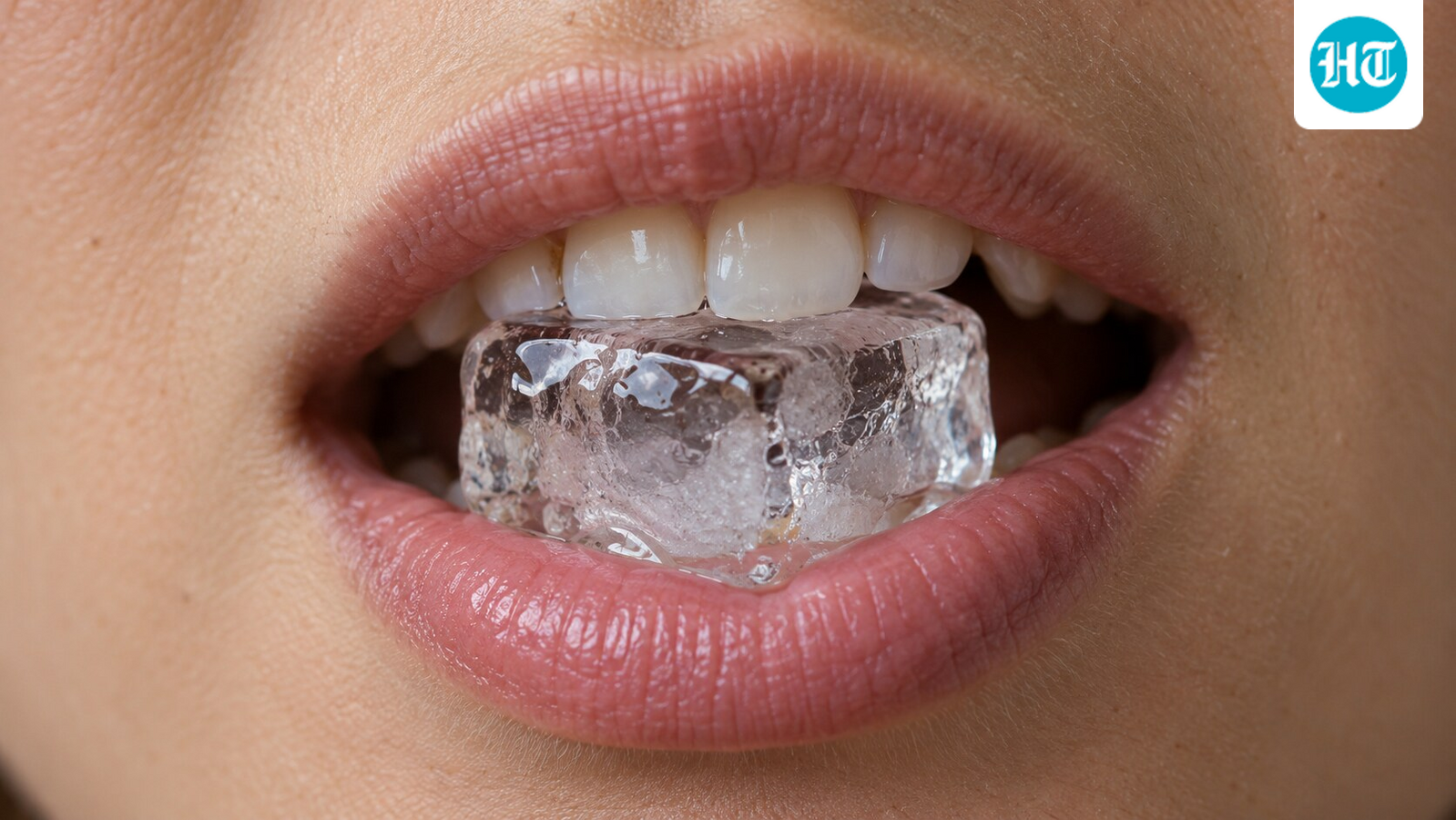
Whether you take ice cubes out of the freezer or enjoy them while drinking an iced beverage, chewing and sucking on ice cubes is a common habit. This simple habit is brushed off as a quirky trait, but a strong, constant craving could be a sign of an underlying health issue that deserves attention.
ALSO READ: Experiencing aching bones? Physician lists 5 symptoms of vitamin D deficiency
We asked Dr G Vimal Kumar, senior consultant in paediatric haematology, oncology, blood and marrow transplantation at MGM Cancer Institute, what this craving could mean, and he explained that it can be a sign of iron deficiency.
Which deficiency causes ice cravings?
A persistent craving for ice may give you clues about a deficiency. Dr Kumar linked this habit, known as pagophagia, to iron deficiency anaemia, while noting that the exact reason behind the craving remains unclear.
What is the reason behind craving ice?
The doctor outlined several theories that may explain ice cravings associated with iron deficiency, although the exact cause remains unclear.
Dr Kumar said, “One theory is that chewing ice may temporarily make a person feel more alert and refreshed, especially when iron deficiency is causing tiredness and difficulty in concentrating. Another theory is that chewing ice may briefly improve blood flow to the brain and make people feel more awake. The important point I wish to convey is that a strong, persistent craving for ice should not simply be ignored.”
When and why should you see a doctor?
If chewing ice has become a constant craving, it may be time to seek medical advice. Dr Kumar emphasised that you should not wait for symptoms to worsen and should instead get it checked early. Which symptoms should you look out for?
He elaborated, “Ice cube chewing can be associated with iron deficiency anaemia even if the person doesn’t have obvious symptoms like weakness or paleness. So, if you or someone you know has developed a strong habit of chewing ice, it’s worth talking to a hematologist and checking the blood count and iron levels. Treating the underlying iron deficiency anaemia usually makes the craving go away.”
Note to readers: This article is for informational purposes only and not a substitute for professional medical advice. Always seek the advice of your doctor with any questions about a medical condition.
