

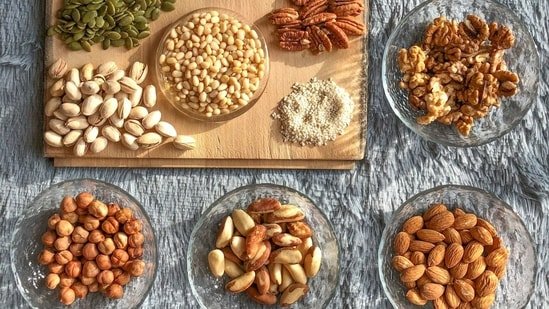
Nuts are often considered a powerhouse of nutrition – rich in omega-3 fatty acids, healthy fats, fibre, and essential nutrients that support heart and brain health. But for some people, enjoying a handful can come with an uncomfortable downside, as nuts may trigger gas or bloating due to how the body processes them. Understanding why this happens – and how to make nuts easier to digest – can help you continue reaping their benefits without the discomfort.
Dr Karan Rajan, a UK-based surgeon and widely followed health content creator, has shared what you can do if nuts leave you feeling bloated – despite their many nutritional benefits. In an Instagram video posted on April 6, he breaks down whether soaking actually helps and offers practical alternatives to make nuts easier on the gut.
Does soaking nuts help?
According to Dr Rajan, nuts contain naturally occurring compounds such as phytic acid, tannins, and enzyme inhibitors, which may contribute to digestive discomfort and bloating in some individuals. While this isn’t an issue for most people, those with conditions like Irritable Bowel Syndrome (IBS), Small Intestinal Bacterial Overgrowth (SIBO), or low stomach acid may be more prone to experiencing bloating after consuming nuts. Soaking nuts can help reduce these compounds to some extent, although the impact can vary from person to person.
The surgeon explains, “A 2020 study tested soaking almonds, hazelnuts, peanuts, and walnuts for 4 to 12 hours with and without salt. And the result was that phytic acid reduction after soaking was minimal to modest for most nuts. It wasn’t dramatic, but it also wasn’t zero. This is because nuts have low endogenous phytase, the actual enzyme which breaks down phytic acid. But grains and legumes have high phytase. So soaking works great for beans, lentils, and oats because it can activate that phytase enzyme.”
Dr Rajan notes that the primary benefit of soaking nuts lies in improved texture rather than a significant reduction in phytic acid. Soaking softens nuts, making them easier to chew and aiding mechanical breakdown. This, in turn, supports digestion – not by altering their chemical composition, but by reducing particle size and allowing for more efficient absorption.
He highlights, “To be honest, the real benefit of soaking nuts is the texture. It makes it softer, easier to chew, and for mechanical breakdown. And actually, this does help digestion not because you’ve removed any anti-nutrients, but because you’ve made the particle size even smaller and provided more surface area for the enzymes to work on.”
How to prevent bloating?
According to Dr Rajan, roasting may be a more effective alternative to soaking – especially for those who experience gas after eating nuts. The application of heat can help break down certain compounds associated with bloating more efficiently than soaking. He also suggests experimenting with different varieties to see what suits your system best: while almonds and walnuts can be relatively harder to digest, options like macadamias and cashews are often better tolerated.
The surgeon emphasises, “If nuts truly give you gas, roast them. The heat can actually denature or break down some of these bloat-causing compounds. Or you could try switching nuts. Almonds and walnuts tend to be slightly harder to digest. Macadamias and cashews are often better tolerated because they have less fibre and are softer. So if soaking nuts helps you feel better, then you should do it – placebo or not – but there’s better evidence for roasting it, chewing it, and eating reasonable portions.”
Note to readers: This article is for informational purposes only and not a substitute for professional medical advice. It is based on user-generated content from social media. HT.com has not independently verified the claims and does not endorse them.
