

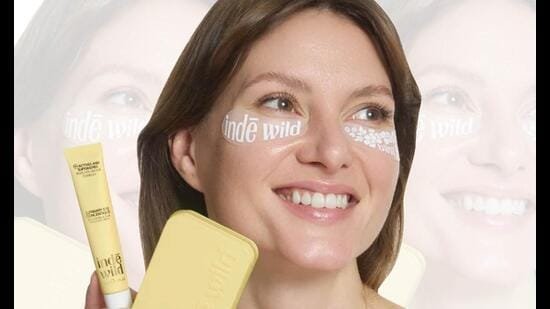
Juicy, in velour, on your bum. Bebe, in rubberised print, on your T-shirt. FB on your cap. CK on your undies. Von Dutch on your hoodie. True Religion on your jeans. Ed Hardy on your sweatshirt. FCUK on… wherever it was most visible. The early years of the ’00s were wild. Logos were loud and proud. Then, everyone went quiet. Luxury, fashion magazines told us, was all about hiding brand names. We knew it wouldn’t last long. With fashion, showing off is part of the fun. Logos, monograms and in-the-know insignia are back. But the rulebook is changing. Here’s an early draft.

You can’t sit with us
The reason fashion is obsessed with logos in the first place is because it distinguishes the generic object – a T-shirt, a boot, a mock-croc handbag – from its more upmarket cousin. “Historically, they’ve signified brand identity, heritage, and belonging to a particular fashion moment,” says Amrita Singh, stylist and wardrobe consultant based in Dubai. Rolls of mill cloth were sealed with oval labels in the 19th century to protect against counterfeits. Weaving communities created special, hard-to-copy patterns that they only taught to trusted apprentices. By 1896, Louis Vuitton worked in the founder’s LV initials to the design of all its luggage. In 1925, Coco Chanel debuted the now-iconic interlocked double C logo as a calling card for chic craftsmanship.
Sure, anyone can fake a logo – or even a whole ensemble. And many have. Two decades ago, when luxury handbag brands began putting their collections online, Hong Kong’s leather craftsmen would do such a fine job of copying (down to the number of stitches on the back of the zipper flap) that even sales staff at legit boutiques couldn’t tell the OG from the fakes. It was only a matter of time before logos became less about authenticity and more about aesthetics. We’re looking at you, Missy Elliot.

When the economic recession hit in 2008, logos went into hiding – when everyone is tightening their belts, why advertise that yours is Dior? But a decade later, we’d kissed and made up with monograms. Then, the pandemic hit, and logos got into another game of hide and seek. Quiet luxury was in. Subtlety was the most elite thing one could do. And here we are again. Flaunting a double F, a quadruple G, a DVF, a CD, a DC – no wait. It’s sideways. That’s ON.
But at the really top end – think of Kate Middleton’s fits – the branding is largely absent. “When someone already has access to exceptional pieces and craftsmanship, there’s no need for a logo to announce it,” Singh says. Loewe’s logo has no name, Bottega Veneta is all about its intrecciato weave, and Alaia doesn’t even have a logo. The Row, the Olsen twins’ 20-year-old brand, does luxury basics with no distinguishing marks. It’s so sought-after that it sells out in minutes; even fashion editors wishlist items for years.

Going undercover
So, when Doechii wore the LV logo on her face at the Met Gala in 2025, and Coach handed Elle Fanning a book with Coach on the spine, it’s curated bait. It’s not aimed at the truly rich. It’s the class that can’t afford expensive stuff that is tricked into believing that this is the stuff worth buying. “There will always be a buyer for the most expensive goods,” says Hemlataa Pariwal, a personal stylist and consultant based in Dubai.
In 2026, logos are back, but they’ve migrated. The Dior symbol that catches the eye isn’t on the purse, but the tote bag. Balenciaga’s leather clutch is in the shape of a plain black coffee cup. YSL’s insignia isn’t on the front of the shoe, the letters literally form the heel.
And they’re hiding in plain sight. On sling bags, the branding is on the strap, not the flap. Bonkers, an affordable streetwear brand, splashes its logo on the knee of its trousers and Beeglee, a slow fashion label with reasonable pricing, places its logo on the lowest strap of its tops. “For small brands with tight marketing budgets, it’s not about signalling wealth; it’s about recall value. A person can just look the name up from the product and buy the same thing online,” says Pariwal.

From Prada to nada
So, what’s going on with logos now? Logo T-shirts from brands such as Almost Gods and Bluorng play right into the 2016 streetwear craze. Big brands are currently fighting over polo-player insignias, four stripes vs three, and similar-looking G logos.
But for most young people, a fit that serves as a billboard for someone else is considered tacky. “I’ve noticed Gen Z reaches for cheaper, more sustainable, and even experimental brands instead of a luxury, established name,” says Ankit Vengurlekar, creative director at Taangerine Tiger, a vacation wear brand.

But there’s a workaround to logomania, one that feels more real. The cool logo is not one brand but two – a limited-edition collab or a pop-up. It’s of-the-moment, unusual, fleeting and more creative. Think of Fendi x Chupa Chups – the little lollipop holder was the most exciting handbag accessory of Fall 2024. Or Estee Lauder x Sabyasachi – much of the lipstick range is perpetually out of stock.
Or it’s not a logo at all, but an inside moment. This is how brands such as HUEMN, which stray away from obvious branding, get people to fall over themselves when they release a new funky print, or do a collab with Tata Sierra, and get cricket goddess Harmanpreet Kaur to wear it, rather than add monograms to their fits. It was never about the brand name, then, was it?
From HT Brunch, March 21, 2026
Follow us on www.instagram.com/htbrunch
