

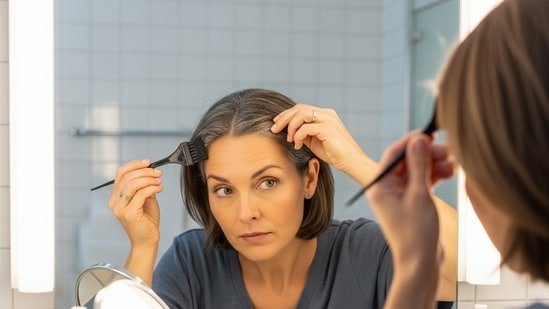
One of life’s quiet turning points is spotting that very first grey hair. Our next instinct is to pluck it, trim it, and hide it as much as we can. And most of us have done exactly that. But as dermatologists and hair experts say, we should not pluck grey hair. One of the easiest solutions to cover grey hair is to colour it. But then, we also have to be cautious of what we are applying to our hair or roots. That is where an organic hair colour or hair dye comes into the picture.

Unlike chemically-loaded hair colours, organic hair dyes are safer as they are ammonia-free and chemical-free hair colours that do not strip off the natural oils from your hair. However, easier said than done, choosing an organic hair colour isn’t as easy from the sea of options available. Dermatologists suggest taking note of these 6 crucial ingredients in your hair colours.
Ingredients to look out for in an organic hair colour
Dermatologist and Hair Transplant Surgeon Dr Gaurav Garg of Dermalife Skin and Hair Clinic, tells HT Shop Now, “If you’re planning to make a switch to an organic hair colour, here are six ingredients to look out for”.
Henna
Often considered the base of most natural hair dyes, henna works by coating the hair rather than penetrating it aggressively. It adds colour while also improving shine, making it a go-to for those looking for a gentler alternative.
As per Dr Garg, “When applied in its unaltered state, henna ranks among the gentlest plant-based dyes available. Instead of penetrating deeply, authentic henna forms a surface layer on each strand, which enhances lustre while preserving structural integrity. Even though it tends to be well tolerated, especially by those prone to scalp sensitivity, verifying personal compatibility beforehand remains necessary through preliminary skin exposure.” He also cautions against certain store-bought versions that include synthetic compounds such as PPD, known to trigger skin responses.
Indigo
To achieve darker shades like brown or black, indigo is usually paired with henna. It helps balance out the warmer tones and gives a more neutral, deeper finish.
Dr Garg says, “Occasionally paired with henna, indigo helps create deeper tones. Though safety profiles are favourable, results rely heavily on correct mixing and method. However, it keeps your hair intact, but it may cause increased dryness in your hair. Hence, it’s crucial to take care of proper moisture in your scalp.” He recommends testing on a small skin area before applying to avoid any scalp reactions.
Amla
Amla plays a supporting role but makes a noticeable difference. It tones down the brightness of henna and helps the colour look more natural, while also supporting overall hair health.
“Known for aiding natural hair colouring, amla also supports a healthy scalp. While blending with henna, it evens out shades due to its rich antioxidant profile”, explains Dr Garg. He further mentions that these extracts reinforce strands and enhance overall scalp texture. “Most users tolerate it well, especially those dealing with lifeless or weak hair. Yet like any plant-based component, effectiveness depends on how pure and fresh it is; choosing trusted suppliers reduces risks of irritation”, he states.
Aloe vera
Common in gel-based formulations, aloe vera helps soothe the scalp and prevents the dryness that often comes with colouring. It also makes the application process smoother and more comfortable.
Dr Garg says that aloe vera is well known for gentle care; it brings comfort and moisture. “When added to a hair dye, aloe vera eases scalp tension while countering dryness caused by chemical processes. People prone to sensitivity often find relief through its inclusion. Though well tolerated overall, anyone allergic to botanicals may want to check compatibility first via skin testing”, tells Dr Garg.
Basil (Ocimum basilicum)
Blends that include herbs like bhringraj or basil are often added for their scalp-care benefits. While they don’t drastically change colour, they support hair strength over time. According to Dr Garg, “Basil provides gentle protection against microbes along with calming effects, potentially aiding scalp wellness. Though the impact on hair shade remains minimal, gradual improvements in scalp condition could occur”. He advises prior application checks.
Bhringraj
Often used in Ayurvedic hair care, bhringraj is included for its strengthening and scalp-nourishing properties. While it doesn’t directly impact the colour, it helps improve hair texture and supports healthier-looking hair over time, especially important if you colour frequently. As per Dr Garg, “Among traditional herbs, Bhringraj stands out due to its ability to nourish the scalp and strengthen strands. Its presence often correlates with better hair feel and healthier-looking roots, especially useful for those applying dyes regularly”. However, he mentions that adding bhringraj won’t really affect the natural or added colour tones; noticeable reductions in brittleness may appear over time.
Shyam Sunder Arya, Managing Director & CEO of Indus Valley Hair Colour, also suggests that reading beyond the label becomes important while selecting your hair colour. “Today, consumers are becoming increasingly aware of this gap and are consciously moving away from aggressive chemicals and bleaching agents such as hydrogen peroxide (HPO), ammonia, and PPD”.
He highlighted a clear shift in consumer mindset, noting, “People are becoming more aware of what they are putting on their scalp. It’s no longer just about colour, it’s about long-term hair health.”
According to him, conventional chemical-laden hair colours were never formulated with Indian hair in mind. Many of the harsh ingredients commonly used are, in fact, unnecessary for effectively covering Indian hair types.
So, next time, you’re planning to buy an organic hair colour, do check on these ingredients.
Here are some organic hair colours to try
Similar articles for you:
Are clarifying shampoos doing more harm than good? Here is what an expert says
Disclaimer: This article is for informational purposes only and not a substitute for professional medical advice. Always seek the advice of your doctor with any questions about a medical condition. At Hindustan Times, we help you stay up-to-date with the latest trends and products. Hindustan Times has an affiliate partnership, so we may get a part of the revenue when you make a purchase. We shall not be liable for any claim under applicable laws, including but not limited to the Consumer Protection Act, 2019, with respect to the products. The products listed in this article are in no particular order of priority.
