

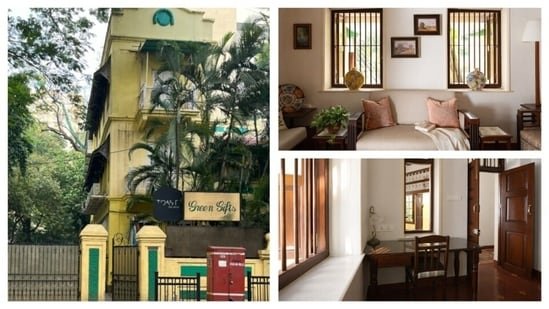
Every home holds not just one but many layered stories shaped by time and people who pass through its doors. One such home stands quietly on Bandra’s quaint Turner Road, a 125-year-old Parsi bungalow officially known as Tehmi Yetrace. The heritage home has witnessed Mumbai through many lenses and phases. It has been many things, from a private family home, a backdrop for film shoots, the venue for Vidya Balan’s wedding festivities and even the diplomatic premises for the Embassy of Luxembourg. The walls of the bungalow have been witness to many dreams and hopes, acting as a storyteller for anyone who enters.
ALSO READ: Step Inside Colourful and Cosy ‘Rainbow House’ in Jaipur
But like every storyteller whose ink begins to dry and pages grow worn, this home too started to show signs of age, succumbing to the passage of time. The mark was prominent on the structure. This required careful restoration, while keeping the heritage spirit of the building intact.
Award-winning interior designer Mansi Mehta undertook the restoration, thoughtfully bringing the bungalow back to its former glory. In conversation with HT Lifestyle, she shared details about the restoration process from the beginning, along with what it looks like now.
What was the home like before restoration?
The 2BHK home was described as being in a state of ‘despair’ because of the extensive damage. Mansi observed several structural and design issues, including peeling plaster, exposed steel and sinking floors. None of the bedrooms had attached bathrooms. As she explained, the house required a complete restoration rather than a simple refresh. However, with a complete restoration, the exterior also gets affected.
The challenge was that the heritage exterior could not be altered, which meant the structural shell of the bungalow had to remain intact. This made the project particularly tough. Mansi recalled, “At first, the scale of transformation felt almost impossible.”
But slowly, through patient planning and relentless refinement, Mansi’s vision started to crystallise. Over time, the bungalow transformed into a magnificent residence that evokes old-world charm with a soft contemporary style.
Who lives here?
The design brief of any renovation revolves around the people who live in the home. After all, a house is an extension of those who live there. Mansi revealed that Tehmi Yetrace is home to Yasmine and Dhanu, a well-travelled couple with two sons, Rustom and Rushad, and that her conversations with the family helped shape the interiors. Their trust in the designer also played a very important role, as they gave her creative freedom without micromanaging the process, with only one condition: to preserve the heritage integrity of the home.
Reflecting on those conversations, Mansi shared, “We would have conversations like where Rushad, a detailing engineer, based at Harvard at the time, offered the simplest brief: Do whatever you want. Just make my space look beautiful and heritage. And Yasmin would simply say: You have the taste we like. Just go ahead. That kind of faith is rare. And deeply empowering.”
What was the final brief? “The brief was ambitious: to transform it into a three-bedroom home, each with an en-suite bathroom, plus an additional powder room — all within the existing footprint, ” Mansi added.
The redesign focused on preserving the heritage style while also making the home more functional for contemporary living.
Renovation priorities
The designer strived to preserve as many heritage elements as possible. She worked with a defined budget, guided by one clear philosophy- to invest in craftsmanship and authenticity. Here are the primary aspects Mansi focused on:
- Restoration of original architectural elements
- Heritage flooring and tile detailing
- Custom wardrobes and built-in elements
- Thoughtful kitchen integration that balanced modern appliances with old-world aesthetics
Glimpses of the renovated bungalow
Glance through the renovated century-old residence, room by room.
1. Living room
The living room is well ventilated, with windows set in alcoves reminiscent of old-school architectural styles. The ceiling features exposed wooden beams, while the floor has glossy red tiles. The main sofa is beige in colour and paired with a coffee table at the centre. Lighting is handled with classic wall scones that add a soft glow to the room.
The wall art includes landscape oil paintings, while vases are placed along the windowsill to evoke a sense of serenity in the space. These elements all reflect classic heritage Indian interiors: neutral tones, traditional artwork, signature architectural features like beams, and good ventilation.
Mansi shared what went into the making of this room, “Windows and doors buried under decades of paint were stripped and repolished. The teak rafters overhead were scraped clean to reveal their rich original grain. Traditional patterned flooring from Bharat Tiles anchored the aesthetic.”
2. Kitchen
Airy and well-lit theme continues in the kitchen-cum-dining room as well, with wooden furniture adding warmth to the space. Green cabinets add a touch of natural colour to the beige kitchen, while modern appliances are also integrated into the design seamlessly.
The dining table has a green and white checked gingham tablecloth, bringing a picnic-like vibe to the kitchen. The space has two large windows that allow plenty of natural light to enter, and the ceiling beams continue here as well. Several potted plants further amplify the space’s natural charm. Overall, the kitchen has a cosy and welcoming energy.
Sharing some of the challenges, Mansi noted, “The kitchen and powder bathroom tiles were chosen with painstaking care to maintain continuity. Working within a defined budget, we made a conscious decision to reuse, restore and upcycle wherever possible.”
3. Bedrooms
The bedrooms had distinct personalities.
Bedroom 1: Zen-like minimalism
Bedroom 1 feels peaceful with its white minimalist style, centred around a four-posted bed with green floral vine motif bedding. Sheer curtains amplify the natural light, making the bedroom seem larger and more open. The wooden cabinet and wardrobe have a vintage appeal, with rich wood grains imparting warmth to the space. The room also includes a cane-back chair with dark wooden grain, creating a perfect corner for reading.
During the restoration process, several hidden details from the bungalow’s past surfaced, showcasing traces of the home’s long history. Mansi said, “One wardrobe, when stripped down, revealed original initials hidden beneath layers of varnish — a small but powerful reminder of the home’s lived history.”
Bedroom 2: Rustic grandeur
Bedroom 2 looks a bit different, with a much larger space. It includes a dedicated study space with a wooden chair and table, along with a dressing area where a shelf is built into the wall to showcase books and potted plants. A vintage chair with floral upholstery adorned the corner. This bedroom has a sense of grandeur in contrast to the previous bedroom’s minimalist style, from the bed style to other furniture.
Last but not least, the corridors. You may think of them as mere transit points, taking you from one room to another, but they have serious main character energy, too. Flooded with natural light and framed by exposed beams in the ceiling, each hallway looks breathtaking. From statement floors with intricate patterns to classic balustrades and potted palm plants, the corridors are detailed. Further, they are adorned by elegant chandeliers, pendant lights and retro scones.
The designer opened up about the final reflection on the project. Mansi said, “Restoration, I learnt, is as much about patience as it is about vision.” It showcases that restoring a heritage space requires time and diligent planning, along with patience as it takes time.
In the end, this renovation project demonstrates that one can still honour heritage design in the renovation process while also adapting it for modern living, so that the home can continue to tell its past stories while also being functional.
