

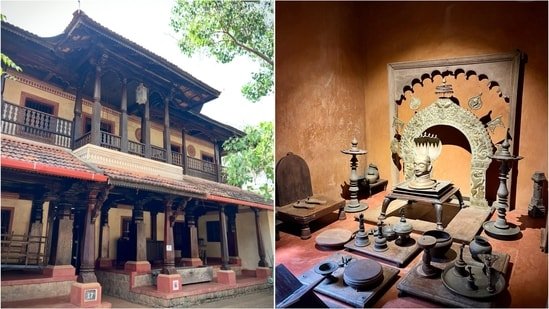
A visit to a museum usually brings to mind a building filled with rare artefacts and historical objects. However, the Hasta Shilpa Heritage Village Museum offers a very different experience. Instead of display cases and galleries, the museum features life-size exhibits, including traditional houses and shrines that transport visitors back in time. (Also read: Step inside 75-year-old British bungalow in Kerala, set amidst a sprawling 2,700-acre plantation of lush greenery )
Where is Hasta Shilpa Heritage Village Museum located
Located in the education hub of Manipal in Udupi district, the heritage village was founded by Vijayanath Shenoy (1934–2017). Spread across nearly seven acres on Manipal–Alevoor Road, about a kilometre from Tiger Circle, the open-air museum is considered one of the largest and most unique museums dedicated to folk arts and traditional architecture in the region.
The museum brings together historic homes from different parts of southern India, many of which are over a century old. These houses were carefully relocated and reconstructed to preserve the architectural styles and cultural traditions they represent. The larger project includes 28 traditional houses, with several already restored and open to visitors.
Which historic houses can visitors explore at the museum
Among the restored structures are Kunjur Chowkimane, the Sringeri house, Vidyamandira of Ramachandrapuram Math, Kamal Mahal of Kukanoor, Deccani Nawab Mahal, Vaderahobli house, Byndoor-Nelyadi house, the Mangaluru Christian house, Mudhol Palace Durbar Hall and the Nandikeshwar shrine. One of the most striking among them is Kunjur Chowkimane, which is nearly 192 years old and reflects the remarkable craftsmanship of traditional builders.
What can you see inside these traditional homes
Stepping inside these homes feels like entering a different era. The interiors are dominated by warm wooden elements, intricately carved pillars, antique doors and heavy timber beams that showcase the artistry of traditional artisans. Sloping tiled roofs, spacious verandahs and open courtyards are common features, designed to allow natural ventilation while also creating a sense of openness within the home.
Many of the rooms are arranged to resemble lived-in spaces, with antique furniture and everyday household objects adding authenticity to the setting. Visitors can see carved wooden chests, vintage beds, traditional seating arrangements and intricately crafted cupboards. Brass lamps, copper utensils, textiles, toys and tools are also displayed, offering a glimpse into the lifestyle and domestic culture of earlier generations.
The heritage village also showcases a wide range of artefacts including textiles, crafts, utensils and traditional objects that reflect everyday life in the past. Plans for dedicated galleries featuring traditional and folk paintings and textiles further highlight the museum’s role in preserving artistic traditions.
