

I’ve long held that sitting behind deep mid-wicket (and its mirror image, deep extra cover) is the best way to watch cricket.
You may not get a front-on view of the wickets, but no matter which end the bowler is charging in from, you sense the speed of the run-up, capture the leap of the delivery stride, and see the opening of the shoulders as the ball is hurled down the pitch. You then get to mark the arc of the bat as it comes down to meet the delivery, the opening of the face of the blade as it caresses the ball through the off-side or the adjustment of the hips as the bat-face closes to whip the ball through the on-side.
This, for me, is cricket in both its most leisurely and most ebullient forms.
As a young sports journalist in the late 1990s, I would often spend winter afternoons at the Kotla in Delhi, watching Ranji Trophy matches from behind the mid-wicket boundary, and observing the next generation of stars lay the foundation for a glistening future. It was the highest level of domestic cricket but, shorn of the serum of national pride or the craze for superstars, it was like watching the game in a setting that loosely resembled the village green.
A few years later, when I moved to Mumbai, this afternoon shift would happen at the Wankhede. This was the early 2000s and Wasim Jaffer was the resident Ranji don. He would be batting with an elegant flurry of cover-drives and flicks when a group of children from the Garware Stand would shout, “Wasim bhai, sixer!” Jaffer would invariably dance down the track, deposit the ball over long-off, and flash the chanters a cheeky smile.
Compare this with my first brush with Twenty20 cricket, at the opening match of the first-ever Indian Premier League (IPL) in Bengaluru, in 2008. What I remember from that night is a fireworks display of Olympic proportions, a haze of pompoms, and an endless flurry of boundaries from Kolkata Knight Riders opener Brendon McCullum of New Zealand.
With a young Indian team surprisingly winning the inaugural T20 World Cup the previous year, it was clear that the stage had been set to transform the sport forever. The IPL went on to become the biggest event on the annual global cricket calendar. McCullum went on to invent Bazball and apply it to red-ball cricket as England coach.
The stark contrast in formats and settings was exemplified this month by the confluence of two events: the Indian cricket team led by Suryakumar Yadav cheered by millions during a heady World T20 run on one side, and a group of cricketers from Jammu & Kashmir beating all odds on smaller grounds across the country to seal their historic first Ranji Trophy title on the other.
Both legitimate forms of cricket. Both worthy causes in their own contexts. But how shall the twain meet?
THE BUILDING BLOCKS
The secret to stitching together a successful campaign in sport lies not in the individual threads but in the entire tapestry. Matches may be won by players; tournaments are won by squads, and by the larger philosophy behind their approach.
Team India’s strength in the World T20, for instance, lies in a varied bowling attack: the accuracy of Jasprit Bumrah, the guile of Ashdeep Singh, and the versatile spin arsenal of Varun Chakravarthi, Axar Patel, Kuldeep Yadav and Washington Sundar. On the batting front, the powerplay philosophy is aggressive and uncomplicated, and the line-up is packed with shot-makers — from Abhishek Sharma at the top to Shivam Dube at No 7 — who can strike blows as soon as they come in.
The team’s weakness, ironically, is a corollary of this same approach. The batters seem unable to change their approach in tough conditions and the always-in-sixth-gear strategy can backfire dramatically, as it did in the league match against South Africa. Players such as Shreyas Iyer and KL Rahul, who can pace the innings when needed, may have removed this chink from the armour. And the success or failure of the team in the final against New Zealand today will eventually be seen through this prism.
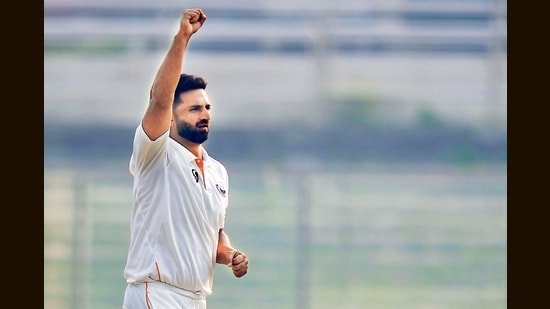
For Team Jammu & Kashmir, meanwhile, the tapestry was stitched around the image of its talismanic swing bowler, Auqib Nabi, whose relentless accuracy and ability to move the ball both ways got him a staggering 60 wickets at an average of 12.73 with seven five-wicket hauls in the Ranji season. But Nabi wasn’t alone; he was supported by a multipronged attack in which three other bowlers picked up over 20 wickets each, and a deep and consistent batting unit led by 41-year-old veteran Paras Dogra as captain.
The J&K team knew that their success would be viewed through one of two non-cricketing lenses — Reintegration or Rebellion, depending on which side of the political divide the analysts came from. Insulating themselves from these narratives became part of the team philosophy.
A LARGER MESSAGE
A key takeaway at the end of this curious cricket season — let’s assume the IPL at the end of March will mark the start of the next one — must be to ensure that T20 and the longer formats are treated differently from one another.
Nabi, after a record-breaking domestic season, deserves a place in the Indian Test squad over some of India’s current World T20 or future IPL swashbucklers. Since he has an IPL contract with Delhi Capitals this year, what Nabi does in that tournament must not dilute his Ranji heroics.
There is often a tendency for the excitement of IPL to overshadow other performances, but India’s national selectors must resist the temptation to be swayed by four-over spells and 40-ball blinders when choosing players for the longer formats. If match-winning numbers throughout India’s premier domestic competition are not enough for a Team India call-up, what meaning will the Ranji Trophy have any longer?
For no matter how we may have changed cricket over the years, it still has room for both leisurely afternoons and noisy evenings.
(The views expressed are personal)
