

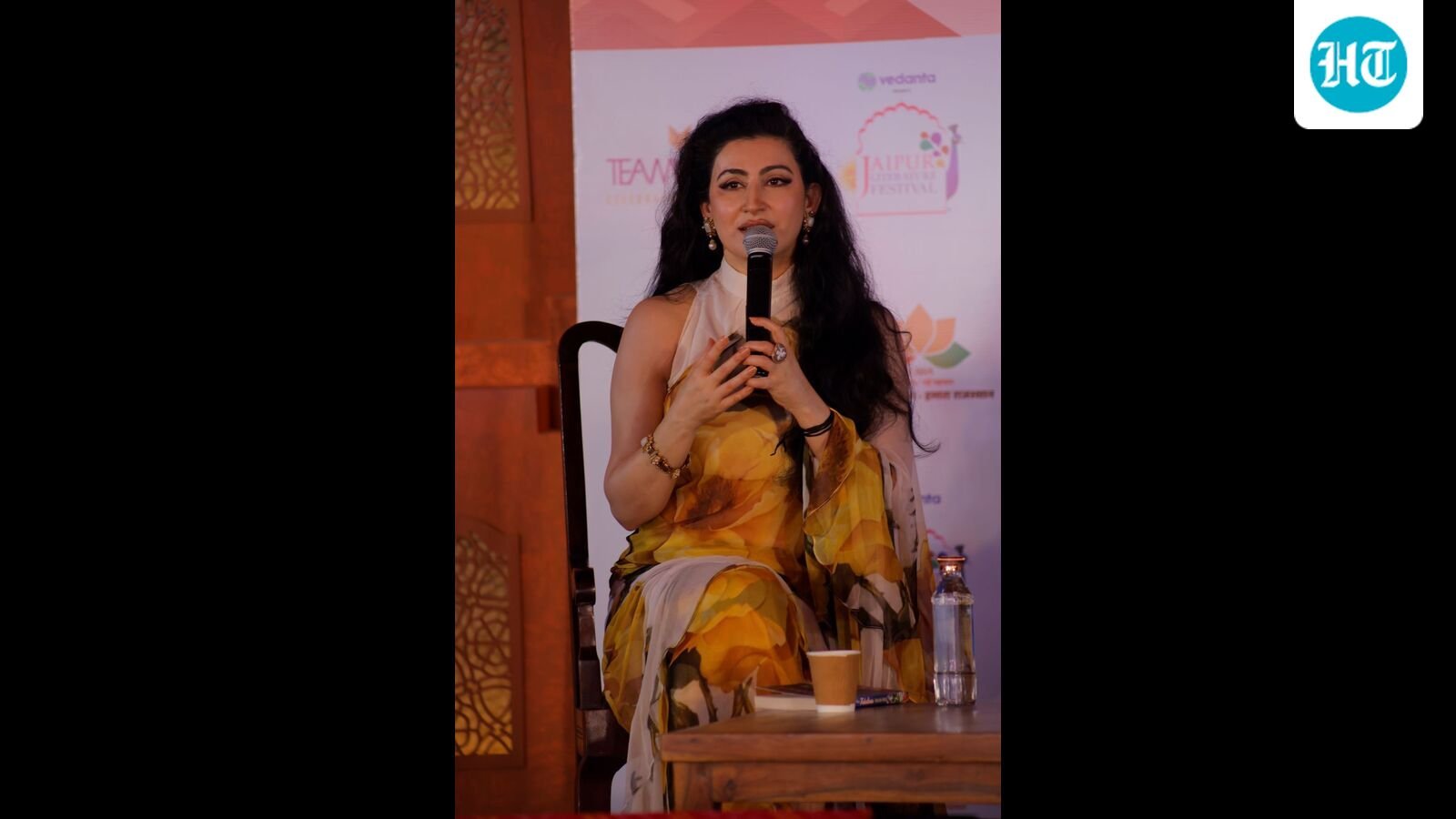
You note in the Prologue that readers may take your book as a manifesto; however, several personal bits in The Art of Being Fabulous make it appear that Shalini Passi, as most of her viewers know her through Fabulous Lives vs Bollywood Wives, is claiming her personhood beyond what she is perceived to be. Was that intentional?
Writing became an act of reclamation — not defensive, but healing. I wanted to bridge the polka-dotted image people recognise and the deeper currents that move through my life. The personal anecdotes aren’t confessional in a sensational way; they’re connective tissue. When I share my struggles or my journey towards integration, I’m creating space for recognition [to help] readers understand that fabulousness isn’t perfection. It’s presence. It’s showing up authentically.
The vulnerability found me as much as I found it. That’s where the real power lies — in the courage to be seen fully, beyond the carefully curated surfaces. I want people to understand that the energy they perceive as “fabulous” isn’t something I wear like a costume. It’s something I’ve cultivated through inner work and learning to trust my own frequency.
While dwelling on the ‘legacy’ aspect of being fabulous, you note that “small things” matter to you. However, the examples that you share are of appearances in Big Boss and at Cannes. How do everyday incidents make you reflect on legacy differently?
I understand the seeming contradiction, but let me clarify — those platforms are significant because of what happens in the invisible spaces around them, the moments no camera captures.
Legacy, for me, lives in how I greet every person who works in my home with genuine warmth, regardless of their position. It’s in teaching my son that material success means nothing without compassion. It’s in spending time with a young artist who’s terrified to showcase her work, or sitting with a woman at a local market, honouring her craft and her story. These seemingly small interactions [are] where legacy actually lives.
Every morning, when I choose gratitude over complaint, when I respond to negativity with grace. These are the consistent choices that build character. Platforms like Cannes give me visibility, but legacy isn’t a monument. It’s resonance. It’s the permission you give others to live more freely, the values you embody when there’s no applause. That’s what lingers.

There was a time when you divided your life into distinct buckets — spiritual, artsy, and public. Several people believe in utilising distinct parts of their personalities for various endeavours, but you later thought that a cohesive self is probably better. What made you decide that?
The shift happened gradually, like watching a sunrise. For years, I operated in separate compartments because I thought that’s what was expected. That was the case whether it was to do with the sophisticated art patron, the devoted spiritual seeker or the glamorous public figure. It was exhausting, like constantly changing costumes for different performances.
The transformation began during a meditation retreat. What came wasn’t a dramatic revelation but a simple truth: fragmentation creates friction. When you’re constantly switching between versions of yourself, you’re never fully present anywhere. The spiritual Shalini felt guilty about the luxury. The art collector wondered if her pursuits were frivolous. The public Shalini was carefully managed. None felt completely authentic.
Integration came when I realised my love for art is spiritual — it’s about connecting with divine expression. My public presence can extend my values. My spirituality doesn’t require renouncing beauty; it deepens my appreciation. Now, when I walk through my collection, I’m experiencing the sacred. When I appear publicly, I bring my whole self. There’s profound freedom in being true rather than performing.
Randomness is an aspect that people greatly gravitate towards to understand their lives. However, you tend to find a “message” or reason behind everything, which, to me, suggests that you process incidents, learning the “why” and “how” behind them. But it can be taxing, too. What strategies do you use to do that without diminishing your light, your aura?
You’ve touched upon something I think about often. Yes, I look for meaning — it’s reflexive now, shaped by my spiritual practice and belief in karma. But you’re right that it can become exhausting if not balanced properly.
My primary strategy is discernment. Not everything requires deep analysis. Sometimes a challenging day is just a challenging day. I’ve learned to distinguish between genuine learning opportunities and overthinking. Meditation creates space between experience and interpretation. I can observe without immediately needing to conclude.
I also practice “meaning with lightness”. I hold insights loosely, like butterflies, rather than pinning them down. This prevents the process from becoming heavy. And crucially, I balance introspection with joy. If I’m spiralling into analysis, I deliberately engage with something pleasurable — dancing, painting, spending time with loved ones. Inner work matters, but so does inner play.
Finally, I remind myself that not everything needs to be a lesson. Sometimes experiences are just meant to be lived, felt, and released. That acceptance itself has been liberating. It’s about trusting that understanding will come when it’s meant to, rather than forcing meaning everywhere.
You’re quite okay with being misunderstood, and you note that perhaps it’s a price one pays. I was wondering in that transaction how you tend to navigate this imbalance in who you are and what people tend to believe about you, for often a misleading perception can mean a lost opportunity or impact one’s career, etc.
I won’t pretend this is always easy. There are moments when I read something fabricated about my intentions, and it stings. I’m human. But here’s what I’ve learned: trying to control perception is a losing battle. If I spend my energy constantly correcting and defending, I’ll have nothing left for actually living and creating.
I’ve made peace with a fundamental truth — people will form opinions based on limited information, their own projections, sometimes complete fiction. The world often wants to flatten complex people into digestible narratives. I refuse to flatten myself to fit those narratives.
Regarding lost opportunities — yes, that’s real. But I’ve found that the right opportunities, the ones aligned with who I truly am, find their way to me regardless. If an opportunity is lost because someone believed a misconception without engaging directly with me, perhaps it wasn’t aligned with my path anyway. I trust in divine timing.
I navigate this by staying rooted in my own truth. I know who I am. My family knows. My close circle knows. For everyone else, I let my work speak — my art initiatives, my philanthropy, my consistent actions. Being okay with being misunderstood is an exercise in detachment. It’s about trusting that authenticity attracts aligned energies, and that my peace of mind is more valuable than universal approval.

Besides the principles you’ve shared in the book, please share a few things that people can do easily so they can begin their journey to being fabulous.
Absolutely! Fabulousness isn’t about grand gestures — it starts with small, accessible shifts. You can start your morning with gratitude. Before checking your phone, take 60 seconds to acknowledge three things you’re grateful for. This rewires your brain toward abundance.
Or curate a small space that brings you joy — your bedside table, work desk, or a corner. Place something beautiful there: flowers, a meaningful photograph, art you love. Beauty in your immediate environment elevates your daily experience. You can also develop one signature element — a particular fragrance, a style of accessory, your unique laugh, or how you greet people. Something intentional that makes people think, “that’s so them”. [I think one should] practice deep listening, too. Give people complete attention. This creates a magnetic presence.
Do one thing, daily, just for joy — dance, read poetry, try a new recipe. Joy is renewable only if you replenish it. [And you must learn to] say no without guilt. Protect your energy fiercely. And finally, find a practice that connects you to something larger — meditation, prayer, nature, creative expression.
This spiritual grounding allows your outer shine to have depth. These practices are accessible to everyone, but their impact is immeasurable. Fabulousness is about intentionality and presence, an energy you cultivate from within, not a status you acquire from without.
Saurabh Sharma is a Delhi-based writer and freelance journalist. They can be found on Instagram/X: @writerly_life.
