

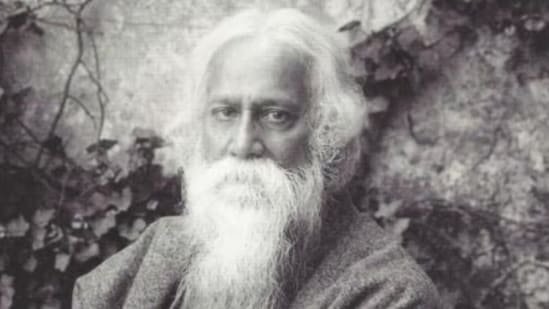
Today’s quote comes from Rabindranath Tagore, the Nobel laureate poet, philosopher, and polymath, whose thoughts on art, science, and spirituality continue to resonate globally. In July 1930, during his philosophical exchange with Albert Einstein in Berlin, Tagore explored the nature of truth, reality, and beauty, emphasising that understanding arises from harmony between man and the universe. (Also read: Quote of the Day by Swami Vivekananda: ‘Take up one idea, make that one idea your life, think of it, dream of it…’ )
What Rabindranath Tagore’s quote means
In his discussion with Einstein, Tagore expressed:
“When our universe is in harmony with man, the eternal, we know it as truth, we feel it as beauty.”
This insight highlights that truth and beauty are not merely intellectual concepts, they are lived experiences. When human consciousness aligns with the fundamental rhythms of the universe, life itself becomes a reflection of harmony and understanding. Creativity, wisdom, and aesthetic appreciation arise naturally when this balance is maintained.
Why this quote is relevant today
In a world dominated by noise, distractions, and relentless pursuit of outcomes, Tagore’s words serve as a reminder to slow down, reflect, and attune ourselves to the larger patterns around us. Whether in art, science, relationships, or personal growth, seeking harmony with the universe can lead to deeper clarity, meaningful experiences, and a profound sense of connection.
Tagore’s philosophy encourages dreamers, thinkers, and creators to cultivate awareness, observe life deeply, and recognise the interplay of human consciousness with the eternal. By doing so, every act of creation or reflection can embody both truth and beauty. His insight invites us to find balance within ourselves and to see the extraordinary in the everyday.
(Also read: Quote of the day by Thomas A. Edison: ‘Genius is one percent inspiration and ninety-nine percent perspiration’ )
More about Rabindranath Tagore
Rabindranath Tagore, born in 1861 in Calcutta, was a towering figure of the Bengal Renaissance, a poet, musician, painter, philosopher, and social reformer. Known also by his pseudonym Bhanusimha, Tagore reshaped Indian literature and music. In 1913, he became the first Asian and first non-European to win the Nobel Prize in Literature, recognised for his collection Gitanjali and his contribution to modern poetry.
Beyond literature, he founded Visva-Bharati University at Santiniketan, promoting education that bridged Eastern and Western thought, and his compositions inspired the national anthems of India and Bangladesh, making him a cultural icon whose influence transcends borders.
