

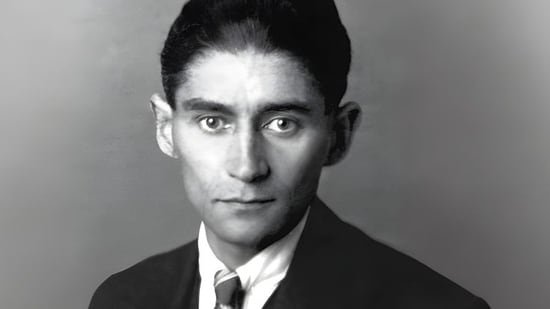
Today’s quote of the day comes from Franz Kafka, one of the most influential literary figures of the 20th century. Known for his haunting explorations of alienation, bureaucracy, and the absurdities of modern life, Kafka’s works continue to resonate with readers more than a century after they were written. Born in Prague in 1883, Kafka wrote in German and produced a body of fiction that is now considered central to modernist literature.
Also Read | Quote of the day by Serena Williams: ‘The success of every woman should be the inspiration to another…’
The quote, “Logic is of course unshakeable, but it cannot hold out against a man who wants to live,” appears in his unfinished novel The Trial, first published posthumously in 1925. The novel follows Josef K., a bank clerk who is suddenly arrested and prosecuted by an opaque, labyrinthine legal system without ever being told the nature of his crime. Throughout the story, Kafka examines the tension between rational systems – like law, bureaucracy, and logic – and the unpredictable, emotional impulses that define human life. This quote reflects one of the novel’s central themes: the idea that human existence cannot always be confined to neat, logical structures.
What the quote means
At its core, Kafka’s quote highlights the limits of pure logic when confronted with the raw force of human will. Logic is described as “unshakeable,” suggesting that reason, rules, and systems possess their own internal consistency. Yet Kafka reminds us that life itself is rarely governed entirely by rational principles.
The phrase “a man who wants to live” symbolises human instinct, passion, and determination. People do not always act according to what is rational or orderly; they act according to desire, survival, and emotion. When someone truly wants to live – whether that means fighting injustice, pursuing dreams, or simply asserting their individuality – they may challenge systems that claim to be logical or inevitable.
Kafka’s insight suggests that life resists rigid frameworks. While logic can structure institutions and rules, the unpredictability of human experience often disrupts those systems. The quote therefore captures the tension between orderly reasoning and the messy, defiant vitality of being alive.
Why this quote is relevant today
Kafka’s words remain strikingly relevant in today’s world, where many aspects of life are governed by algorithms, data, and systems designed to operate logically and efficiently. From bureaucratic institutions to digital technologies and artificial intelligence, modern societies often prioritise rationality and measurable outcomes. Yet human lives rarely unfold according to perfect logic.
People continue to challenge systems when those systems fail to account for human needs, dignity, or freedom. Whether it is individuals speaking out against injustice, pursuing unconventional career paths, or resisting pressures to conform, the desire to live authentically often pushes back against rigid structures.
Kafka’s quote therefore reminds us that logic alone cannot define what it means to be human. Life involves contradictions, emotions, and impulses that defy calculation. In recognising this, Kafka encourages readers to remember that the human spirit – driven by the will to live, question, and resist – can endure even in the face of seemingly unshakeable systems.
