

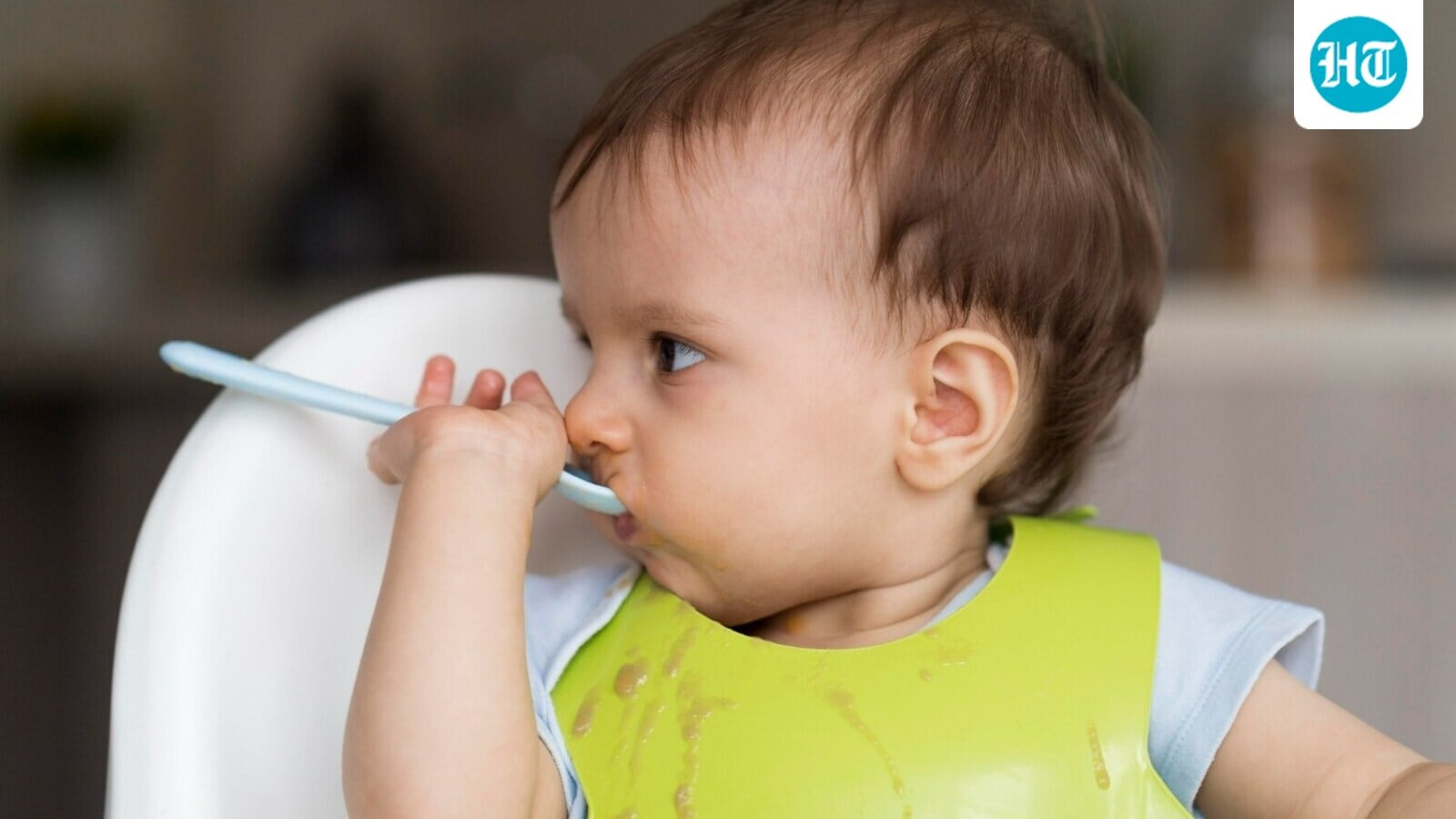
Feeding time with babies can be a real struggle for parents, from endless purées to messy force-feeding. But what if your little one could learn to feed themselves as early as 6–7 months? Dr Pawan Mandaviya, consultant paediatrician and newborn specialist, shares in his September 15 Instagram post how a simple approach called baby-led weaning can make it possible. (Also read: Paediatrician warns of rising ‘diabetes and heart disease’ in children; blames poor lifestyle and Western diet )
What is baby-led weaning and how does it work
Dr Pawan explains in his post, “Just imagine, this little baby is only six to seven months old, yet he is feeding himself, drinking milk on his own, and that too without any help. This is possible through baby-led weaning.”
He adds, “In India, when a baby turns six months, we usually prepare vegetable purée or khichdi and feed it to the child. Mothers often try every recipe they find on YouTube, but still complain that mealtime is a struggle. Many times, parents hold the baby’s hands and legs to forcefully feed them. This creates a negative association with food. The problem arises when all the control lies with the mother. Even if the Indian baby is eating, the mother keeps wiping the child’s mouth repeatedly, which irritates the child.”
How can parents encourage self-feeding safely
“In Western culture, as soon as the baby turns 6–7 months, they are placed in a high chair with clothes removed (to avoid mess), and baby-led weaning is practised. Once your baby is around 7 months and can sit up, you can place them in a high chair or even on your lap. Offer soft finger foods such as boiled banana, chikoo, small pieces of idli, moong dal cheela, or tiny oat pancake bites,” says Dr Pawan.
Talking about how it works, he advises, “The key is not to put any pressure on the child. Just ensure safety while the baby is learning to eat. And the best tip? Sit and eat with your baby. When your baby sees you eating, they will naturally try to eat too.”
“So instead of the traditional way of force-feeding, let your child learn self-feeding. This way, they’ll enjoy food, learn at their own pace, and you’ll also be stress-free about finishing meals,” he concludes.
Note to readers: This report is based on user-generated content from social media. HT.com has not independently verified the claims and does not endorse them.
This article is for informational purposes only and not a substitute for professional medical advice.
