

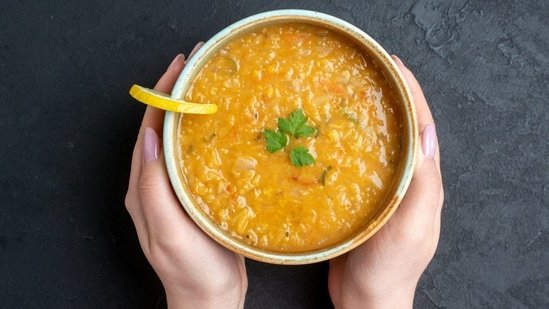
Dals are often referred to as a ‘superfood’ in Indian households. Nutritionist Deepsikha Jain took to Instagram to highlight the transformative power of dals in her January 5 post, sharing that while dals are excellent plant-based protein sources, the key to unlocking their benefits lies in soaking them prior to cooking to reduce anti-nutrients. Also read | 5 lip-smacking moong dal recipes you can easily make at home
The golden rule: don’t forget to soak
She wrote in her caption, “Dal have great power to improve your health. Legumes overall are great plant based foods which can improve your heart health, gut and immunity. But don’t forget to soak it prior.” In the accompanying video, Deepsikha broke down specific dals that target common health concerns, from insulin sensitivity to digestive comfort.
Tailoring your dal to your health goals
For those struggling with poor gut health or frequent bloating, she specifically recommended opting for split versions of legumes. According to the nutritionist, these versions are significantly gentler on the stomach as the removal of the outer skin (or splitting the grain) reduces the concentration of complex sugars and anti-nutrients that often lead to digestive distress.
She said, “If you have sensitive and poor gut health, please eat split moong dal or any split dals because this is much easier to digest for your stomach. They also have less amount of anti-nutrients, making them easy to digest.”
In the video she shared, Deepsikha added, “Eat chickpeas if you have poor heart health because this is rich in potassium, fibre and magnesium that can actually improve your heart health and weight functions.”
She also said, “If you have polycystic ovary syndrome (PCOS), then whole moong dal is the best because it is so much lighter; it can actually help reduce your inflammation and also not whack your hormones. If you have diabetes, then masoor dal is really good for you because this has so much more fibre that can actually make your body much more insulin sensitive, hence managing diabetes better.”
Click here if you need more tips for choosing different types of dal – from timing, soaking, and spices to pair with to other small tweaks you can make.
Note to readers: This report is based on user-generated content from social media. HT.com has not independently verified the claims and does not endorse them.
This article is for informational purposes only and not a substitute for professional medical advice.
