

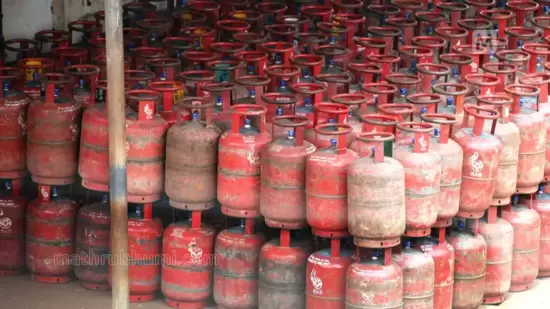
Rising tensions in the Middle East are beginning to ripple through India’s food industry. The ongoing conflict involving Iran and the United States has pushed global oil prices higher and disrupted energy supply routes, including the crucial Strait of Hormuz. For a country like India, which relies heavily on imported energy, the fallout is being felt through higher LNG costs, rising fuel prices and increasing pressure on gas supply chains.
The ripple effects have reached restaurants and street food vendors across the country. A shortage of commercial LPG cylinders—combined with the government invoking provisions under the Essential Commodities Act—has left the commercial food sector scrambling for alternatives. Small vendors and large restaurant chains alike are adjusting menus, shifting to electric appliances and cutting back operations to cope with the supply crunch.
Restaurants cut menus, turn to electric alternatives
Restaurant operators in the capital say the shortage is already affecting daily operations. Debaditya Chaudhury, managing director of the restaurant chain Chowman, which operates outlets across India, says supply gaps are visible in several cities. “Cities like Bangalore and Mumbai, where we have a significant operational presence, are witnessing a more noticeable supply gap. Chennai is also beginning to show early signs of irregular supply. We may temporarily restrict a few menu items that require longer preparation time like momo, bao and other fried items,” he says.
In Delhi–NCR, restaurants are trying to quickly adapt to the situation. Varun Khera, head of the Noida chapter of the National Restaurant Association of India (NRAI), says many establishments are reducing their dependence on gas. “The plan is that we are trying to limit the menu. We are trying to go electric; we have already ordered induction cooktops, commercial induction, and more deep-fat fryers. I’ve also told them to use gas for the bare essentials. Furthermore, we’ve also ordered rice cookers, boilers and steamers — whatever things we can use as an alternative, we are trying to arrange. Many people are also ordering combi ovens, but they are very expensive — around ₹2 to 3 lakhs. There is also no availability of gas at any price in the black market. People are ready to pay ₹5,000– ₹6,000, even ₹7,000, but there’s nothing available.”
The dependence on commercial LPG in the capital is high. Amit Bagga, co-founder of Daryaganj Restaurants, says nearly 75–80 percent of eateries rely on LPG cylinders to operate. “Most restaurants maintain only one to two days of LPG inventory, so any disruption in supply can quickly lead to closures of the restaurants. This could impact the livelihood of thousands of restaurant employees, and also affect the large number of people who depend on restaurants for their daily meals. We urge the government to treat the restaurant sector as an essential service, as was done during COVID-19, and ensure uninterrupted LPG supply to the industry,” Bagga says.
‘Cannot use wood, coal in Delhi…’ founders say
Founder Joy Singh, who runs Yeti the Himalayan Kitchen and Raasta the Caribbean Lounge, along with other independent restaurants across Delhi and Mumbai, says the impact varies depending on the fuel source used by restaurants.
“It’s only the properties that rely on LPG that are affected, mostly the standalone outlets. The mall properties that run on CNG are not affected at all. If the gas does not reach us in time, we will either have to resort to something completely out of the box or simply shut down, because letting go of staff is not something we believe in.”
When asked what he’s doing to deal with the shortage, he said, “We got a delivery of LPG a few days ago because we planned in advance. But we usually need these cylinders every two to three days to make sure the restaurants are up and running at full capacity.”
He further said, “We have also been reducing the menu. At Cafe Loca in Delhi, for instance, we have switched off the tandoor and are using the oven system for now. Once we run out of the essential LPG that we have stored, we will have to start investing in induction cooktops. But due to the lack of availability, the prices of induction equipment have also gone up a bit. If the situation gets worse, we will not stop dine-in services, but we may stop deliveries because most of our restaurants focus on experiential dining.”
Furthermore, commercial kitchens in Chennai, Bengaluru and Kolkata, among other cities, have reportedly turned to wood-fired cooking—often using scrap lumber—to keep their kitchens running and ensure that at least some food can be served.
However, such alternatives are not viable in Delhi due to strict pollution regulations. “Eateries in some parts of India might resort to coal or wood. But in Delhi, due to government regulations and rising pollution concerns, we cannot use coal or wood for cooking without risking fines,” he said.
Government institutions also hit
The Lawyers’ Canteen at the Delhi High Court has temporarily halted the preparation of main course dishes after running out of LPG cylinders. In a notice issued on March 11, the canteen management said the shortage of LPG supply has made it difficult to cook and serve regular meals. “This is to respectfully inform you that due to the unavailability of the LPG gas cylinder at present, we regret that we are unable to prepare and serve the main course items in the Lawyers Canteen,” the notice stated.
The canteen management also said there is no clear timeline for when the gas supply will resume. “At the moment, we do not have any information regarding when the LPG supply will be restored. We will resume the preparation of the main course as soon as the gas supply becomes available,” the notice said.
However, the canteen added that some food items that do not require cooking will continue to be available in the meantime. “Other food items such as sandwiches, salads, fruit chaats and similar refreshments are available and will continue to be served,” it said. The notice, signed by Sandeep Sharma of the Lawyers’ Canteen, apologised for the inconvenience caused and sought their understanding.
Small vendors worst hit
The impact appears even sharper in smaller cities where supply networks are thinner. In Lucknow, vendors say they have limited ability to shift to expensive electric alternatives. Harshit Dhawan, who runs the 42-outlet food chain Food Valley in the city, says eateries are already cutting down menus. “It’s a tight situation. People are tweaking and curtailing the menu. People are somehow managing but this won’t last too long. Alternative means are too costly and not possible in small kiosks,” he says.
The strain is already visible in Lucknow’s popular food hub Chatori Gully, where 49 of the area’s 160 stalls have already shut operations due to the shortage. A soya chaap vendor says many stalls may soon run out of options. “In 2–3 days we will be a handful of people who are dependent on other means of cooking,” he says.
Lucknow Golf Club secretary Rajnish Sethi confirms that establishments are already running out of cylinders. “We are out of supply of commercial cylinders and facing restaurant closure. We may operate with grills and basic induction-based cooking,” says Sethi.
What are distributors saying?
Distributors say supply has dropped sharply. Cylinder supply manager Mangal Sahu explains the pressure on the ground. “From one big lorry (300 cylinders) a day to medium size (120) supply in three days, there is a lot of pressure to supply only to authorised people. People are going to rural areas to get cylinders at whatever cost. There is too much strictness on blackmarketing,” says Sahu.
The NRAI has now issued an advisory asking restaurants to conserve gas, introduce limited “crisis menus” with faster cooking items and collaborate with other establishments to manage the shortage. Chef Ishtiyaque Qureshi, who runs the cloud kitchen Murgori in Mumbai, says the association has advised members to explore alternative cooking methods and improve operational efficiency until supply stabilises.
For now, however, many small vendors say they are simply waiting to see how long they can keep their stoves running.
