

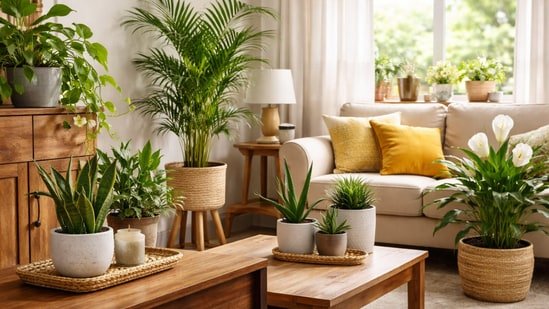
Indian homes have a lot going on. Dust sneaks in through windows, traffic fumes hang around longer than guests, and indoor air quietly takes a hit from furniture, paints, and cleaning liquids. That slightly heavy feeling in closed rooms is real. Indoor plants help fix this in the most low-effort way possible. Certain plants act like natural air cleaners, taking in pollutants and giving back fresher air. The trick is picking plants that actually survive Indian weather, moody humidity levels, and corners that barely see sunlight.
The hard-to-kill champions
If remembering watering schedules is not your strength, start here!
The snake plant is the ultimate set it and forget it option. It releases oxygen at night, which makes it perfect for bedrooms. It handles dry heat, coastal humidity, and long gaps between watering without drama. Once every two weeks is more than enough.
Money plants are just as forgiving. They help clean indoor air and grow happily in soil or even a glass of water. Pop one on top of a cupboard or shelf and let it trail down. It grows fast, looks cheerful, and rarely throws tantrums.
The tropical purifiers
If you love a fuller green look, tropical plants bring serious mood-lifting energy along with better air.
The areca palm works like a natural humidifier, which is a blessing in air-conditioned rooms. It likes bright but soft light and fills empty living room corners beautifully.
Peace lilies are great for shaded spots and help filter chemicals found in floor cleaners. They are also very expressive. Droopy leaves mean it is thirsty. Keep it away from harsh afternoon sun since strong light can damage its flowers.
Compact solutions for desks and shelves
Short on space does not mean missing out.
Spider plants are small, neat, and great at clearing out indoor chemicals released by inks and paints. They are also pet-friendly, which makes them ideal for homes with curious paws.
Aloe vera earns its spot twice over. The gel is useful, and the plant reacts when indoor air quality drops. Brown spots on the leaves can signal higher pollution levels, making it a quiet little warning system.
The author of this article holds a Master’s Degree in Interior Design and has spent over a decade in research, teaching, and designing homes from scratch.
Disclaimer: At Hindustan Times, we help you stay up-to-date with the latest trends and products. Hindustan Times has an affiliate partnership, so we may get a part of the revenue when you make a purchase. We shall not be liable for any claim under applicable laws, including but not limited to the Consumer Protection Act, 2019, concerning the products. The products listed in this article are in no particular order of priority.
