

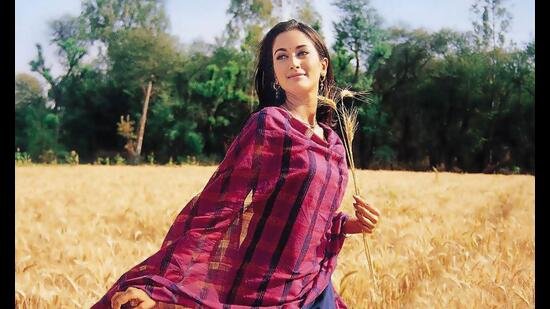
Geeta, from Swades. Ashutosh Gowariker cast Gayatri Joshi because he wanted someone unfamiliar to Bollywood audiences. She was a beauty-pageant winner, and had turned down several roles before the 2004 film. She acted opposite Shah Rukh Khan, earned critical praise and multiple Best Female Debut awards. Then she walked away, to wed businessman Vikas Oberoi in 2005. She is a rare case of Bollywood’s most graceful one and done.

Subodh, from Dil Chahta Hai. Asad Dadarkar’s character has been living in our heads rent-free since the film’s 2001 release. The walking, talking, heart-shaped-balloon-giving nitpicker is what made the friendship seem real. IRL, Dadarkar wasn’t an actor, just a friend who once didn’t let Farhan Akhtar stay a night in Vegas, because it didn’t fit the itinerary. Akhtar cast him as Subodh in revenge. Dadarkar came, delivered comedy gold, and disappeared.

Charlie Bucket, from Willy Wonka & the Chocolate Factory. Peter Ostrum was 12, performing in a local children’s theatre in Cleveland when he was discovered. After acing the sincere Charlie Bucket in the 1971 film, he decided he was done with Hollywood. He found its “hurry-up-and-wait” format frustrating. Ostrum turned down a three-film contract, opting to pursue a degree in veterinary medicine from Cornell. He still receives $8-$11 as royalty every three months.

India Wilkes, from Gone With The Wind. Alicia Rhett had no acting experience. She was cast as the icily proper India Wilkes because she had “natural poise”, the perfect, rigid foil to Scarlett O’Hara’s chaos in the 1939 classic. But once production wrapped, she felt no pull toward stardom. She retired home to South Carolina to become a renowned portrait painter, leaving the industry with a perfect batting average.

Sgt Bob Johnson, from A Canterbury Tale. John Sweet, an actual US Army sergeant, was spotted in a military play while stationed in England during WWII. Director Michael Powell liked his soulful, unpolished authenticity, and gave him the role of the earnest Johnson. Sweet’s role anchored the 1944 masterpiece. After the war, he returned to America to become a schoolteacher. He even donated his acting fee to the National Association for the Advancement of Colored People (NAACP).

Vicky Malhotra, from Yalgaar. If you lived through the 1990s and had a pulse, you’d know that model-turned-actor Vicky Arora was an overnight sensation. He gave us the classic “Ho jata hai kaise pyar”. It was a dream debut — Manisha Koirala and Sanjay Dutt were in the 1992 film. But Arora’s contract and professional disputes with director Feroz Khan meant his career fizzled out. He now runs businesses in Mumbai and Dubai.

Newt, from Aliens. Carrie Henn was spotted in a school cafeteria in England, while her father was stationed there with the US Air Force. As Newt, the resilient survivor, she became the heart of the 1986 sci-fi hit, holding her own against Xenomorphs. The role earned a Saturn Award, but sci-fi’s ultimate survivor left the spotlight for a normal life after just one film. She thrived as a schoolteacher in California.

Joan of Arc, from The Passion of Joan of Arc. The 1928 silent film is the only time we see French stage actor Renée Jeanne Falconetti on screen. It’s still one of cinema’s most devastating performances. Director Carl Theodor Dreyer pushed extreme close ups, no makeup, and emotional endurance to breaking point. Falconetti returned to theatre. For decades, only damaged versions of the film existed, until Dreyer’s final cut was found in a Norwegian mental institution in 1981.

Polly Maggoo, from Who Are You, Polly Maggoo? Dorothy McGowan was already a popular model, so it made sense to play a version of herself in William Klein’s 1966 satire. The film gently skewered the Paris fashion scene that McGowan ruled, making her casting an inside joke. Soon after, she stepped away from modelling and cinema by choice, raised a family, and lived quietly in New York. She died in 2022, after giving only occasional interviews.

Medea, from Medea. We won’t count the documentary. This is the only time opera legend Maria Callas acted on screen. Pier Paolo Pasolini chose her for the title role in 1969 not for her voice (she stays mostly silent, does not sing a single note) but for her severe, timeless presence. Callas never acted again, retreating as her career and health declined. When she died in Paris in 1977 at 53, many claimed her relationship with Aristotle Onassis had broken her. Biographers point to heart failure linked to a rare autoimmune disease instead.
From HT Brunch, March 21, 2026
Follow us on www.instagram.com/htbrunch
