

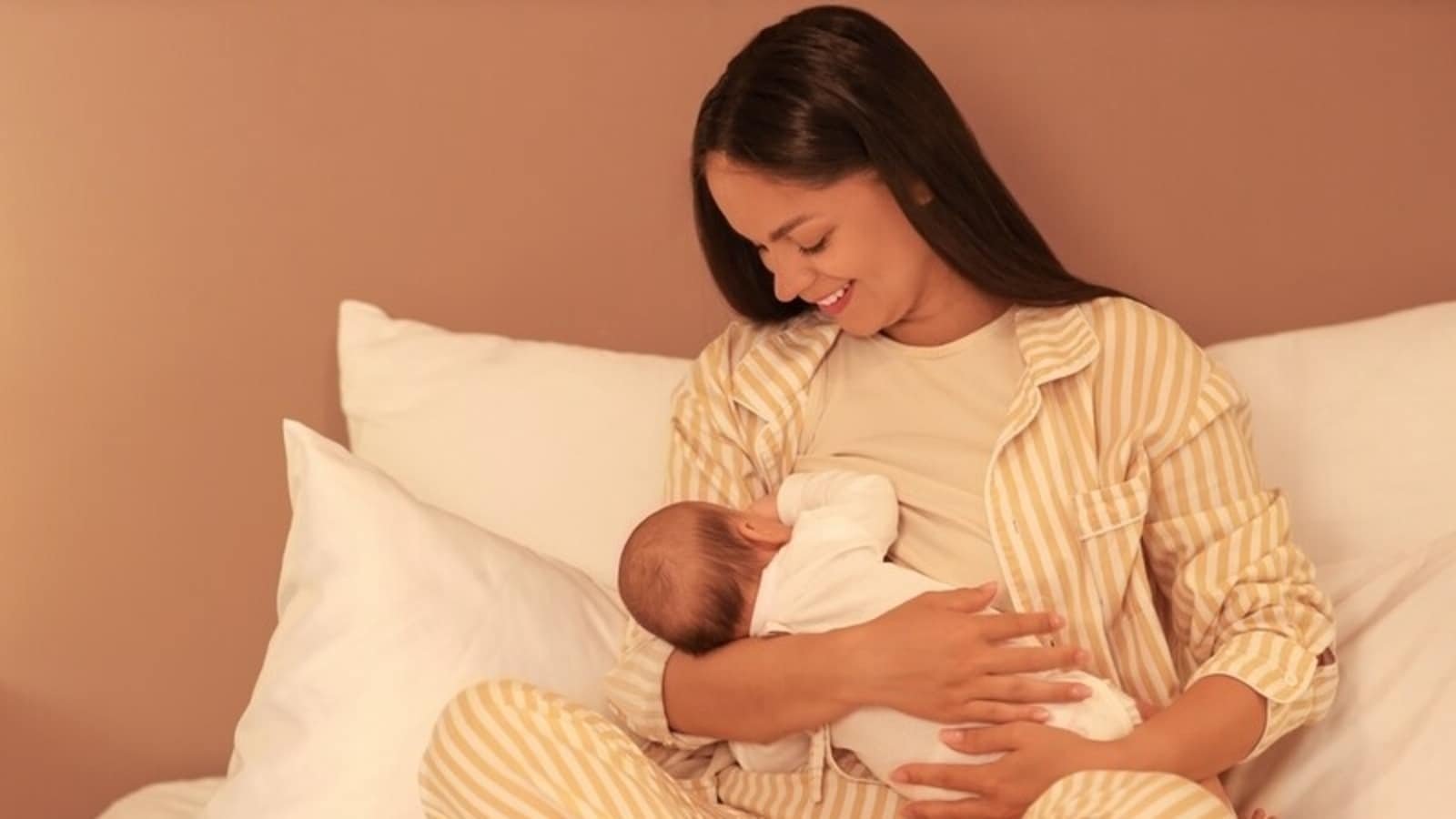
Breastfeeding Week is observed from August 1 to 7 every year. As it wraps up, let’s take a closer look at one of the most misunderstood aspects of breastfeeding: its relation to fertility.
Often, there are many questions surrounding breastfeeding, periods, and conception. Can you get pregnant while breastfeeding? Does breastfeeding delay periods? And is breastfeeding a natural form of birth control? With so many questions, it’s easy for myths and misconceptions to take over. It becomes vital to be well-informed to get better clarity.
ALSO READ: 11 common breastfeeding myths in Indian families busted
Dr Swapnil Agrahari, Sr Consultant, Obstetrician & Gynaecologist at SilverStreak Multispeciality Hospital, shared with HT Lifestyle a comprehensive explanation behind this connection between breastfeeding and fertility.
But first, he highlighted the benefits of breastfeeding and what it means for a mother’s health. He said,“It also offers long-term health benefits for the mother by reducing the risk of certain cancers, such as breast cancer and ovarian cancer, and potentially decreasing the risk of developing type 2 diabetes mellitus.”
Does breastfeeding delay periods?

Often, new mothers who are breastfeeding observe a delay in periods. Dr Swapnil Agrahari elaborated on how breastfeeding affects fertility, causing a hormonal shift in the menstrual cycle. He confirmed, “Breastfeeding can indeed influence fertility. When a mother breastfeeds frequently, especially within the first six months postpartum and without supplementing with formula or solids, it can suppress ovulation. This natural delay in the return of menstrual cycles is called lactational amenorrhea.”
Why you may still need contraception
But a delay in periods does not necessarily mean that it is a guaranteed form of natural birth control. Dr Swapnil Agrahari warned against this as well, as he added, “For some women, this can serve as a temporary form of birth control. However, this effect is neither permanent nor guaranteed.”
This is a common misconception, but ovulation can begin again, increasing the chances of being pregnant. Dr Agrahari explained, “What’s often overlooked is that ovulation can resume before the first postpartum period appears. In other words, a woman may be fertile and capable of becoming pregnant, even if she hasn’t had a single period after childbirth. This makes relying solely on breastfeeding for contraception risky if you’re not planning another pregnancy soon.”
So, how do you know if your ovulation has returned and you might be at risk of getting pregnant, even if your periods haven’t? Are there any signs? Dr Swapnil Agrahari confirmed that there are signs, even if periods haven’t returned. He noted, “By the time the baby is about six months old — or even earlier if night feeds decrease or solids are introduced — ovulation may resume, even if periods haven’t returned. Given this uncertainty, medical professionals strongly advise considering additional forms of contraception.”
Dr Agrahari further recommended contraceptive options such as progestin-only pills, intrauterine devices (IUDs), contraceptive implants, or barrier methods like condoms. He assured that these methods do not interfere with milk supply and can help new mothers take control of their reproductive choices during this transitional period.
So, it is important to be clear about the common myth that breastfeeding prevents pregnancy. It may delay fertility, but Dr Agrahari reminded that it cannot be used as a substitute for planned contraception.
Note to readers: This article is for informational purposes only and not a substitute for professional medical advice. Always seek the advice of your doctor with any questions about a medical condition.
