

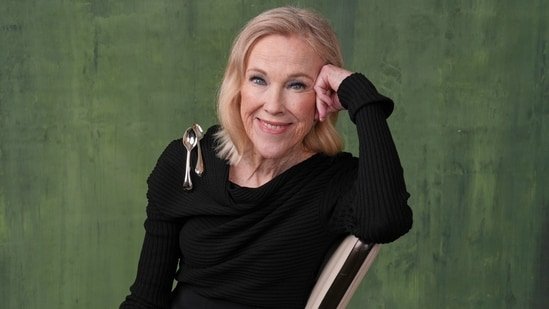
Hollywood icon Catherine O’Hara passed away on Friday at the age of 71. According to reports, the actor was rushed to a Los Angeles hospital in “serious” condition, where she later died.
Also Read | Catherine O’Hara cause of death update: How did Schitt’s Creek star die? Details on health issues
According to Page Six, a spokesperson for the Los Angeles Fire Department revealed that paramedics responded to a medical aid call at O’Hara’s Brentwood home at approximately 4:48 AM. While the official cause of death hasn’t been announced, the actor’s health issues are well-documented.
O’Hara had a rare congenital heart condition called dextrocardia with situs inversus. Her heart was located on the right side of the chest, and other major organs were in a mirror-image position. This condition generally causes no medical issues or symptoms. Here’s everything you need to know about it:
What is dextrocardia?
According to the National Institutes of Health, dextrocardia is a rare congenital condition in which the heart is positioned on the right side of the chest, with its apex pointing to the right. This condition can occur in isolation or in combination with other congenital anomalies, such as situs inversus or structural heart defects.
According to a Johns Hopkins Medicine report, experts are not sure what causes dextrocardia. It occurs in about 1 in 12,000 pregnancies because the heart does not form correctly during fetal development. Though it does not cause any problems, it often occurs alongside other conditions that can have serious effects on the heart, lungs, and other vital organs.
What are the types of dextrocardia?
There are different types of dextrocardio:
- Isolated dextrocardia
- Dextrocardia situs inversus
- Dextrocardia situs inversus totalis
- Dextrocardia with heterotaxy
Catherine O’Hara was diagnosed with dextrocardia situs inversus. According to Johns Hopkins Medicine, in this condition, some other organs are also on the opposite side of the body. For example, the spleen may be on the right instead of its normal position on the left, or the liver may be on the left instead of its normal position on the right.
Symptoms
The report also noted that isolated dextrocardia rarely causes symptoms. However, dextrocardia accompanied by other health conditions can cause:
- Breathing problems
- Cyanosis (bluish skin due to not enough oxygen in the blood)
- Failure to grow and gain weight
- Fatigue, especially when feeding
- Frequent sinus or lung infections
- Jaundice (yellow skin and eyes)
- Pallor (very pale skin)
Note to readers: This article is for informational purposes only and not a substitute for professional medical advice. Always seek the advice of your doctor with any questions about a medical condition.
