

In an era of viral diet trends and protein obsession, a leading heart expert championed a different approach: flavour and fats. Dr Dariush Mozaffarian, a cardiologist and director of the Food Is Medicine Institute at Tufts University, in a February 11 interview with The Washington Post peeled back the curtain on his daily eating habits. His philosophy? Stop counting calories and start embracing minimally processed, healthy fat-rich foods. Also read | Cardiologist shares ‘best diet for heart disease reversal’: Lower or completely stop eating meat, have protein like tofu
The golden rule: eat what’s delicious
Dr Mozaffarian’s primary advice was surprisingly simple: ‘if you don’t enjoy it, don’t eat it’. However, he bridged the gap between ‘tasty’ and ‘healthy’ by focusing on whole foods: “I focus on eating food that’s as minimally processed and as close to natural food as possible… I think people are mistakenly obsessed with protein, when they should be obsessed with healthy fats.”
The cardiologist was quick to debunk social media myths regarding seed oils, noting that plant-based oils, nuts, and seeds are among the most validated heart-healthy foods in medical trials. Dr Mozaffarian shared that he follows a concept of ‘uniform variety’ — eating a rotating set of healthy staples to ensure consistency.
Here’s a closer look at the cardiologist’s daily meals:
Breakfast
His morning routine typically cycles through a couple of options, centred on fruit and healthy fats: his signature smoothie made with one frozen banana, one fresh banana, a large scoop of peanut butter, and a splash of oat milk, or a yoghurt bowl featuring plain, whole-fat yogurt topped with almonds, walnuts, and a mix of berries. Some days, he also ate a hearty toast: walnut cranberry bread with peanut butter, raisins, and fresh berries. The cardiologist shared that if he isn’t hungry, he skips the meal entirely, listening to his body’s internal cues.
Lunch
Lunch is rarely a heavy affair for Dr Mozaffarian, who often opts for a bag of dates, figs, and walnuts or a bowl of soup, or a plain yogurt with fresh fruit.
Dinner
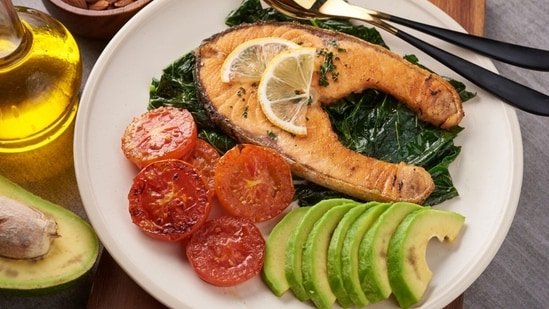
Dinner is where the cardiologist leans into his Persian heritage. The most frequent meal in his household is grilled salmon —specifically dark-meat fish for the higher omega-3 content — served with Persian herb rice (white rice mixed with dill, cilantro, and parsley). Accompanying the meal is often a salad (cucumbers, tomatoes, onions, lemon juice, and olive oil) and a side of whole-fat yoghurt. When bread is involved, Dr Mozaffarian said he insists on thin varieties like pita or lavash, calling doughy bread — and specifically hotdog buns — ‘the worst thing in the world’.
Note to readers: This article is for informational purposes only and not a substitute for professional medical advice. Always seek the advice of your doctor with any questions about a medical condition.
