

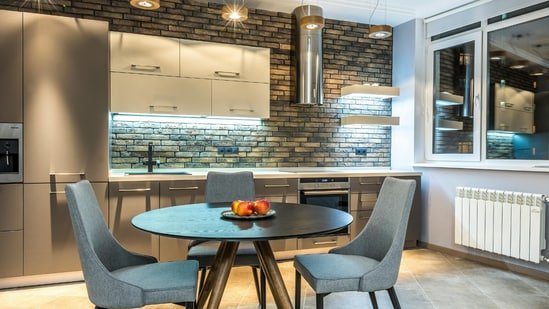
Sometimes, while designing a space, movement matters just as much as the way furniture is arranged. In dining areas or shared spaces where the table sits within the living or drawing room, the shape of the table can influence how people move through the room.

A round table softens the layout instantly. Without sharp corners, movement around the space feels easier and more natural. It also creates a gentle visual flow that rectangular and square tables often interrupt, especially in open plan homes where every piece of furniture shapes the way the room feels.
The psychology of the circle
A round table changes the social mood of a room in a noticeable way. Rectangular tables often create a natural head position. That seat can carry a sense of authority, even in a casual setting. A circular table removes that structure. Everyone sits on equal footing, which makes conversations feel more open and relaxed.
The shape also helps people interact more naturally. Since every seat faces the centre, it becomes easier to stay part of the same conversation.
Why a circular table works so well socially
• No head position
Every seat feels equal, so no one takes on an unspoken leadership role.
• Better eye contact
People can see each other easily across the table, which keeps conversations flowing.
• More inclusive chats
Guests are less likely to form small side conversations that leave others out.
• A calmer visual feel
Curved shapes often feel softer to the human eye, while sharp corners can create a slightly tense visual effect.
Solving the square problem
Many modern floor plans include square dining zones tucked into corners of a living room. In these layouts, a rectangular table can make the space feel tight, especially around the corners.
A circular table softens the layout and improves movement through the room. Without sharp edges, people can move around the table more freely.
Chairs slide out easily, and no one has to squeeze past a pointed corner while walking through the space.
Pedestal bases also help visually lighten the room. Instead of four legs taking up space at the edges, a single central base keeps the floor area looking open.
The result is a dining spot that feels less crowded and easier to use. Round tables also work beautifully in small corners that might otherwise go unused.
The 2026 aesthetic: Materials and textures
Round tables also fit beautifully into the softer design language, gaining attention in homes this year. Straight lines are slowly giving way to shapes and materials that feel closer to nature.
Natural stone is a popular choice for tabletops. Honed travertine in particular has gained attention for its soft texture and warm, sandy tones. Wood finishes are also shifting. Charred wood treatments inspired by the Japanese Shou Sugi Ban technique bring depth and a slightly smoky look to dining spaces. Recycled glass composites are another material gaining attention for their subtle texture and sustainability.
The details matter just as much as the material. Many round tables now feature bullnose edges, which give the tabletop a smooth curved finish. Fluted pedestal bases are also appearing more often, adding gentle texture without making the piece feel heavy. The colour palette stays soft and grounded.
Colours that pair beautifully with round tables
• Soft terracotta tones
• Muted sage greens
• Warm butter yellow
• Light sand and stone shades
Round tables also work nicely with the curved sofas and modular seating that appear in many furniture catalogues today. The shapes complement each other, creating a relaxed layout that feels natural and comfortable for both work and meals.
Style tips: How to design a space around a round table
In many ways, round tables help bring the focus back to what a dining space has always meant. A place for connection, comfort, and shared moments.
The author of this article holds a Master’s Degree in Interior Design and has spent over a decade in research, teaching, and designing homes from scratch.
Disclaimer: At Hindustan Times, we help you stay up-to-date with the latest trends and products. Hindustan Times has an affiliate partnership, so we may get a part of the revenue when you make a purchase. We shall not be liable for any claim under applicable laws, including but not limited to the Consumer Protection Act, 2019, concerning the products. The products listed in this article are in no particular order of priority.
