

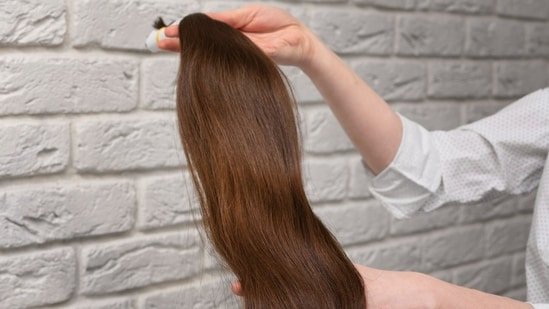
In an era where instant glamour is just a salon visit away, a Mumbai oncologist is urging consumers to look beyond hair extensions‘ aesthetic appeal. While long, voluminous locks are trending globally, she is raising concerns about the hidden chemical cocktail used in their production and attachment. Also read | Oncologist warns that frequent use of chemical hair straighteners may increase the risk of uterine cancer
In an interview with HT Lifestyle, Dr Amrita Srivastava, consultant in radiation oncology at HCG Cancer Centre, Borivali, shed light on the complex relationship between beauty products and long-term health risks.
Chemical connection: cause for concern, not panic
The primary worry stems from the substances used to treat synthetic hair or the adhesives used for application. Dr Srivastava noted that research has identified several “red flag” chemicals in certain extension products, including:
⦿ Flame retardants: often used in synthetic hair to meet safety standards.
⦿ Plasticizers: chemicals used to make materials flexible.
⦿ Organotin compounds: Often used as stabilisers or biocide treatments.
“These have been associated in experimental or epidemiological research with hormone disruption, cellular damage, or reproductive toxicity,” Dr Srivastava explained. However, she was quick to clarify that a ‘direct cause-and-effect link’ between extensions and cancer has not yet been established in humans.
The ‘cumulative risk’ factor
One of the most significant points raised by Dr Srivastava is the pathogenesis of tumours related to hormonal pathways. Cancers such as breast, ovarian, and endometrial cancers are often driven by estrogen. “The combined effect of exposure to endocrine-disrupting chemicals from different sources in the beauty industry could potentially raise the risk of cancer,” she warned.
The danger often lies not in a single exposure, but in the duration, frequency, and manner of absorption (through the skin or inhalation during heat styling). Because the beauty industry in many nations does not require the same rigorous pre-market testing as prescription drugs, consumers are often “in the dark” about their total chemical load.
A balanced approach: how to stay safe
For those who aren’t ready to give up their extensions, Dr Srivastava suggests a strategy of ‘caution over alarm’. She recommended these preventive measures to reduce exposure to potentially harmful chemicals: check product labels for transparent ingredient lists, limit wear time, avoid heat styling, and opt for natural hairstyles periodically.
Who should be most cautious?
While the general public should be mindful, Dr Srivastava highlighted a specific group that should exercise extra care: individuals with a strong family history of hormone-related cancers. For these patients, discussing cosmetic exposures with a healthcare provider is a vital step in long-term risk management.
“As an oncologist, the most crucial course of action would be to proceed with caution rather than alarm. The goal is to support further research and patient education to avoid unnecessary long-term exposure to chemicals,” Dr Srivastava concluded.
Note to readers: This article is for informational purposes only and not a substitute for professional medical advice. Always seek the advice of your doctor with any questions about a medical condition.
