

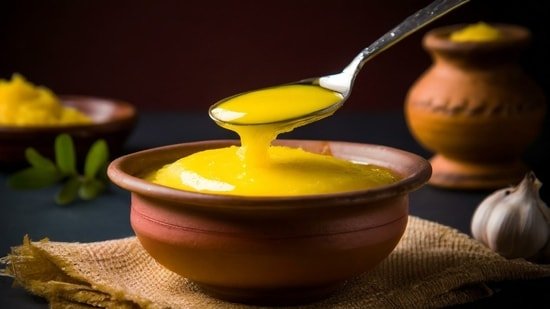
Ghee is frequently found in Indian diets. It is rich and flavourful, imparting a fragrant note to the food. The staple in the Indian kitchen, ghee has been widely used for cooking across generations.
ALSO READ: Is ghee ‘safest food to have’? Start using ghee over oil for this reason, according to doctor
But today, different varieties are available in the market. With this comes a host of myths that can leave you scratching your head, wondering whether ghee should have an active place in your diet. It is high time you learn how to identify authentic varieties and clarify the common misconception around its consumption, so that there is no confusion about including it as a part of a balanced diet. We reached out to experts to get a complete picture on ghee consumption.
Ghee quantity and nutritional profile
DrGopal Jee Sharma, senior consultant physician, Kailash Hospital Dehradun, told us that one teaspoon of ghee is recommended, as it contains 45 calories. In terms of nutritional composition, ghee is rich in saturated fats, but it also contains beneficial fatty acids and fat-soluble vitamins, such as A, D, E, and K, which can be beneficial when consumed in moderation.
Common ghee-related myths
Since ghee is a saturated fat, having concerns about its consumption is not unusual. However, the key is to consume it mindfully. The physician debunked two common myths.
Myth 1: Ghee always causes weight gain
One of the most common concerns people have about ghee is whether it automatically leads to weight gain. The physician shared the context many miss: “Weight gain occurs when total calorie intake exceeds requirements.”
The main game is portion control. Dr Sharma shared, “In small amounts, about 1–2 teaspoons per day, ghee does not automatically lead to obesity if balanced with physical activity and an overall healthy diet.” So this ghee does not need to be eliminated from the diet, as long asyouadhere to this frequency. When consumed in moderation, ghee adds value to your meals.
Myth 2: Heart patients must completely avoid ghee
Are heart patients in danger? The physician answered, “Not necessarily. Heart patients may consume small quantities after medical consultation and regular lipid profile monitoring.”
In fact, he further explained that completeelimination is not alwaysnecessary, and ghee can be balanced with a healthy lifestyle. This includes regular exercise, eating a fibre-rich diet and undergoing periodic cholesterol checks. However, those with conditions such as high LDL cholesterol, uncontrolled diabetes, or existing coronary artery disease should consult a health expert before daily ghee consumption.
Which ghee variant is popular and how to know which ghee is pure?
Now that you are aware of the health aspect, it is also important to understand which ghee variants are gaining popularity in the market. To explore this, we spoke with Arvind Patel, MD of Bharat Vedica, who shared his practical insights on the trend. According to him, A2 ghee is witnessing growing demand across consumers.
However, with rising popularity also comes the challenge of identifying authenticity. As Patel explained, ” As demand for A2 Gir cow ghee rises, so does the challenge of identifying what truly counts as pure. Experts say consumers can rely on a few time-tested cues.”
But most importantly, how do weidentify if a ghee is pure? “When made through the traditional Bilona method, curd ishand-churned and then slowly heated over a controlled flame, allowing the natural fats to separate gently while preserving its nutritional properties. It develops a natural golden hue, a soft grainy texture and a gentle, natural aroma.” But he added that the most critical marker is transparency. “Pure ghee doesn’t need additives or blended fats. A clear ingredient list, traceable sourcing, and an openly explained process are the strongest indicators of authenticity.”
So ghee in itself is not inherently harmful; you just need to eat in moderation and check for its purity.
Note to readers: This article is for informational purposes only and not a substitute for professional medical advice. Always seek the advice of your doctor with any questions about a medical condition.
