

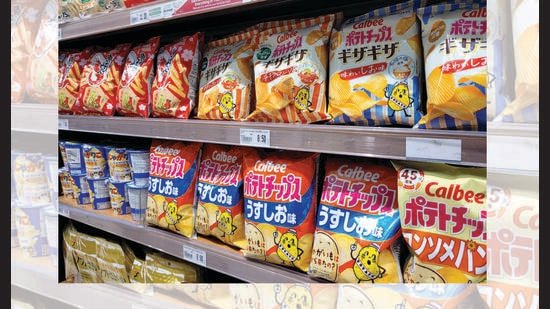
Travel itineraries once revolved around monuments, museums and that one café the internet insisted was unmissable. The usual ways to understand a city’s history, culture, and food. Now, there’s a new stop on the list: The local grocery store. Spend ten minutes at a supermarket when you’re in a foreign city and, oddly enough, the place starts to make sense. Soni Saloni, travel content creator and YouTuber (@SoniSaloni__),swears by it. She was especially blown away by Japan’s convenience stores. “They are incredible, with fresh sushi and bento boxes, and endless matcha and mochi options,” she says. Stacked on those shelves is a clear glimpse into daily Japanese life.
Grocery stores don’t curate culture the way museums or food tours do, through carefully plotted stops at the Louvre Museum or the British Museum, guided tastings of pizza in Naples or curated tapas trails through Barcelona. Those experiences are designed to show you the most photogenic sides of a city. The corner store, on the other hand, is a more honest insight. Plus, it’s cheaper than the souvenir shop and far more entertaining than it sounds. Traveller and explorer Veeresh Mashetty (@Veere_Machete) goes looking for the hyper-local products in the aisles. Think seaweed snacks and chilled packs of onigiri in convenience stores across Asia, or kecap manis in Jakarta. The weirder and more unfamiliar, the better. “They’re the real deal. I want to see what the locals buy to gift or use in their daily life. I want to see their version of ‘jugaad’ that suits the local life,” says Mashetty. “I love looking at the different packaging or the unfamiliar fruits,” he says. “The moment I pick up a basket, start comparing products and prices, and make a choice, I am engaging in the same fundamental act of daily survival as everyone else in that store.” Saloni describes a similar surreal feeling of being both an observer and a participant in everyday life. “Doing something as ordinary as buying groceries, paying in local currency, or figuring out labels in a new country often feels more intimate than visiting a famous attraction,” she says.
Everything you need to know about a city is right there in those aisles, says Thierry Vergnault, executive chef at the JW Marriott Maldives. “The staples section (bread, rice, grains) reveals how people eat at home. The condiments and sauces aisle offers clues about lifestyle, work culture, family life, and how much time is spent around the table. The snacks and sweets aisle reflects comfort foods, nostalgia, and indulgence.” You’ll find familiar brands, but rarely familiar flavours, be it Ruffles Jamon in Spain or Hot Chili Squid Lays in Thailand. The wine shelf holds bonus clues. “It tells you whether a country treats wine as a daily companion or a luxury object. Whether it’s understood or simply consumed based on branding and trends.” Plus, there’s always a discount section. It’s remarkable how a 50% off sign lights up the same parts of our brains even when all the product labels are in a different language.
Mashetty learned more about modern Thai life “by spending 20 minutes at a 7-Eleven in Pai” than he would have after spending a day at a popular tourist spot. “I saw the dependence on instant food, the popularity of Asian beauty products, the constant snacking culture, and the ingenious little bags they use for everything,” he says. “It shows you how a city actually functions when it’s not at its best behaviour for tourists.” Grocery stores also reflect climate influences and economic realities. Vergnault always looks for the fresh produce section first. It tells you what people eat every day, what grows locally, and how connected they are to their environment.
Rather than trying to impress visitors, grocery stores simply carry on with the business of feeding a city. Spend a few minutes wandering around in one on your next trip, and notice how the place starts to feel a little less foreign.
From HT Brunch, March 28, 2026
Follow us on www.instagram.com/htbrunch
