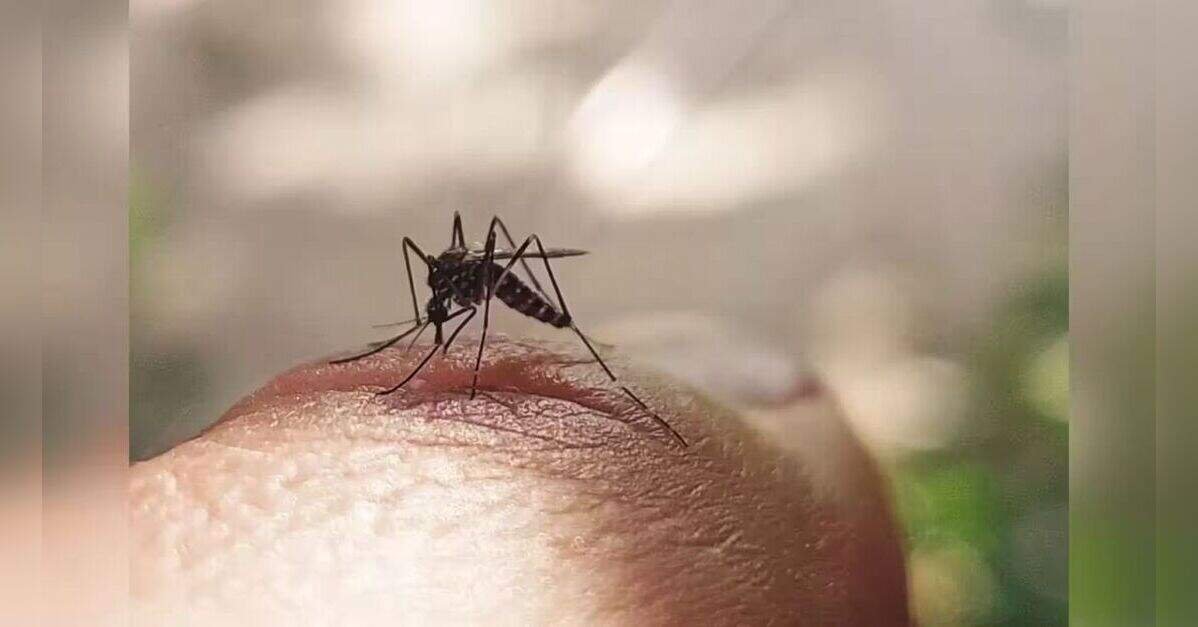
Pune: Mosquitoes that spread dengue, chikungunya and Zika have in parts of the city developed resistance to permethrin, a pyrethroid insecticide (man-made chemical neurotoxin), with genetic mutations now helping them survive doses that should kill them.
The development has been highlighted in a study carried out at the Indian Council of Medical Research-National Institute of Virology (ICMR-NIV), helmed by researchers affiliated with the ICMR National Institute of Translational Virology and AIDS Research (ICMR-NITVAR).
The study tested Aedes aegypti mosquitoes collected from nine wards across Pune Municipal Corporation (PMC) areas — Pashan, Susgaon, Khadki, Yerawada, Warje, Hadapsar, Kondhwa, Kothrud and Dhankawdi — between Feb and May 2024. Researchers exposed adult mosquitoes to the standard 0.75% permethrin dose used in World Health Organisation (WHO) susceptibility tests and tracked how many survived.
The findings indicated that resistance levels varied across wards. The study mooted that areas with more dengue cases may have seen more frequent insecticide spraying, which could be one reason for the higher resistance. However, the study did not directly track insecticide use in these areas or establish a direct link between spraying and resistance.
Mosquitoes from six wards — Khadki, Pashan, Susgaon, Warje, Hadapsar and Kondhwa — showed clear resistance to permethrin, indicating that a significant share of them survived the exposure that should normally kill them.
Yerawada showed an in-between level of resistance. Only Kothrud and Dhankawdi mosquitoes remained susceptible, with most of them dying as expected.
Researchers also looked at genetic changes in mosquitoes to understand how they may be resisting permethrin. These changes occur in a gene targeted by pyrethroid insecticides and are known as knockdown resistance (kdr) mutations.
Four such mutations were found in different combinations across the wards. The F1534C mutation was the most widespread, found in Khadki, Susgaon, Warje, Yerawada and Hadapsar. Mutations S989P and V1016G were found together in Pashan and Kondhwa, while T1520I was found only in Hadapsar.
Permethrin is not routinely used in India’s current vector-control programme. However, it belongs to the synthetic pyrethroid family, which includes other insecticides currently used for mosquito control. Since these insecticides work in similar ways, the resistance found in mosquitoes could also be relevant to other pyrethroids in use, the study indicated. Researchers have thus called for continued local monitoring of insecticide resistance.
Senior entomologist Dr Rahul Marathe, who was not associated with the study, told TOI that the findings should serve as a warning for Pune. “Dengue mosquitoes in several areas are showing resistance to commonly used insecticides due to genetic changes. If we continue using the same insecticide everywhere, it may gradually become less effective. Regular monitoring of insecticide resistance and rotation of insecticides is therefore necessary,” he said.
Dr T Mariappan, former scientist at ICMR-National Institute for Vector Control Research, said insecticide resistance has been a persistent challenge in mosquito control, with resistance emerging over the years against successive classes of insecticides. “Resistance to insecticides is a common phenomenon in mosquito vectors. Even newer compounds such as pyrethroids, including permethrin and deltamethrin, can face resistance, particularly with indiscriminate use. This makes it important to continuously monitor resistance and adapt vector-control strategies accordingly.”
Pune Municipal Corporation (PMC) recently released a statement saying it had stepped up mosquito-control measures across the city in view of conditions favourable for breeding.
“We have reviewed dengue, chikungunya and malaria cases over the past three years and conducted a map-based analysis across all 41 wards. All departments have been directed to identify and eliminate mosquito-breeding sites, including stagnant water at construction sites, roads, drains, parks and other public spaces. We are also using Gambusia fish, which feed on mosquito larvae, in fountains at municipal parks and public spaces. The focus is on preventing mosquito breeding at source through coordinated action across departments,” the statement said.