

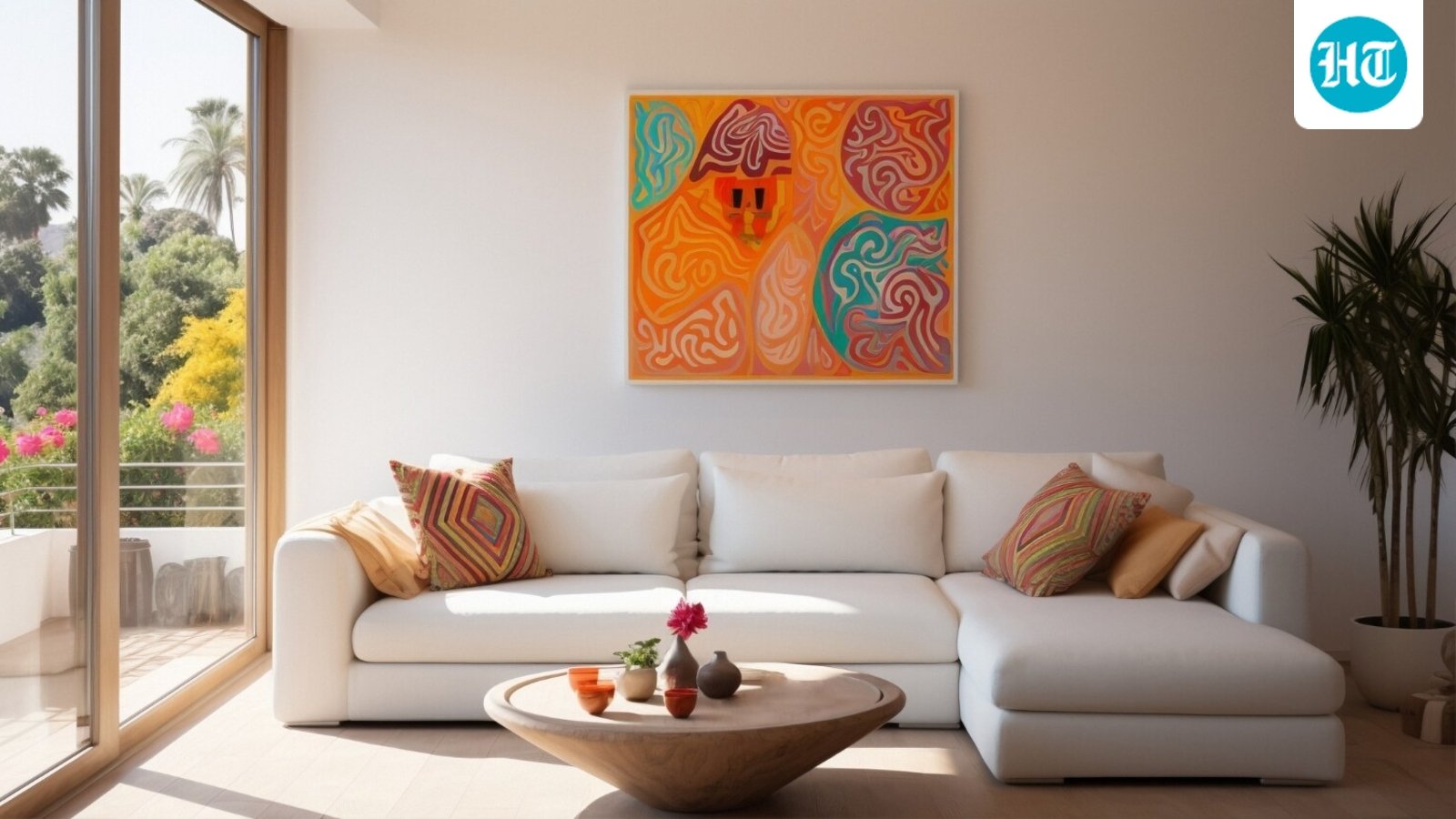
As homeowners, there’s a constant desire to find art pieces that can beautify your home. Walls may feel bare and empty without artwork adorning them, but simply putting up the right piece can transform the space. A dull room can gain a renewed sense of depth and personality. That is the power of art!
ALSO READ: Love bold colours? Interior experts share how to use them without overwhelming your home
But its placement is equally important. Otherwise, even a beautiful piece may look out of place or mismatched with the furniture. Suumit Arora, founder and CEO of Ariture, an art platform, shared five art placement ideas to help every piece complement its surroundings and make the place shine.
We asked Suumit about the art placement mistakes people commonly make that prevent even a beautiful piece from creating the desired effect in its surroundings.
He shared a couple of reasons: “Beautiful painting hung too high, or lost on a wall three sizes too big for it, or squeezed into a corner nobody looks at, stops doing its job. Most homes do not have an art problem. They have a placement problem.”
Your priority should not solely hinge on how attractive or expensive the artwork is. Its impact also depends on how and where it is placed.
The next obvious doubt would be how to understand if you are placing your art in the correct spot. Suumit shared some basic parameters that you need to know about art placement: “All that is needed is to understand what height, proportion, and light a piece really needs, and that will be the key.”
Here are some placement spaces Suumit suggested:
1. Above the sofa
- The wall over the sofa is the ideal place for hanging an artwork.
- A common mistake most make is that they hang the artwork too high, making it appear as though it is floating above the sofa.
- To avoid this, align the centre of the painting with eye level and position the artwork approximately 15-20 centimeters above the sofa.
- The dining room is where interactions happen the most, so keep artworks at eye level.
- Since people sit most of the time, art should be hung lower than in the living room.
- The choice of pieces with warm colours and inviting composition contributes greatly here. The ideal art becomes a subtle and long-lasting component of each meeting at the dining table.
One principle connects all five ideas. As parting advice, the expert recommended hanging art for the people who use the space, positioning it at their natural eye level and keeping it proportional to the furniture beneath it. When these three elements are well factored in, the artwork looks coordinated and thoughtfully placed and complements its surroundings well.
