

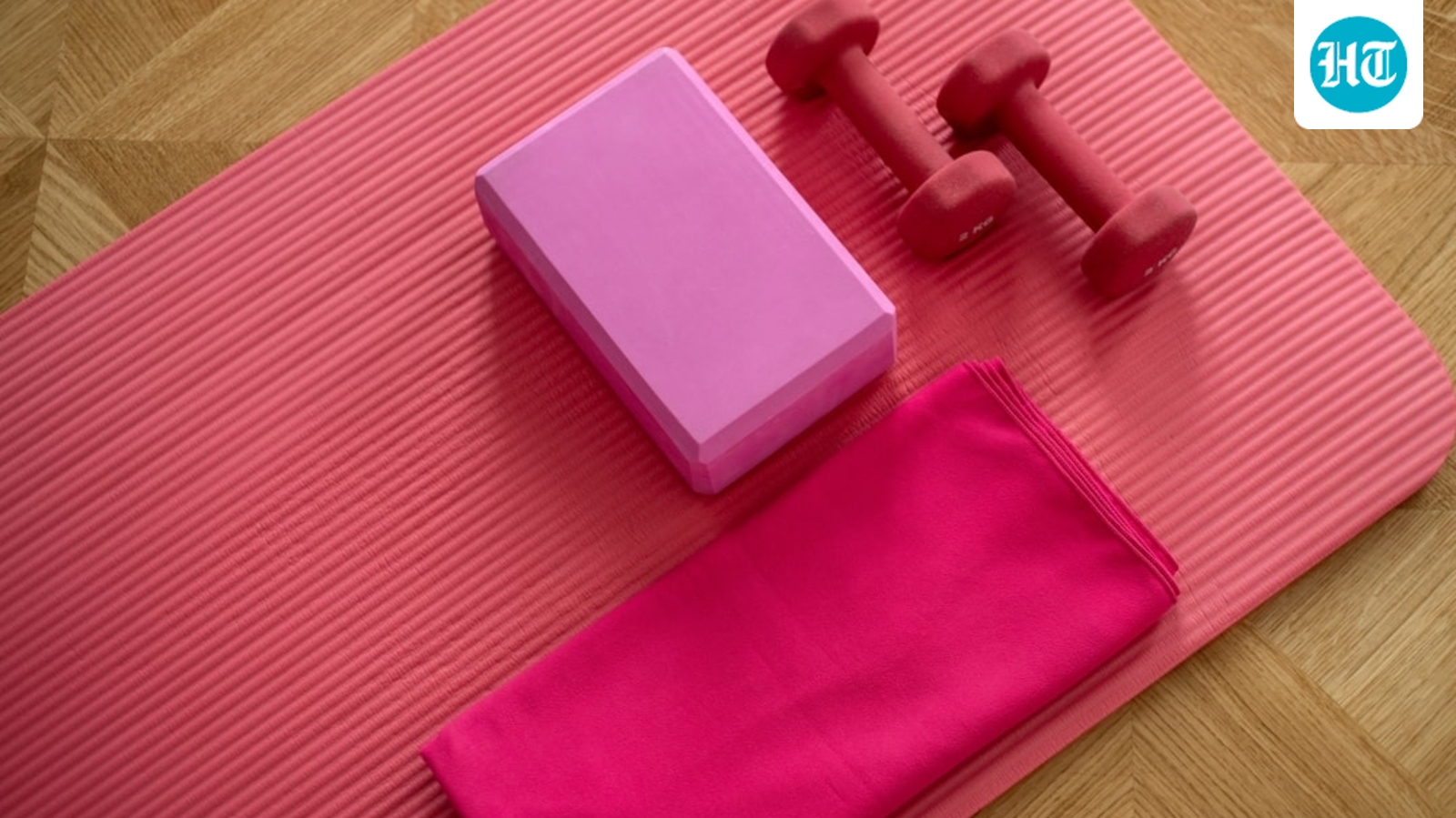
Every morning, millions of people roll out a yoga mat expecting calm, not chemicals. But that safe-space rectangle of foam or rubber might be doing more to your body than helping you hold a yoga pose. In an interview with HT Lifestyle, Prateek Kedia, yoga expert and founder of Wiselife, shared the harmful impact of yoga mat and how to reverse that.
Also read | Yoga expert shares relaxing 10-minute bedtime yoga routine for better sleep and stress relief
How do yoga mats impact your health?
Prateek highlighted that most budget mats are made from PVC (polyvinyl chloride), the stuff used in water pipes and flooring. It’s cheap, it grips well, and it lasts forever, so it’s no surprise the market is flooded with it. It’s also why dermatologists and toxicologists have started raising eyebrows. PVC production and disposal release toxins, among the most persistent environmental toxins known. Some mats also use phthalates as softening agents, chemicals that have been linked to hormone disruption with prolonged exposure.
He also added that there’s the smell. That distinct “new mat” odour isn’t just plastic off-gassing harmlessly into the air; it’s volatile organic chemicals evaporating, and inhaling them in a closed room, session after session, isn’t something your lungs particularly enjoy.
Skin contact adds another layer. “A mat is pressed against bare skin throughout your yoga session, often while you’re sweating, which opens pores and increases absorption,” said Prateek. Add in the fact that mats are rarely washed as often as they should be, and you’ve got a surface that can harbour bacteria, fungus, and yes, whatever residual chemicals are leaching out of the material itself.
How to protect yourself from the harmful impact of a yoga mat?
According to Prateek, none of these means you need to dispose of your mat tonight. It does mean it’s worth knowing what you’re practising on.
Natural rubber, jute, cork and organic cotton mats have become far more accessible in India over the past few years, and while they cost more upfront, they don’t carry the same chemical baggage.
Habits to keep your yoga mat safe
Here are a few simple habits that help regardless of what your mat is made of:
Wipe it down after every session
Let it air out rather than rolling it up damp
Replace it once the surface starts flaking or peeling- that’s usually a sign the material is breaking down and releasing more than you’d like into the air you breathe.
Yoga is meant to be a practice in mindfulness, right down to the ground beneath you. It seems only fair that the mat holding you up gets as much scrutiny as your diet, your water, and even your skincare routine. Because sometimes the healthiest choice has nothing to do with the pose, it’s just what’s under your feet while you do it.
Note to readers: This article is for informational purposes only and not a substitute for professional medical advice. Always seek the advice of your doctor with any questions about a medical condition.
