

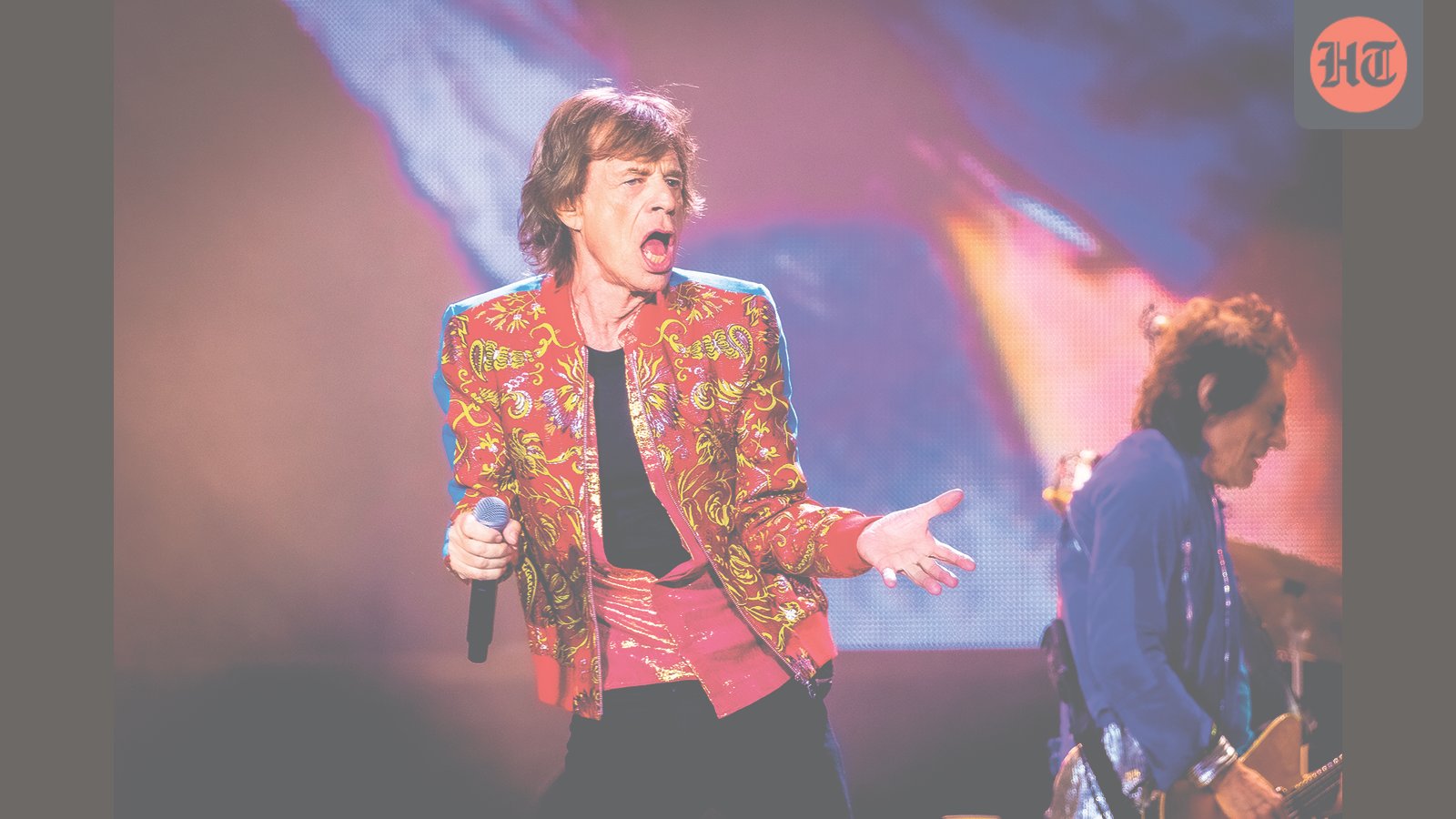
I have just become a fan of Mick Jagger and his band, The Rolling Stones. How ridiculous does that sound? It’s 2026. Jagger and his mates founded the band in 1962 — 64 years ago — and I’ve been listening to them ardently for more than half a century.
Perhaps I should rephrase that. I have become a born-again fan of Jagger, 83.
Last month, the Stones released their 25th British studio album, Foreign Tongues, along with the customary blitz of promotional interviews. On talk-show host Conan O’Brien’s podcast, Jagger talked about David Hockney, the great British painter who died in London in June, a month short of his 89th birthday. He sounded almost boyish with admiration: here was a man who had kept reinventing himself right up to his final iPad drawing, never settling into the comfortable groove of his own reputation.
The irony, though Jagger didn’t seem to notice it, is that he and his bandmates — Keith Richards, 82, and Ronnie Wood, 79 — are doing precisely what he found so remarkable in Hockney. Since Hackney Diamonds arrived in 2023, ending an 18-year drought of new Stones material, the world’s best-loved septuagenarian-plus rock band has been rocking — and rocking forward, not backward.
Foreign Tongues, 14 tracks and just over an hour long, was assembled from sessions stretching from 2019 through last year, under producer Andrew Watt, who has become something of a whisperer to legacy acts, working with Elton John, Paul McCartney, and now the Stones twice over.
It is worth clearing up one assumption early: this isn’t a scraps record. Only four of the 14 tracks date to the Hackney Diamonds sessions. The rest were written and cut fresh. Jagger has described the method as deliberately unfussy: get the song down fast, before anyone in the room has the chance to pick it apart. Which shows. Where the Stones of the 1990s and 2000s often sounded like a band assembling a Stones album by algorithm — riff here, harmonica there, Start Me Up DNA smeared over everything — this one sounds like the work of men who still enjoy being surprised by what emerges from the amp.
The guest list says a lot about where the band stands.
Steve Winwood’s organ runs through nine of the 14 tracks, less a cameo than a genuine second voice, pulling the sound toward soul and blues rather than straight rock swagger. McCartney plays bass on one track, the second time he’s guested on a Stones record, after doing the same on Hackney Diamonds.
Robert Smith of The Cure and Chad Smith of Red Hot Chili Peppers both drop in, pulling toward textures — one moody, the other propulsive — that this band had no particular obligation to reach for at this age.
And then there’s the quietly devastating one: Hit Me in the Head incorporates a drum take from the late Charlie Watts’s final session in 2021, so that the Stones’ original rhythm section is still, somehow, on the record.
The first two tracks, Rough and Twisted and In the Stars, set the tone: sharp, crunchy, mixed with a contemporary punch rather than a vintage one. Mr Charm is vintage sleaze, with Richards’s riff at its most disreputable and Jagger doing his familiar wry-observer-of-scoundrels routine, which is a character sketch on the surface, though “scoundrel” recurs more pointedly elsewhere on the record.
Jealous Lover drifts into the soul register of Beast of Burden (1978) and Emotional Rescue (1980), Jagger’s falsetto still, remarkably, intact. There is a cover of Amy Winehouse’s You Know I’m No Good on the album, handled with touching tenderness.
The record’s emotional centre is Ringing Hollow, a country-inflected, Midnight Rambler-adjacent track that reviewers have called a love letter to America written by men watching it change into something less familiar. Jagger sings of a scoundrel whipping up the crowd, of clocks that never turn back — lines that don’t name names but land squarely in a moment when populist theatre, on either side of the Atlantic and beyond, has become the ambient noise of public life.
Set alongside Mr Charm’s sketch of a smooth operator working an audience, the two feel like companion pieces: one from inside the con, and one watching it happen. It’s about as political as the Stones have ever allowed themselves to be on record, needling power obliquely rather than planting a flag.
The album closes, fittingly, with Beautiful Delilah, a tip of the hat to Chuck Berry, the band audibly grinning through it.
Set against Hackney Diamonds, the differences are instructive. That album was a comeback statement built for maximum impact (with Lady Gaga and Stevie Wonder guesting), with a lean, radio-ready track list, and every song earning its place in the “the Stones still have it” narrative. Foreign Tongues doesn’t have anything to prove. It has the loose feel of a band that has stopped auditioning for its own legacy and started simply enjoying the company it keeps.
Some critics call it the stronger record, uncluttered by comeback pressure; others find that the back half sags, the lyrics occasionally lazy where Hackney Diamonds’ urgency papered over similar cracks. Both things can be true.
What struck me most was the refusal to lean on nostalgia as a crutch. There is no cynical rewrite of Satisfaction, no contrived stadium anthem to close. Jagger has said, more than once on the promo run, that he makes records for today’s listener, not yesterday’s fan. That’s the kind of thing an 83-year-old rockstar is expected to say, except here, unusually, it’s true.
Hockney’s example — never stopping, staying curious to the end — seemed to genuinely unsettle Jagger, in the best way. Listening to Foreign Tongues, that curiosity is what comes through loudest. Which, I suppose, is as good an excuse as any for a fan of 50 years to feel like he’s just discovered the band all over again.
(Email sanjoy.narayan@gmail.com.The views expressed are personal)
