

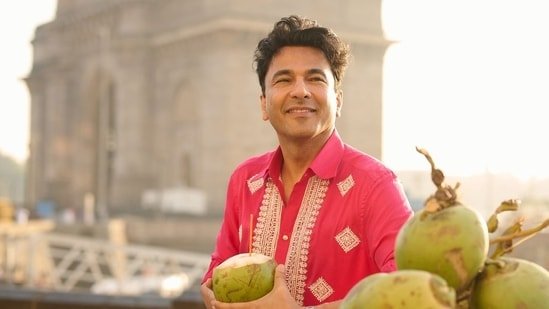
There was a time when a chef’s ultimate ambition was tethered entirely to the four walls of a kitchen line. Success was measured in gruelling 12-hour shifts, sizzling copper pans, and the volatile approval of anonymous inspectors. But a quiet, high-stakes evolution has rewritten the culinary playbook. Also read | Chef Vikas Khanna turns heads in black Louis Vuitton bandhgala at TIME100 gala
Today, an elite tier of modern chefs is translating culinary acclaim into massive global business empires, stepping into a financial league historically dominated by tech founders and media moguls. Standing firmly at the intersection of this cultural and commercial shift is Michelin-starred chef, author, and filmmaker Vikas Khanna.
Fresh off being named in the prestigious ‘TIME100 Most Influential People’ list for 2026, chef Vikas has entered the ranks of the world’s wealthiest culinary titans alongside names like Jamie Oliver, Gordon Ramsay, and Nobu Matsuhisa. Yet, his blueprint is distinctly unique.
Spanning ultra-premium hospitality, mass consumer products, independent filmmaking, publishing, angel investing, and systemic philanthropy, chef Vikas has built a multi-faceted ecosystem that positions him as one of India’s most powerful cultural ambassadors on the global stage.

The capital of authenticity
Nowhere is this cultural real estate more visible than at Bungalow, chef Vikas’s hospitality venture in New York City. Since its doors opened, it has become one of the most fiercely competitive tables in Manhattan, with countless diners flooding the digital waitlist every single night. But for chef Vikas, structural longevity matters far more than temporary hype.
“Scarcity alone is not a strategy,” chef Vikas told HT Lifestyle in an interview. “Our responsibility is to convert first-time curiosity into lifelong trust. Every guest must leave believing the experience justified the wait. Operational excellence, team development, consistency, innovation, and continuous investment in hospitality are what create durability. Hype brings people in once. Excellence brings them back for decades,” he explained.
At Bungalow, that experience is deeply rooted in what chef Vikas calls the ’emotional geography’ of India — bringing hyper-regional, traditionally overlooked home cooking to a Western audience that has historically been fed a monolithic or anglicised diet of chicken tikka masala and generic curries.
“I never pitched India as something that needed to be simplified. I believed people were ready for honesty,” chef Vikas said, reflecting on the commercial positioning of the concept. “New Yorkers are among the world’s most curious diners. The success of Bungalow proves that authenticity is not a commercial risk. When executed with precision, hospitality, and consistency, authenticity becomes a competitive advantage,” he added. Also read | Step inside chef Vikas Khanna’s typical Indian childhood home in Amritsar, filled with family memories and nostalgia
Emotional equity as ROI
To understand chef Vikas’ business model is to understand the tangible financial value of a narrative. In a premium market where consumers are fatigued by generic luxury, storytelling has become a critical economic lever. Through initiatives such as the Bungalow Book Club, his films, and deeply personal book tours, chef Vikas has successfully turned cultural appreciation into brand loyalty.
He shared, “Luxury today is not defined only by price. It is defined by meaning. People remember how a brand makes them feel. Emotional connection creates loyalty, repeat visits, stronger word of mouth, and ultimately greater lifetime value than marketing alone. Stories cannot replace quality, but when exceptional quality is combined with authentic storytelling, customers stop buying products and begin joining a community.”
This focus on community is driving his recent moves as an angel investor, including an investment in the grassroots, immigrant-led startup Kolkata Chai Co. When evaluating where to deploy his capital, chef Vikas insisted that spreadsheets only tell half the story.
“Financial discipline matters because great ideas need sustainable businesses. But I also ask deeper questions. Does this founder have integrity? Does the product represent culture with honesty? Can this business create opportunities for communities? Some investments produce financial returns. The most meaningful ones also produce cultural returns,” he said.

Scaling the intangible
One of the greatest operational hurdles for any charisma-driven brand empire is the threat of brand dilution. How does a global entrepreneur audit and maintain structural integrity across consumer goods, books, and restaurants when they cannot physically be in the room?
“Authenticity cannot depend on one individual standing in the room,” chef Vikas said flatly, adding, “We build systems before we build scale. That means documenting recipes, sourcing standards, storytelling, design language, customer experience, and the values behind every decision. I spend a great deal of time mentoring founders because culture has to become part of the company’s DNA, not the founder’s personality. The goal is simple: every guest or customer should experience the same integrity whether I am present or not.”
This obsessive focus on institutionalising knowledge is how chef Vikas plans to ensure his ecosystem thrives for decades independently, bypassing the typical succession traps that plague founder-centric businesses: “The greatest legacy is not creating followers. It is creating leaders.”
He reflected, “Everything we are building is designed around institutions rather than individuals… if, decades from now, these businesses continue to celebrate India’s culture with integrity without depending on my daily presence, that will be the true measure of success.”
India’s ultimate soft power
As India continues to cement its status as an economic powerhouse, the next frontier is undeniable: commanding premium valuations in the global luxury lifestyle market. For centuries, European cuisines and design houses have held a monopoly on premium pricing. Chef Vikas believes it is time for a systemic shift: “India must move beyond exporting ingredients and begin exporting intellectual property, brands, craftsmanship, and hospitality.”
He explained, “Premium value is built through design, consistency, research, education, storytelling, and global standards of execution. We also need to celebrate our regional diversity instead of presenting Indian cuisine as one unified category. The world already believes India has extraordinary food. The next chapter is ensuring the world recognises Indian brands as premium global luxury brands.”
Despite the sprawling portfolio, the boardroom meetings, the venture capital metrics, and the historic TIME100 recognition, if you ask chef Vikas who he is at his core, the answer hasn’t changed since he began his journey in Amritsar. “I will always introduce myself as a chef,” he said.
“Cooking remains my language. Everything else, whether it’s business, filmmaking, books, or investing, simply extends that conversation. Food has given me the privilege to tell India’s stories to the world. If entrepreneurship helps those stories travel further and creates opportunities for others, then business becomes a responsibility rather than an ambition,” chef Vikas concluded.
